
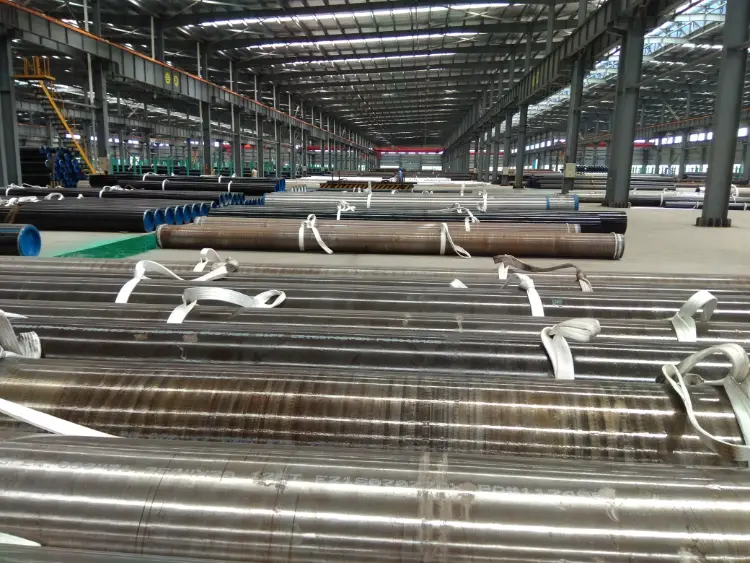
Q345D SHS/RHS Cold-Drawn Hollow Section Pipe
Q345D SHS/RHS Cold-Drawn Hollow Section Pipe | GB/T 3094 Structural Steel Tube
Explore Q345D square and rectangular hollow section steel pipes under GB/T 3094. Ideal for welded, bolted structural applications with excellent low-temperature toughness and high strength.
Cold-drawing, welding, cutting, bending, punching, galvanizing, powder coating
- Phone : +8618037372205
- Email : [email protected]
- WhatsApp: Contact via Whtsapp
- WeChat: +8618037372205
Q345D SHS/RHS Cold-Drawn Hollow Section Pipe Introduction
Q345D SHS/RHS pipe is a cold-drawn square and rectangular hollow section manufactured in accordance with GB/T 3094, utilizing the low-alloy structural steel grade Q345D defined in GB/T 1591. This material offers a minimum yield strength of 345 MPa and tensile strength ranging from 470 to 630 MPa, with guaranteed impact toughness of at least 34 J at -20°C, making it suitable for structural applications in cold climates. The cold-drawing process ensures precise dimensions, smooth surfaces, and enhanced mechanical properties compared to hot-finished alternatives. Typical thicknesses for SHS/RHS range from 2 mm to 16 mm, with excellent weldability and formability. Q345D belongs to the Chinese low-alloy high-strength steel family and is equivalent to S355J2 in European standards, widely used in construction, machinery, and transportation infrastructure.
Q345D SHS/RHS Cold-Drawn Hollow Section Pipe Chemical Composition
The chemical composition of Q345D steel is specified in GB/T 1591-2008. The cold-drawn tubing inherits the same chemistry. Key alloying elements such as manganese, silicon, and micro-alloying additions ensure strength and toughness. Phosphorus and sulfur are strictly controlled for weldability and cold formability. Values are maximum unless a range is given.
| Element | Standard Value (wt.%) | Remarks |
|---|---|---|
| C | ≤ 0.18 | Carbon equivalent CEV typically ≤ 0.45 |
| Si | ≤ 0.50 | Silicon for deoxidation |
| Mn | ≤ 1.70 | Manganese enhances strength and hardenability |
| P | ≤ 0.030 | Maximum phosphorus reducing brittleness |
| S | ≤ 0.025 | Maximum sulfur improving toughness |
| Nb | ≤ 0.07 | Optional grain refiner; improves strength |
| V | ≤ 0.15 | Optional micro-alloy |
| Ti | ≤ 0.20 | Optional micro-alloy, grain refinement |
| Al (total) | ≥ 0.015 | Grain refinement, normally 0.02–0.06 |
| Cr | ≤ 0.30 | Residual element, may be present |
| Ni | ≤ 0.50 | Residual, may improve toughness |
| Cu | ≤ 0.30 | Residual, may improve corrosion resistance |
| N | ≤ 0.012 | Controlled for aging resistance |
Q345D SHS/RHS Cold-Drawn Hollow Section Pipe Thermal and Electrical Physical Properties
Physical properties are typical for low-alloy structural steel, not specified in GB/T 3094 but derived from standard references for Q345D (similar to S355). Values are given at room temperature unless stated. Thermal expansion and conductivity change with temperature; key values are listed. These data are suitable for design calculations involving heat transfer, thermal stress, and electrical resistance.
| Property | Typical Value | Unit | Test Condition |
|---|---|---|---|
| Density (ρ) | 7.85 | g/cm³ | 20 °C |
| Modulus of elasticity (E) | 206 | GPa | 20 °C |
| Shear modulus (G) | 79.3 | GPa | 20 °C, calculated from E and ν |
| Poisson's ratio (ν) | 0.30 | - | 20 °C, in elastic range |
| Thermal expansion coefficient (α) | 12.2 12.8 13.5 | 10⁻⁶ /K | 20 – 100 °C 20 – 200 °C 20 – 300 °C |
| Thermal conductivity (λ) | 42.7 41.0 38.8 | W/(m·K) | 100 °C 200 °C 300 °C |
| Specific heat capacity (cp) | 486 | J/(kg·K) | 20 °C |
| Electrical resistivity (ρ_e) | 0.23 | 10⁻⁶ Ω·m | 20 °C |
Q345D SHS/RHS Cold-Drawn Hollow Section Pipe Mechanical Properties
Mechanical properties are based on GB/T 1591-2008 for plates/strips and validated for hollow sections per GB/T 3094. Requirements depend on wall thickness (t). The cold-drawing process may slightly increase yield and tensile strength while reducing elongation. Impact test at -20°C is mandatory for D-grade certification. Bending test ensures formability. All values are for transverse specimens unless noted.
| Property | Standard Requirement | Unit | Test Condition |
|---|---|---|---|
| Yield Strength (ReH) | ≥ 345 (t ≤ 16 mm) ≥ 335 (16 < t ≤ 30 mm) | MPa | Ambient temperature, transverse |
| Tensile Strength (Rm) | 470–630 (t ≤ 16 mm) 470–630 (16 < t ≤ 30 mm) | MPa | Ambient temperature, transverse |
| Elongation after fracture (A) | ≥ 21 (t ≤ 16 mm) ≥ 21 (16 < t ≤ 30 mm) | % | Gauge length 5.65√So, longitudinal |
| Impact absorbed energy (KV2) | ≥ 34 (at -20 °C) | J | Charpy V-notch, longitudinal, average of 3 tests |
| Bend test (mandrel diameter) | d = 2a (t ≤ 16 mm) d = 3a (16 < t ≤ 30 mm) | - | Bending angle 180°, sample width ≥ 2t |
Q345D SHS/RHS Cold-Drawn Hollow Section Pipe Completely Equivalent Material Standards and Substitute Grades
| Country/Region | Standard | Grade | Remarks |
|---|---|---|---|
| China | GB/T 1591-2008 | Q345D | Original standard for the base steel; chemical and mechanical equivalence |
| European Union | EN 10025-2:2004 | S355J2 | Identical yield class (355 MPa) and -20°C impact option; close chemistry |
| USA | ASTM A572/A572M-21 | Grade 50 [345] | Minimum 345 MPa yield; Charpy requirements optional; not exact -20°C counterpart but widely used |
| USA | ASTM A500/A500M-21 | Grade C | Structural tubing with 345 MPa yield; cold-formed hollow sections equivalent product standard |
| Japan | JIS G 3106:2015 | SM490A/B | SM490B includes impact test at 0°C or -10°C; SM490C for -20°C; similar mechanicals |
| International | ISO 630-2:2021 | S355D | Corresponds to EN S355J2; impact at -20°C; harmonized global standard |
Q345D SHS/RHS Cold-Drawn Hollow Section Pipe Application Introduction
Q345D SHS/RHS cold-drawn pipe is primarily used in welded and bolted steel structures requiring high strength, good low-temperature toughness, and precise section dimensions. The cold-drawn finish allows tight tolerances and a smooth surface suitable for architectural exposed applications. It is easily welded with common methods (MIG/MAG, TIG, SMAW) using low-hydrogen electrodes. Typical processing includes cutting, drilling, bending (with caution to avoid cracking), and hot-dip galvanizing for corrosion protection. Advantages include high load-bearing capacity, design flexibility, and excellent weight-to-strength ratio. Not recommended for heavily corrosive environments without protective coatings.
Product Applications: Structural hollow sections in various sizes (SHS: 20x20 to 400x400 mm; RHS: 50x25 to 500x300 mm), Cold-drawn precision tubes for telescopic applications, Prefabricated steel building components, Modular scaffold tubes and accessories, Architectural exposed steel frames and canopies, Traffic sign posts and gantry arms
Processed into products: Columns and beams in multi-story buildings, Truss chords and diagonals in roof structures, Base frames for heavy machinery, Boom sections of cranes and aerial platforms, Chassis rails for trucks and trailers, Support legs and outriggers, Solar tracker torque tubes and brackets, Hydraulic cylinder outer tubes (when precise inner bore not required), Handrail and guardrail posts
Application industries: Construction and civil engineering (steel frames, columns, trusses), Bridge engineering (pedestrian and light traffic bridges), Mechanical and equipment manufacturing (chassis, booms, machine frames), Automotive and transport (truck bodies, trailers, bus frames), Agricultural equipment (greenhouses, storage racks, irrigation structures), Renewable energy (solar panel support structures, wind tower internals), Street furniture and urban infrastructure (sign gantries, lighting poles, barriers)
Q345D SHS/RHS Cold-Drawn Hollow Section Pipe Similar or Alternative Materials Recommendation
| Country/Region | Standard | Grade | Remarks |
|---|---|---|---|
| China | GB/T 1591-2018 | Q355D | Successor to Q345D in the latest Chinese standard; yield increased to 355 MPa; equivalent impact requirement at -20°C; direct substitute |
| European Union | EN 10025-2 | S355J0 | 0°C impact option; slightly lower toughness requirement but same strength; cost-effective alternative if -20°C is not mandatory |
| USA | ASTM A501/A501M | Grade B | Hot-formed structural tubing with 345 MPa yield; chemistry and welding properties similar; good alternative for hot-finished sections |
| Russia | GOST 19281-2014 | 09G2S (09Г2С) | Yield ~345 MPa, impact at -40°C typical; widely used for welded structures; good weldability |
| India | IS 2062:2011 | E350C | 355 MPa yield, impact at -20°C; similar alloying concept; suitable for structural hollow sections |
Notes:
- Actual mechanical properties of cold-drawn Q345D SHS/RHS may exceed the minimum requirements due to work hardening; design should consider the guaranteed minimum values.
- Weldability: CEV ≤ 0.45% ensures good weldability without preheating for thicknesses up to 30 mm under normal conditions. Low-hydrogen welding procedures are recommended for thick sections.
- Dimensional tolerances follow GB/T 3094: for side length, wall thickness, corner radius, and straightness. Typical wall thickness range 2.0–16.0 mm for cold-drawn sections.
- Surface condition: As-drawn (oily or slightly oxidized); can be supplied pickled, phosphated, or primed upon request.
- Corrosion protection: hot-dip galvanizing to EN ISO 1461 or paint systems are commonly applied; Q345D is not considered weather-resistant steel.
- Standard lengths: 6.0 m or 12.0 m; cut-to-length available.
- Third-party inspection certificates (EN 10204 Type 3.1 or 3.2) can be provided upon request.
- Share



