
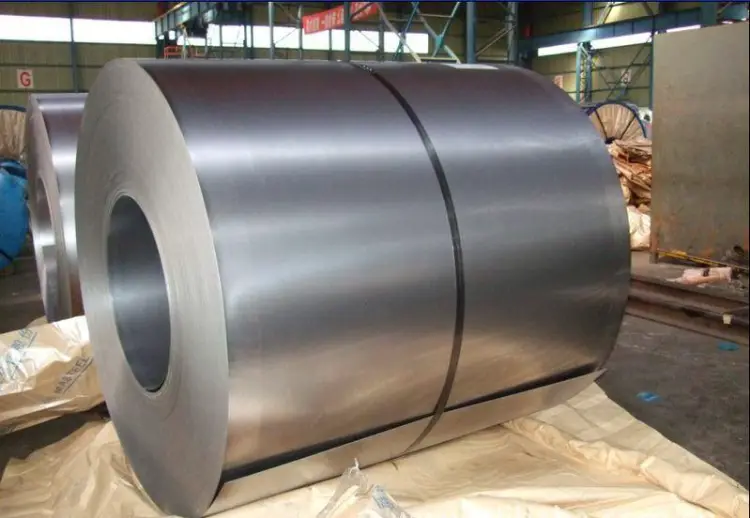
ABS Grade EQ63 Shipbuilding Steel Coil
ABS Grade EQ63 Shipbuilding Steel Coil - Quenched & Tempered Marine Steel
Comprehensive material data for ABS Grade EQ63 steel coil: chemical composition, mechanical properties, thermal and electrical properties, equivalent grades and application guide strictly based on ABS Rules for Building and Classing Steel Vessels.
Suitable for gas cutting, plasma cutting, shearing, cold forming, machining and all common welding processes (offshore and structural welding)
- Phone : +8618037372205
- Email : [email protected]
- WhatsApp: Contact via Whtsapp
- WeChat: +8618037372205
ABS Grade EQ63 Shipbuilding Steel Coil Introduction
ABS Grade EQ63 is an extra-high-strength, quenched and tempered hull structural steel certified by the American Bureau of Shipping. It combines a minimum yield strength of 620 MPa with excellent notch toughness down to –40°C, making it ideal for critical structures in ships, offshore platforms and heavy engineering.
Main characteristics:
- Minimum yield stress 620 MPa, tensile strength 720–890 MPa
- Low-temperature impact properties: minimum average absorbed energy 41 J at –40°C (transverse, t≤50 mm)
- Excellent weldability when suitable preheating and consumables are used
- Supplied in the form of hot-rolled coils, typically in the quenched and tempered (Q+T) condition
- Complies with the most demanding class requirements for hull and marine construction
ABS Grade EQ63 Shipbuilding Steel Coil Chemical Composition
The values below are the maximum permissible or typical limits given in ABS Rules Part 2, Chapter 1, Section 6, Table 2 for extra-high-strength hull structural steels of grade EQ63. Actual ladle analysis is reported by the manufacturer and must meet the carbon equivalent value (CEV) and mechanical property requirements.
| Chemical Element | Standard Value (wt%) | Remarks |
|---|---|---|
| Carbon (C) | ≤ 0.20 | Ladle analysis |
| Silicon (Si) | 0.10 – 0.55 | Ladle analysis |
| Manganese (Mn) | 0.90 – 1.70 | Ladle analysis |
| Phosphorus (P) | ≤ 0.025 | Ladle analysis |
| Sulfur (S) | ≤ 0.025 | Ladle analysis |
| Aluminium (Al) | ≥ 0.020 | Total Al, grain refining |
| Chromium (Cr) | ≤ 0.20 | Residual or intentional addition limit |
| Nickel (Ni) | ≤ 0.40 | Residual or intentional addition limit |
| Molybdenum (Mo) | ≤ 0.08 | Residual or intentional addition limit |
| Copper (Cu) | ≤ 0.35 | Residual or intentional addition limit |
| Vanadium + Niobium + Titanium (V+Nb+Ti) | ≤ 0.12 | Micro-alloying elements |
| Carbon Equivalent (CEV) | ≤ 0.56 (t≤50 mm) | CEV = C+Mn/6+(Cr+Mo+V)/5+(Ni+Cu)/15 |
ABS Grade EQ63 Shipbuilding Steel Coil Thermal and Electrical Properties
The physical properties listed below are typical values for quenched and tempered low-alloy structural steel of the EQ63 type. They are not part of the mandatory ABS product specification but provide useful engineering data for design, thermal and electrical calculations.
| Property | Typical Value | Unit | Test Conditions |
|---|---|---|---|
| Density (ρ) | 7850 | kg/m³ | At 20 °C |
| Modulus of elasticity (E) | 205 | GPa | At 20 °C |
| Shear modulus (G) | 79 | GPa | At 20 °C |
| Poisson's ratio (ν) | 0.3 | – | At 20 °C |
| Coefficient of thermal expansion (α) | 12.5 × 10⁻⁶ | /K | Between 20 °C and 100 °C |
| Thermal conductivity (λ) | 50 | W/(m·K) | At 20 °C |
| Specific heat capacity (c) | 460 | J/(kg·K) | At 20 °C |
| Electrical resistivity (ρe) | 0.23 × 10⁻⁶ | Ω·m | At 20 °C |
ABS Grade EQ63 Shipbuilding Steel Coil Mechanical Properties
The following mechanical properties are the minimum specified values for ABS Grade EQ63 quenched and tempered steel as detailed in ABS Rules Part 2, Chapter 1, Section 3. Impact tests are performed on transverse V-notch Charpy specimens. Bending is carried out to 180° over a former of diameter 2a (a = specimen thickness).
| Property | Specified Value | Unit | Test Conditions |
|---|---|---|---|
| Yield Strength (ReH) | ≥ 620 | MPa | Transverse, t ≤ 100 mm |
| Tensile Strength (Rm) | 720 – 890 | MPa | Transverse, t ≤ 100 mm |
| Elongation (A) | ≥ 15 | % | Transverse, t ≤ 50 mm (gauge 200 mm or 5.65√So) |
| Elongation (A) | ≥ 14 | % | Transverse, 50 < t ≤ 85 mm |
| Elongation (A) | ≥ 13 | % | Transverse, 85 < t ≤ 100 mm |
| Bend Test (180°) | 2 a | – | Former diameter = 2 × specimen thickness |
| Charpy Impact Energy (KV) | ≥ 41 | J | Transverse, –40 °C, 10×10 mm specimen, t ≤ 50 mm |
| Charpy Impact Energy (KV) | ≥ 46 | J | Transverse, –40 °C, 10×10 mm specimen, t > 50 mm |
ABS Grade EQ63 Shipbuilding Steel Coil Completely Equivalent Standards and Replaceable Grades
| Country/Region | Standard | Grade | Remarks |
|---|---|---|---|
| Norway/Germany (DNV-GL) | DNVGL Rules Pt.2 Ch.1 | NV E620 (E620) | Same minimum YS 620 MPa, impact at –40°C |
| United Kingdom (LR) | Lloyd's Register Rules | LR E620 | Equivalent quenched and tempered hull structural steel |
| France (BV) | Bureau Veritas Rules | BV E620 | Identical strength and toughness requirements |
| China (CCS) | CCS Rules | CCS E620 | Fully equivalent according to CCS Material and Welding Rules |
| South Korea (KR) | Korean Register Rules | KR RE62 | Yield strength class 62 kgf/mm²; E-grade (–40°C) |
| Japan (NK) | ClassNK Rules | NK KRE62 | Quenched and tempered extra high strength steel, –40°C impact |
ABS Grade EQ63 Shipbuilding Steel Coil Application Introduction
ABS EQ63 steel coils are primarily used in marine and offshore engineering where high strength and excellent low-temperature toughness are essential. The material is suitable for a wide range of products and components in the following fields:
Product Applications: Hull side shell and bottom plating, Deck plates and bulkheads, Jack-up rig legs and spudcans, Offshore crane booms and lattice structures, Pressure vessel shells, Heavy-duty structural frames
Processed into products: Welded fabrications such as insert plates, stiffeners and brackets, Machined parts: pins, bushings, shafts, Cut and formed profiles: flanges, gussets, web plates, Pipes and tubulars for high-stress joints, Repair and replacement panels for existing structures
Application industries: Shipbuilding and ship repair, Offshore oil and gas platforms, Wind turbine foundations and transition pieces, Heavy-lift crane manufacturing, Pressure vessel and boiler fabrication, Mining and earth-moving equipment
ABS Grade EQ63 Shipbuilding Steel Coil Similar or Alternative Material Recommendations
| Country/Region | Standard | Grade | Remarks |
|---|---|---|---|
| International | ABS Rules | ABS EQ51 / EQ56 / EQ70 | Lower/higher yield strength grades within the same quenched and tempered family; suitable when different strength levels are acceptable |
| International | ABS Rules | ABS EH63 (TMCP) | TMCP-treated variant with similar yield strength; may have different toughness delivery condition |
| USA | ASTM A514/A514M | A514 Grade E | Quenched and tempered alloy steel with minimum YS 690 MPa, similar high strength and toughness, but not specifically certified for marine service |
Notes:
- Welding: Because of its high strength and carbon equivalent, EQ63 requires careful preheat and interpass temperature control. Low-hydrogen consumables and post-weld stress relieving may be needed for thick sections.
- Forming: Cold forming is possible; however, hot forming or subsequent re-heat treatment may be required to restore the quenched and tempered properties.
- Corrosion protection: Surface coating or cathodic protection is recommended in seawater environments.
- Certification: Material is delivered with ABS Type 3.2 inspection certificate in accordance with the Society's rules.
- Share



