
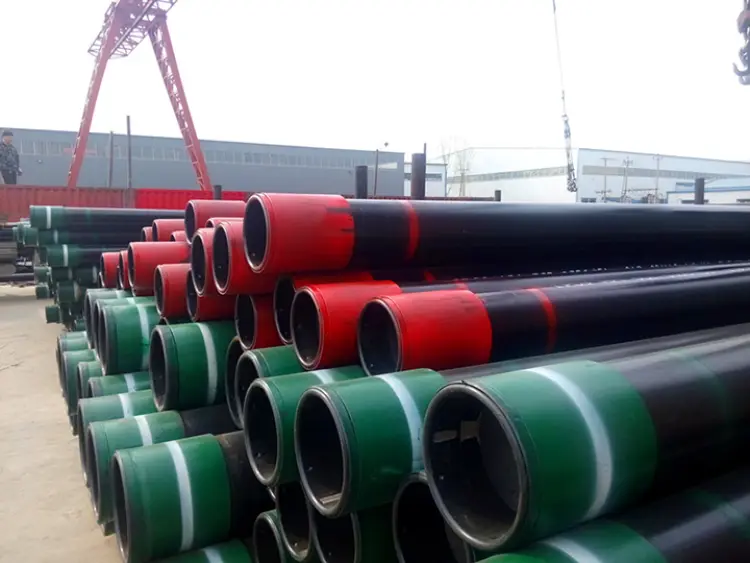
Q345C Steel for SSAW Pipe
Q345C Steel for SSAW Pipe: Properties, Equivalents & Applications
Complete metallurgical profile of Q345C steel grade according to GB/T 1591, including chemical composition, mechanical and physical properties, international equivalents, similar materials, and typical applications for spiral submerged arc welded pipes.
Hot rolling, controlled rolling, normalizing, welding (SAW, GMAW, SMAW), cold bending, machining
- Phone : +8618037372205
- Email : [email protected]
- WhatsApp: Contact via Whtsapp
- WeChat: +8618037372205
Q345C Steel for SSAW Pipe Introduction
Q345C is a Chinese low-alloy high-strength structural steel defined in GB/T 1591-2008. It combines a minimum yield strength of 345 MPa with good weldability, toughness, and cold-forming capabilities. The suffix "C" designates guaranteed Charpy V‑notch impact energy at 0 °C, making it suitable for structural applications exposed to moderate low temperatures. Typical microstructures are fine‑grained ferrite‑pearlite, achieved through controlled rolling or normalizing.
- Used extensively in welded structures, bridges, buildings, and pressure vessels.
- In SSAW (spiral submerged arc welded) pipe production, Q345C hot‑rolled coils are formed into long, large‑diameter pipes with a helical weld seam.
- Provides reliable strength‑to‑weight ratio and ductility, facilitating fabrication and ensuring structural integrity under static and dynamic loads.
Q345C Steel for SSAW Pipe Chemical Composition
The alloy design of Q345C is based on manganese and silicon strengthening with optional microalloying elements (Nb, V, Ti) for grain refinement and precipitation hardening. Low phosphorus and sulfur levels ensure purity and good notch toughness at 0°C. An adequate aluminum content guarantees fine grain structure through aluminium nitride precipitation.
| Element | Specified Value (wt.%) | Remarks |
|---|---|---|
| Carbon (C) | ≤ 0.20 | Strength and hardenability |
| Silicon (Si) | ≤ 0.50 | Deoxidizer, strength contributor |
| Manganese (Mn) | ≤ 1.70 | Primary strengthener and toughness enhancer |
| Phosphorus (P) | ≤ 0.030 | Detrimental to toughness |
| Sulfur (S) | ≤ 0.030 | Improves machinability but reduces ductility |
| Vanadium (V) | ≤ 0.15 | Grain refinement, precipitation strengthening |
| Niobium (Nb) | ≤ 0.07 | Grain refinement, precipitation strengthening |
| Titanium (Ti) | ≤ 0.20 | Grain refinement, deoxidation |
| Aluminum (Al, acid soluble) | ≥ 0.015 | Sufficient for fine grain assurance |
| Nitrogen (N) | ≤ 0.012 | Residual element, may cause brittleness if excessive |
Q345C Steel for SSAW Pipe Thermal and Electrical Physical Properties
These values are representative for Q345C steel at ambient temperature and are not specified in GB/T 1591. They serve as guidelines for thermal and structural analysis. Density is assumed for carbon‑manganese steel. Moduli and thermal expansion influence design for thermal loads, while electrical resistivity affects welding parameters.
| Property | Standard Requirement | Unit | Test Condition |
|---|---|---|---|
| Density (ρ) | ≈ 7850 | kg/m³ | 20°C |
| Modulus of elasticity (E) | ≈ 206 | GPa | 20°C, tension |
| Shear modulus (G) | ≈ 79.3 | GPa | 20°C (calculated from E and ν) |
| Poisson's ratio (ν) | ≈ 0.3 | – | Elastic range |
| Thermal expansion coefficient (α) | ≈ 11.7 × 10⁻⁶ | K⁻¹ | 20–100°C |
| Thermal expansion coefficient (α) | ≈ 12.5 × 10⁻⁶ | K⁻¹ | 20–200°C |
| Thermal expansion coefficient (α) | ≈ 13.5 × 10⁻⁶ | K⁻¹ | 20–400°C |
| Thermal conductivity (λ) | ≈ 48 | W/(m·K) | 20°C |
| Specific heat capacity (cp) | ≈ 470 | J/(kg·K) | 20°C |
| Electrical resistivity (ρe) | ≈ 0.22–0.24 | μΩ·m | 20°C |
Q345C Steel for SSAW Pipe Mechanical Properties
Tensile testing is performed at room temperature on transverse specimens. Yield strength decreases with increasing thickness; elongation is measured on proportional test pieces (original gauge length L₀ = 5.65√S₀). The Charpy V‑notch impact energy at 0°C ensures low‑temperature toughness. Bending test with specified mandrel diameter verifies cold formability.
| Property | Standard Requirement | Unit | Test Condition |
|---|---|---|---|
| Yield strength (ReH) | ≥ 345 | MPa | Thickness ≤ 16 mm |
| Yield strength (ReH) | ≥ 335 | MPa | Thickness >16–40 mm |
| Yield strength (ReH) | ≥ 325 | MPa | Thickness >40–63 mm |
| Yield strength (ReH) | ≥ 315 | MPa | Thickness >63–80 mm |
| Yield strength (ReH) | ≥ 305 | MPa | Thickness >80–100 mm |
| Tensile strength (Rm) | 470–630 | MPa | Thickness ≤ 100 mm |
| Elongation after fracture (A) | ≥ 20 | % | Thickness ≤ 16 mm, L₀=5.65√S₀ |
| Elongation after fracture (A) | ≥ 19 | % | Thickness >16–40 mm |
| Elongation after fracture (A) | ≥ 19 | % | Thickness >40–63 mm |
| Elongation after fracture (A) | ≥ 18 | % | Thickness >63–100 mm |
| Charpy impact energy (KV₂, 0°C) | ≥ 34 | J | Longitudinal, V‑notch, at 0°C |
| Bend test (bend angle 180°) | d = 2a | – | Thickness ≤ 16 mm (a = specimen thickness) |
| Bend test (bend angle 180°) | d = 3a | – | Thickness >16–100 mm |
Q345C Steel for SSAW Pipe Fully Equivalent Material Standards and Substitutable Grades
| Country/Region | Standard | Grade | Remarks |
|---|---|---|---|
| China | GB/T 1591-2008 | Q345C | Original grade, 0°C impact |
| European Union | EN 10025-2:2004 | S355J0 | 0°C impact, 27J minimum, similar strength |
| International | ISO 4950-2:1995 | S355J0 | High yield strength, 0°C impact |
| Japan | JIS G3106:2015 (SM series) | SM490B | 0°C impact, 27J, comparable tensile properties |
| USA | ASTM A572/A572M-21 | Grade 50 [345] with Suppl. S5 (impact at 0°C) | Requires supplementary specification for notch toughness |
Q345C Steel for SSAW Pipe Application Introduction
Q345C is a versatile structural steel widely adopted in welded constructions where strength, moderate low‑temperature toughness, and cost‑effectiveness are essential. The grade is particularly common in China and many export projects. Its combination of formability and weldability makes it a primary choice for SSAW pipes and heavy structural components.
Product Applications: Spiral submerged arc welded (SSAW) pipes for long‑distance pipelines, Structural beams, columns, and trusses for high‑rise buildings, Bridge girders and deck plates, Storage tanks and silos, Pressure vessel shells (for moderate service conditions), Piling pipes and casing for foundation work, Welded machinery frames and heavy‑duty components
Processed into products: SSAW pipe body and welded seam for oil, gas, water transport, Flanges and fittings welded to pipe ends, As‑rolled plates cut, bent, and welded into box girders, Cutouts and stiffeners in ship hulls, Gusset plates and splice plates in bolted connections, Tubular towers and transition pieces in wind turbines
Application industries: Oil and gas transmission, Water supply and sewage, Civil engineering and construction, Bridge engineering, Shipbuilding and marine structures, Offshore platforms and wind energy, Heavy equipment manufacturing
Q345C Steel for SSAW Pipe Similar or Nearby Substitute Material Recommendations
| Country/Region | Standard | Grade | Remarks |
|---|---|---|---|
| China | GB/T 1591-2008 | Q345B | 20°C impact, slightly lower toughness; use when 0°C impact is not required |
| China | GB/T 1591-2008 | Q345D | -20°C impact, better low‑temperature performance for more demanding environments |
| China | GB/T 1591-2018 (new edition) | Q355C | Replacement for Q345C with slightly higher yield strength (355 MPa), 0°C impact |
| European Union | EN 10025-2:2019 | S355J2 | -20°C impact, otherwise similar to S355J0; may be used if lower temperature toughness is needed |
| USA | ASTM A572/A572M-21 | Grade 50 | Without impact testing; must add impact requirement for cold applications |
Notes:
- Q345C is being phased out in favor of Q355C according to GB/T 1591-2018. For new designs, refer to the updated standard.
- When used for SSAW pipe, the strip is typically supplied in as‑rolled or controlled‑rolled condition. Welding consumables should match the base metal strength and toughness requirements.
- Preheating (e.g., 100–150°C) may be required for thicknesses above 30 mm to avoid hydrogen‑induced cracking.
- For sour service (H₂S environment), additional testing and chemistry control per NACE MR0175/ISO 15156 are necessary.
- Dimensional tolerances for plates/coils are governed by GB/T 709, and for SSAW pipes often by API 5L or customer specifications.
- Share



