
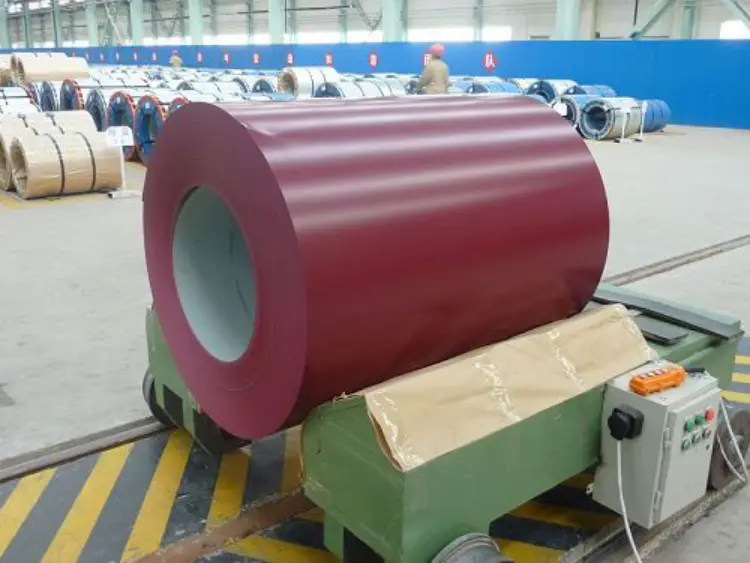
NK Grade E Shipbuilding Steel Coil
NK Grade E Shipbuilding Steel Coil: Properties, Equivalents and Application Data
In-depth material data for NK Grade E shipbuilding steel coil, covering chemical composition, mechanical and physical properties, international equivalent grades, and typical applications in shipbuilding and marine engineering.
Hot rolling, normalizing, thermo-mechanical controlled processing (TMCP), cutting, forming, welding
- Phone : +8618037372205
- Email : [email protected]
- WhatsApp: Contact via Whtsapp
- WeChat: +8618037372205
NK Grade E Shipbuilding Steel Coil Introduction
NK Grade E steel is an ordinary-strength hull structural steel for shipbuilding, specified by Nippon Kaiji Kyokai (ClassNK) in accordance with IACS Unified Requirement W11. It is designed for primary hull structures exposed to low-temperature service conditions, exhibiting good weldability, reliable toughness, and moderate strength. Typically supplied in coil or plate form, the steel is fully killed and aluminum-treated for fine grain refinement.
- Grade: E (highest toughness among ordinary-strength grades A/B/D/E)
- Impact test temperature: -40°C, longitudinal Charpy V-notch energy ≥27 J
- Yield strength: min. 235 MPa for thickness ≤50 mm
- Delivery condition: Normalized or thermo-mechanical controlled processed (TMCP), with class surveyor certification
NK Grade E is widely accepted by all major classification societies under the IACS framework and is used extensively in the construction of oceangoing vessels, offshore structures, and port equipment.
NK Grade E Shipbuilding Steel Coil Chemical Composition
The chemical composition of NK Grade E steel complies with IACS UR W11 and ClassNK rules. The steel is fully killed and treated with aluminum to ensure fine grain structure. Residual elements such as chromium, nickel, copper, and molybdenum are kept within limits to maintain weldability and toughness. Typical ladle analysis values are shown below; product analysis tolerances may apply.
| Chemical Element | Standard Value (wt%) | Remarks |
|---|---|---|
| C | ≤0.18 | Ladle analysis |
| Mn | 0.70~1.50 | Depending on thickness and deoxidation practice |
| Si | ≤0.50 | Killed steel |
| P | ≤0.035 | |
| S | ≤0.035 | |
| Al (acid soluble) | ≥0.015 | Grain refining element; total Al ≥0.020 acceptable |
| Cr | ≤0.20 | Residual element |
| Ni | ≤0.40 | Residual element |
| Cu | ≤0.35 | Residual element |
| Mo | ≤0.08 | Residual element |
| N | ≤0.009 | Typically limited, not mandatory for Grade E |
NK Grade E Shipbuilding Steel Coil Thermal and Electrical Physical Properties
Physical properties for NK Grade E steel are typical of low‑carbon structural steels. Values are representative at room temperature unless otherwise noted and may vary slightly depending on composition, heat treatment, and processing. These data are provided for design calculations and simulations.
| Property | Typical Value | Unit | Test Condition |
|---|---|---|---|
| Density (ρ) | 7850 | kg/m³ | At 20°C |
| Modulus of elasticity (E) | 210 | GPa | At 20°C |
| Shear modulus (G) | ~80 | GPa | At 20°C, estimated |
| Poisson's ratio (ν) | 0.3 | — | At 20°C |
| Thermal expansion coefficient (α) | 11.1×10⁻⁶ | /K | 20~100°C |
| Thermal expansion coefficient (α) | 12.2×10⁻⁶ | /K | 20~200°C |
| Thermal expansion coefficient (α) | 12.9×10⁻⁶ | /K | 20~300°C |
| Thermal conductivity (λ) | 53 | W/(m·K) | At 20°C |
| Specific heat capacity | 460 | J/(kg·K) | 20~100°C |
| Electrical resistivity (ρ_e) | 0.17 | μΩ·m | At 20°C |
NK Grade E Shipbuilding Steel Coil Mechanical Properties
Mechanical properties are verified by tensile, bend, and impact tests according to ClassNK rules and IACS UR W11. Requirements depend on product thickness. Charpy V-notch impact tests are performed at -40°C in the longitudinal direction. Below are the minimum required values for different thickness ranges.
| Property | Specified Value | Unit | Test Condition |
|---|---|---|---|
| Yield strength (ReH) | ≥235 | MPa | Thickness ≤50 mm, transverse or longitudinal |
| Yield strength (ReH) | ≥225 | MPa | 50 < thickness ≤70 mm |
| Yield strength (ReH) | ≥215 | MPa | 70 < thickness ≤100 mm |
| Tensile strength (Rm) | 400~520 | MPa | Thickness ≤100 mm |
| Elongation (A) | ≥22 | % | Thickness ≤50 mm, gauge length 5.65√So |
| Elongation (A) | ≥22 | % | 50 < thickness ≤70 mm |
| Elongation (A) | ≥22 | % | 70 < thickness ≤100 mm |
| Bend test (180°) | 3a (no cracks) | — | Thickness ≤50 mm, bend diameter = 3×thickness |
| Bend test (180°) | 4a (no cracks) | — | 50 < thickness ≤70 mm |
| Bend test (180°) | 5a (no cracks) | — | 70 < thickness ≤100 mm |
| Charpy impact (KV, -40°C) | ≥27 | J | Thickness ≤50 mm, longitudinal, average of 3 specimens |
| Charpy impact (KV, -40°C) | ≥27 | J | 50 < thickness ≤70 mm, longitudinal |
| Charpy impact (KV, -40°C) | ≥27 | J | 70 < thickness ≤100 mm, longitudinal |
NK Grade E Shipbuilding Steel Coil Completely Equivalent Material Standards and Replaceable Grades
| Country/Region | Standard | Grade | Remarks |
|---|---|---|---|
| International (IACS) | IACS UR W11 | Grade E | Unified requirement for ordinary‑strength hull structural steel |
| Japan | NK Rules Part K | Grade E | Nippon Kaiji Kyokai (ClassNK) |
| China | CCS Rules | Grade E | China Classification Society |
| China | GB/T 712 | Grade E | National shipbuilding steel standard |
| USA | ABS Rules | Grade E | American Bureau of Shipping |
| USA | ASTM A131/A131M | Grade E | Structural steel for ships |
| UK | LR Rules | Grade E | Lloyd's Register |
| France | BV Rules | Grade E | Bureau Veritas |
| Germany/Norway | DNV Rules | E (NV E) | DNV (formerly DNV GL) |
| Korea | KR Rules | Grade E | Korean Register |
| Italy | RINA Rules | Grade E | Registro Italiano Navale |
NK Grade E Shipbuilding Steel Coil Application Introduction
NK Grade E steel is purpose‑designed for ship and offshore structures subjected to low ambient and service temperatures. Its good notch toughness at -40°C makes it suitable for hull members above the waterline and for internal structures in cold regions. Typical processing includes flame cutting, plasma cutting, bending, and welding by all conventional methods. The steel is delivered with class inspection certificates, enabling direct use in classification‑governed projects.
Product Applications: Ocean‑going cargo vessels, Tankers and bulk carriers, Container ships, Passenger ferries and cruise ships, Offshore platforms and jackets, Deckhouses and superstructures, Hatch covers and masts, Docks and floating cranes
Processed into products: Main hull shell plating (side, bottom, bilge), Strength decks and inner bottom plates, Transverse and longitudinal bulkheads, Web frames, stringers, and girders, Stiffeners and brackets, Rudder and stern frame components, Foundation plates for machinery, Hatch coamings and deep frames
Application industries: Shipbuilding, Offshore oil & gas, Marine engineering, Port and harbor machinery, Renewable energy (offshore wind foundations)
NK Grade E Shipbuilding Steel Coil Similar/Comparable Alternative Material Recommendations
| Country/Region | Standard | Grade | Remarks |
|---|---|---|---|
| Japan | JIS G3106 | SM400C | Similar strength level; impact test at 0°C; requires supplementary class approval for ship hull use |
| European Union | EN 10025‑2 | S235J2 | Comparable yield and tensile; impact test at -20°C; not ship‑specific, needs additional certification for marine application |
| International | ISO 630‑2 | Fe360B | Similar tensile strength; impact temperature 0°C; not directly approved for ship construction without classification |
| China | GB/T 700 | Q235D | Closest general structural steel grade; impact at -20°C; may be considered for non‑critical structures if approved |
Notes:
NK Grade E steel must be certified by a ClassNK surveyor, with mill test certificates documenting chemical analysis, tensile properties, bend test results, and Charpy V‑notch impact values at -40°C. The steel is typically supplied in the normalized condition or as thermo‑mechanically controlled processed (TMCP) material; controlled rolling alone is not sufficient for Grade E unless specially approved. For thicknesses above 100 mm, separate agreement with the classification society is required. Weldability: Excellent with standard welding processes (SMAW, SAW, GMAW, FCAW) using appropriate low‑hydrogen consumables and preheat when necessary. No post‑weld heat treatment is generally needed for ordinary‑strength grades. Care should be taken to follow class‑approved welding procedures and to ensure adequate toughness of the heat‑affected zone.
- Share



