
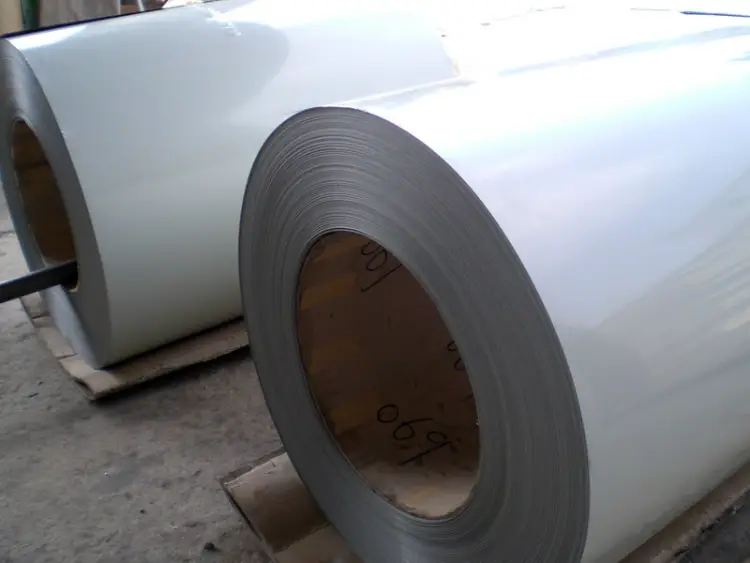
NK D63 Shipbuilding Steel Coil
NK D63 Shipbuilding Steel Coil - High-Strength Marine Grade for Extreme Loads
Comprehensive material data sheet for NK D63 shipbuilding steel coil according to Nippon Kaiji Kyokai (ClassNK) rules, including chemical composition, mechanical and physical properties, equivalent grades, and applications in marine and offshore engineering.
Hot rolling, controlled rolling, normalizing, quenching and tempering, welding, forming, cutting
- Phone : +8618037372205
- Email : [email protected]
- WhatsApp: Contact via Whtsapp
- WeChat: +8618037372205
NK D63 Shipbuilding Steel Coil Introduction
NK D63 is a high-strength shipbuilding steel grade certified by Nippon Kaiji Kyokai (ClassNK), designed for critical structural components in ships and offshore structures. With a minimum yield strength of 630 MPa, it offers exceptional strength-to-weight ratio, excellent weldability, and good toughness at low temperatures. This grade is subjected to rigorous impact testing at -20℃, ensuring reliable performance in cold marine environments. The steel is typically supplied as hot-rolled coils or plates in normalized, quenched and tempered condition, meeting the stringent requirements of IACS UR W11 and ClassNK rules. Its fine-grained microstructure and controlled alloying elements provide high resistance to brittle fracture and fatigue, making it suitable for heavy-load-bearing applications such as hull girders, decks, and bottom structures of large vessels.
NK D63 Shipbuilding Steel Coil Chemical Composition
The chemical composition requirements for NK D63 as per ClassNK rules, with emphasis on elements contributing to strength and toughness. Maximum limits are specified for impurities; microalloying elements like niobium, vanadium, and titanium are often added to refine grain size. Carbon equivalent (CEV) is controlled to ensure good weldability.
| Element | Standard Value | Remarks |
|---|---|---|
| Carbon (C) | ≤ 0.20 | max |
| Silicon (Si) | 0.10 – 0.80 | typical range |
| Manganese (Mn) | 0.90 – 1.70 | typical range |
| Phosphorus (P) | ≤ 0.030 | max |
| Sulfur (S) | ≤ 0.030 | max |
| Chromium (Cr) | ≤ 0.50 | max, often residual |
| Nickel (Ni) | ≤ 0.50 | max, optional for toughness |
| Molybdenum (Mo) | ≤ 0.30 | max, optional |
| Copper (Cu) | ≤ 0.35 | max, residual |
| Aluminum (Al, total) | ≥ 0.020 | minimum for grain refinement; acid soluble Al typically ≥0.015 |
| Niobium (Nb) | ≤ 0.05 | optional microalloy |
| Vanadium (V) | ≤ 0.10 | optional microalloy |
| Titanium (Ti) | ≤ 0.05 | optional microalloy |
| Boron (B) | ≤ 0.0005 | if added, controlled |
| Carbon Equivalent (CEV) | ≤ 0.55 | typically, based on CEV = C + Mn/6 + (Cr+Mo+V)/5 + (Ni+Cu)/15 |
NK D63 Shipbuilding Steel Coil Thermal and Electrical Physical Properties
Physical properties at ambient temperature (20°C) for quenched and tempered high-strength steel with similar composition and strength level. Actual values may vary based on exact heat treatment and composition. These data are indicative and suitable for engineering design calculations.
| Property | Standard Value | Unit | Test Condition |
|---|---|---|---|
| Density (ρ) | 7.85 | g/cm³ (kg/dm³) | At 20°C |
| Modulus of Elasticity (E) | 205 | GPa | At 20°C, tensile |
| Shear Modulus (G) | 80 | GPa | Estimated from E and Poisson's ratio |
| Poisson's Ratio (ν) | 0.30 | – | At 20°C, in elastic range |
| Thermal Expansion Coefficient (α) | 11.5 × 10⁻⁶ | /K | 20°C to 100°C |
| Thermal Conductivity (λ) | 42 | W/(m·K) | At 20°C |
| Specific Heat Capacity (c) | 460 | J/(kg·K) | At 20°C |
| Electrical Resistivity (ρₑ) | 0.25 | µΩ·m | At 20°C |
NK D63 Shipbuilding Steel Coil Mechanical Properties
The mechanical properties of NK D63 are verified through tensile and impact testing at specified temperatures. Minimum yield and tensile strengths are guaranteed for thicknesses generally up to 100mm. Elongation and impact energy values may vary with thickness and specimen orientation; the values below are typical for material up to 50mm thickness.
| Property | Standard Requirement | Unit | Test Condition |
|---|---|---|---|
| Yield Strength (ReH) | ≥ 630 | MPa | Room temperature, transverse specimens for plate ≤ 50mm |
| Tensile Strength (Rm) | 720 – 930 | MPa | Room temperature |
| Elongation (A) | ≥ 15 | % | Gauge length 5.65√S₀ (5d), transverse, ≤ 50mm |
| Impact Energy (KV2) | ≥ 47 (average), ≥ 34 (individual) | J | -20°C, longitudinal, 10x10mm Charpy V-notch |
| Bend Test | 180° bending on mandrel diameter 4a (a=specimen thickness), no cracks | – | Room temperature, transverse specimens |
NK D63 Shipbuilding Steel Coil Fully Equivalent Material Standards and Substitute Grades
| Country/Region | Standard | Grade | Remarks |
|---|---|---|---|
| International (IACS) | IACS UR W11/W31 | EH63 (provisional) | Class societies may recognize EH63 as a 630 MPa yield grade; NK D63 is covered under ClassNK specific rules. |
| Norway/Germany | DNV GL Rules | NV D63 | Direct equivalent if approved by DNV. |
| USA | ABS Rules | ABS EH63 | American Bureau of Shipping may certify EH63 for high-strength steel. |
| UK | Lloyd's Register Rules | LR DH63 | Lloyd's equivalent high-strength grade for shipbuilding. |
| France | Bureau Veritas Rules | BV DH63 | BV equivalent grade. |
NK D63 Shipbuilding Steel Coil Application Introduction
NK D63 steel is engineered for high-stress marine and offshore structures where weight savings and structural integrity are critical. Its high yield strength allows reduced material thickness, leading to lighter structures without compromising safety. Typical applications include:
- Shipbuilding: main hull plates, deck plating, bottom shell, bulkheads, and longitudinal stiffeners in large container ships, bulk carriers, and naval vessels.
- Offshore engineering: legs of jack-up rigs, topside modules, crane pedestals, and heavy-lift structures subjected to dynamic loading.
- Pressure vessels: high-pressure shell plates where toughness and strength are required under low-temperature service.
- Bridge and building construction: heavy-duty welded sections for long-span bridges and high-rise buildings, often after requalification.
This grade is readily formable, weldable with low-hydrogen procedures, and compatible with standard steel cutting and processing methods.
Product Applications: Vessel hull plates and stiffeners, Jack-up rig legs and spudcans, Offshore platform decks and modules, Heavy-lift crane booms, Piles for offshore wind turbines
Processed into products: Longitudinal and transverse frames, Bulkhead plates, Keel and bottom plates, Deck stringer plates, Crane pedestal forgings and rolled rings
Application industries: Shipbuilding and marine engineering, Offshore oil and gas, Renewable energy (offshore wind foundations), Heavy machinery and crane manufacturing, Pressure vessel fabrication
NK D63 Shipbuilding Steel Coil Similar or Alternative Material Recommendations
| Country/Region | Standard | Grade | Remarks |
|---|---|---|---|
| Europe | EN 10025-6 | S690Q/QL/QL1 | Quenched and tempered structural steel with yield 690 MPa, used in heavy construction. Requires additional certification for marine use. |
| Japan | JIS G 3106 | SM570 | High-tensile strength steel for welded structures, yield 460 MPa; not as strong, but similar weldability. For 630 MPa level, proprietary grades like JFE-HITEN 610 or NSHT 63 may be used. |
| USA | ASTM A514/A514M | Grade B, E, F, H, Q (e.g., A514 Gr Q) | Quenched and tempered alloy steel plate with min yield 690 MPa, suitable for structural applications; not specific to shipbuilding but may be accepted with additional testing. |
| China | GB/T 16270 | Q690D/Q690E | High strength structural steel plates with min yield 690 MPa, comparable in strength but may need toughness verification for marine use. |
Notes:
All data are based on publicly available ClassNK Rules and typical product brochures. Actual properties must be confirmed by the mill certificate. For critical applications, supplementary requirements like through-thickness properties (Z35) or CTOD testing may be specified. Welding consumables should match the strength and toughness level, and preheating may be required based on CEV. Delivery conditions include ClassNK survey and stamping unless otherwise agreed. HK D63 may also be ordered with normalizing rolling (N) or thermo-mechanical rolling (M) if specified.
- Share



