
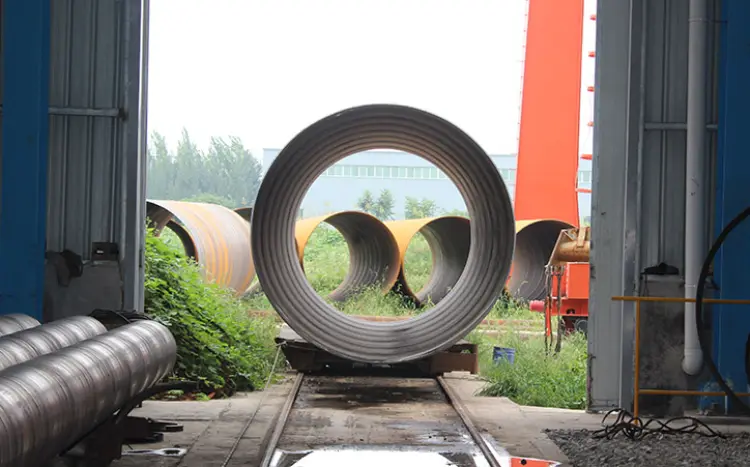
L390 (API 5L X56) PSL2 LSAW Steel Pipe
L390 (API 5L X56) PSL2 LSAW Steel Pipe for High-Strength Oil & Gas Transmission
Comprehensive material data for L390 PSL2 LSAW pipeline steel manufactured to GB/T 9711-2011, including chemical, mechanical, thermal properties and international equivalents.
Thermo-Mechanical Controlled Processing (TMCP) or Normalizing, followed by UOE/JCOE forming and multi-wire submerged arc welding; cold expansion may be applied.
- Phone : +8618037372205
- Email : [email protected]
- WhatsApp: Contact via Whtsapp
- WeChat: +8618037372205
L390 PSL2 LSAW Steel Pipe Introduction
L390 (also designated X56 in API 5L) is a micro-alloyed high-strength low-alloy (HSLA) steel grade primarily used for longitudinal submerged arc welded (LSAW) line pipes in oil and gas transmission. Under GB/T 9711-2011 PSL2, it offers enhanced toughness, stricter chemical limits, and mandatory fracture toughness requirements compared to PSL1. The steel is typically supplied in thermo-mechanically controlled processed (TMCP) or normalized condition, ensuring a fine-grained microstructure with balanced strength (minimum yield 390 MPa) and excellent low-temperature toughness. It is suitable for cold regions and sour service when combined with specific hardness and chemistry restrictions. L390 LSAW pipes are produced from thermomechanical rolled plates, formed by UOE or JCOE processes, and welded with multiple submerged arc passes, offering high dimensional accuracy and structural integrity for long-distance pipelines, offshore risers, and structural applications.
L390 PSL2 LSAW Steel Pipe Chemical Composition
The chemical composition of L390 (PSL2) shall comply with the maximum limits given in GB/T 9711-2011, with additional restrictions on carbon equivalent (CEV) and potentially cracking parameter (Pcm) to ensure weldability and sour service suitability. Typical values for microalloying elements are shown; the sum of Nb+V+Ti is limited to ≤ 0.15%. CEV maximum is 0.43% (for general service) and Pcm may be specified for sour conditions.
| Chemical Element | Specified Value (max unless range) | Remarks |
|---|---|---|
| C | 0.22 | If C > 0.12, CEV limits apply; lower C for sour service |
| Si | 0.45 | Deoxidizing element, limited for weldability |
| Mn | 1.60 | May be lower for thick-wall pipes to reduce CEV |
| P | 0.025 | Maximum for PSL2; lower values improve toughness |
| S | 0.015 | Maximum for PSL2; lower required for HIC-resistant grades |
| V | 0.10 | Microalloying grain refiner and precipitation strengthener |
| Nb | 0.05 | Grain refinement and controlled rolling aid |
| Ti | 0.04 | Deoxidation and grain size control; often added with low S |
| Al (total) | 0.015 - 0.060 | Typically fully killed steel; fine grain requirement |
| N | 0.012 | Limited to avoid strain ageing |
| Cu | 0.50 | Residual element limit; may be higher for weathering applications |
| Ni | 0.50 | Residual element limit |
| Cr | 0.50 | Residual element limit; intentional additions may increase strength |
| Mo | 0.50 | Residual element limit; may be added for strength in thick walls |
| CEV (max) | 0.43 | CEV = C + Mn/6 + (Cr+Mo+V)/5 + (Ni+Cu)/15 |
| Pcm (optional) | 0.25 | Pcm = C + Si/30 + Mn/20 + Cu/20 + Ni/60 + Cr/20 + Mo/15 + V/10 + 5B |
L390 PSL2 LSAW Steel Pipe Physical Properties
Thermal and electrical properties are not specified in the pipe standard but are standardized for HSLA steels similar to L390. Values are given for room temperature unless otherwise noted. High-temperature properties like thermal expansion and conductivity change with temperature and are provided in ranges.
| Property | Typical Value | Unit | Test Condition / Temperature |
|---|---|---|---|
| Density (ρ) | 7.85 | g/cm³ | Room temperature |
| Elastic Modulus (E) | 207 | GPa | Room temperature, tensile |
| Shear Modulus (G) | 79.6 | GPa | Calculated (E / (2(1+ν))) |
| Poisson's Ratio (ν) | 0.30 | – | Room temperature |
| Thermal Expansion Coeff. (α) | 11.7 - 12.4 | 10⁻⁶/K | From 20 °C to 100 °C (typical range for mild steel) |
| Thermal Expansion Coeff. (α) | 12.5 - 13.1 | 10⁻⁶/K | From 20 °C to 300 °C |
| Thermal Conductivity (λ) | 52 | W/(m·K) | At 20 °C |
| Thermal Conductivity (λ) | 48 | W/(m·K) | At 100 °C |
| Specific Heat Capacity | 460 - 490 | J/(kg·K) | Room temperature (approx. 460 at 20 °C, increasing with temperature) |
| Specific Electrical Resistivity (ρ_e) | 0.15 - 0.20 | µΩ·m | At 20 °C (typical for carbon-manganese steel) |
L390 PSL2 LSAW Steel Pipe Mechanical Properties
Tensile and impact properties for L390 PSL2 LSAW pipes are tested on specimens taken from the pipe body in the transverse direction (flattened specimens). Requirements depend on wall thickness and specified test temperature. PSL2 imposes minimum average Charpy V-notch impact energy values and permits no single value below 75% of the minimum average. Guided bend tests are performed on both face and root bends of the weld to verify integrity.
| Property | Specified Value | Unit | Test Condition / Remarks |
|---|---|---|---|
| Yield Strength (ReH) | 390 - 540 | MPa | Transverse strip test, 0.2% offset or 0.5% total extension (Rt0.5); upper limit for PSL2 typically Rt0.5 ≤ 540 MPa |
| Tensile Strength (Rm) | 490 - 760 | MPa | Transverse; minimum 490 MPa; maximum depends on pipe grade and wall thickness |
| Elongation (A) | ≥ 22 (typical minimum) | % | Gauge length 50 mm (2 in), transverse specimen; exact min depends on formula A50 = 1950 * (A x,0)^0.2 / Rm^0.9, but typically approx. 22% for L390 |
| Yield/Tensile Ratio (Rt0.5/Rm) | ≤ 0.93 | – | PSL2 requirement for pipe body transverse; may be ≤ 0.90 for strain-based design |
| Charpy Impact Energy (KV at 0 °C) | ≥ 27 (average of 3) / ≥ 20 (single) | J | Full-size specimen (10x10 mm), transverse direction, test at 0 °C; for other temperatures, values adjusted; PSL2 requires min average and single minimum |
| Charpy Impact Energy (KV at -10 °C) | ≥ 27 (or as agreed) | J | If lower temperature specified; some projects require -10 °C or colder |
| Shear Area (DWTT, if applicable) | ≥ 85% (at test temperature) | % | Drop Weight Tear Test on pipe body specimens required for gas lines ≥ 508 mm OD; temperature as per specification |
| Guided Bend Test (Face & Root) | No crack > 3 mm | – | Bend angle 180°, former diameter per standard (e.g., 3T for wall ≤ 12.7 mm); weldment integrity check |
L390 PSL2 LSAW Steel Pipe Directly Equivalent Standards and Substitute Grades
| Country/Region | Standard | Grade | Remarks |
|---|---|---|---|
| International | ISO 3183:2019 | L390 (PSL 2) | Same steel grade, PSL2 requirements; LSAW pipe covered |
| USA | API Spec 5L (46th Ed.) | X56 (PSL2) | Direct equivalent; L390 is the metric designation, X56 is US customary unit designation |
| Europe | EN 10208-2:2009 | L390ME | Seam pipeline pipes; M indicates TMCP delivery; ME for enhanced grades |
| Russia / CIS | GOST R 52079-2003 | K56 (К56) | Strength class 56; similar chemical and mechanical requirements |
L390 PSL2 LSAW Steel Pipe Application Introduction
L390 (X56) PSL2 LSAW pipes are designed for large-diameter, high-pressure oil and gas transmission lines and structural purposes. Their high strength-to-weight ratio, controlled chemistry, and excellent low-temperature toughness make them suitable for demanding environments, including arctic, sour, and offshore conditions. The product is typically supplied with beveled ends for welding, along with internal/external coatings if required.
Product Applications: Spiral and straight seam welded pipe (LSAW) in sizes up to 56 inches (1422 mm) OD., Coated line pipe (3LPE, 3LPP, FBE) for buried or immersed service., Offshore riser pipe with high fatigue resistance and dimensional tolerance., Structural hollow sections (square/rectangular) made from similar steel but not covered by this standard.
Processed into products: Pipe line segments (12 m or 24 m lengths) with bevel ends., Induction bends and cold-formed elbows (after hot bending, may require normalizing)., Tees, reducers, and weldolets made from forged or rolled L390 material., Flanges and weld neck connections in pipeline systems (material often also meets ASTM A694 F52 or F60)., Pressure vessel shells (if subjected to supplementary qualification as per ASME BPVC).
Application industries: Oil and Gas Exploration and Production: long-distance onshore and subsea pipelines for crude oil, natural gas, and refined products., Petrochemical: process piping in refineries and chemical plants, especially for high-pressure service., Marine and Offshore: risers, platform structural members, conductor casings, and jacket legs., Civil and Infrastructure: piling, bridge supports, water transmission mains, tunnel linings., Power Generation: penstocks, cooling water lines, and containment shells.
L390 PSL2 LSAW Steel Pipe Similar and Alternative Materials for Substitution
| Country/Region | Standard | Grade | Remarks |
|---|---|---|---|
| International | API 5L / ISO 3183 | X52 (L360) | Lower strength grade; may be substituted if design allows lower yield strength; better weldability |
| International | API 5L / ISO 3183 | X60 (L415) | Higher strength grade; can replace L390 in some designs if toughness requirements are met; may require thicker wall for same pressure rating due to higher strength |
| Europe | EN 10208-2 | L360ME (X52) | Lower strength alternative; similar chemical composition but lower Mn and alloying |
| China | GB/T 9711-2011 | L360 (PSL2) | Next lower grade; suitable for non-critical applications where 390 MPa yield is not mandatory |
| China | GB/T 9711-2011 | L415 (PSL2) | Next higher grade; may increase cost but could allow down-gauging; verify sour service restrictions |
Notes:
Sour Service Consideration: For hydrogen sulfide (H2S) containing environments, L390 material must satisfy additional NACE MR0175/ISO 15156 requirements, including strict hardness limits (e.g., ≤ 250 HV10), lower carbon content, and specific sulfide stress cracking tests (SSC). Supplementary ordering conditions per GB/T 9711-2011 Annex H or API 5L Annex H are recommended. Weldability: Because the CEV is ≤ 0.43, preheating is generally not required for wall thicknesses below 25 mm, but hydrogen control and low-hydrogen consumables are essential. Post-weld heat treatment (PWHT) may be specified for thick-wall or high-restraint joints.
- Share



