
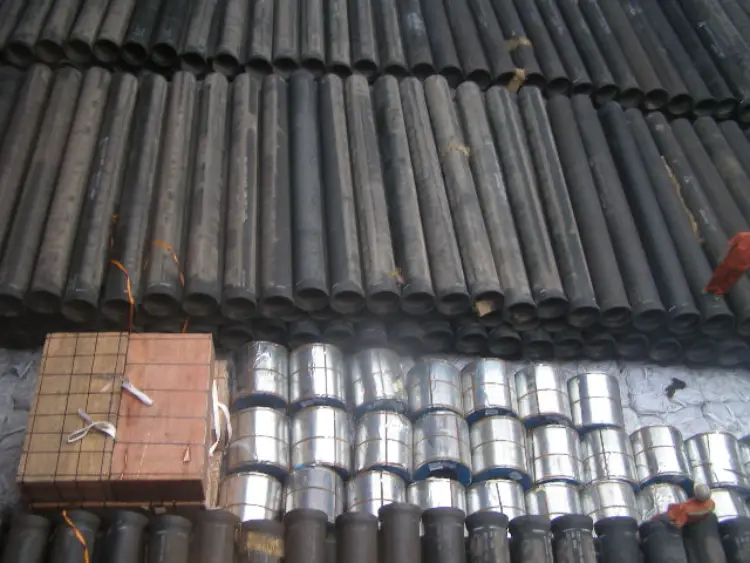
KR F63 Shipbuilding Steel Coil
KR F63 Shipbuilding Steel Coil: High-Strength Hull Structural Plate (63 ksi Yield)
Complete material data for KR F63 shipbuilding steel coil: chemical composition, mechanical properties, physical properties, and international equivalents for marine structural applications.
Hot rolling, cold rolling (limited), normalizing, TMCP, quenching & tempering, welding, cutting, bending, forming
- Phone : +8618037372205
- Email : [email protected]
- WhatsApp: Contact via Whtsapp
- WeChat: +8618037372205
KR F63 Shipbuilding Steel Coil Introduction
KR F63 is a high-strength shipbuilding steel certified by the Korean Register (KR). It belongs to the category of hull structural steels with a minimum yield strength of 63 ksi (approximately 434 MPa). This fine-grain, fully killed steel is designed for critical ship and offshore structural components that demand high load-bearing capacity, excellent weldability, and guaranteed low-temperature impact toughness (F-grade, -60°C). It is typically supplied in normalized, thermomechanically rolled (TMCP), or quenched and tempered condition. The steel combines strength with good ductility and fatigue resistance, making it suitable for heavy-duty applications in container ships, bulk carriers, and offshore platforms.
KR F63 Shipbuilding Steel Coil Chemical Composition
The chemical composition of KR F63 is controlled to achieve high strength and excellent toughness at -60°C. The steel uses a low-carbon, fine-grain design with microalloying elements (Nb, V, Ti) for precipitation and grain refinement. The alloy content is optimized for good weldability and resistance to brittle fracture. The following table shows the maximum limits unless a range is specified, based on typical FH420 requirements according to IACS UR W11 and KR rules.
| Element | Specified Value (max unless range) | Remarks |
|---|---|---|
| Carbon (C) | ≤ 0.18 | Low carbon for weldability |
| Silicon (Si) | ≤ 0.50 | Killed steel practice |
| Manganese (Mn) | 0.90 - 1.60 | Provides strength and hardenability |
| Phosphorus (P) | ≤ 0.025 | Control for toughness |
| Sulfur (S) | ≤ 0.025 | Minimizes inclusions |
| Copper (Cu) | ≤ 0.35 | Residual element |
| Chromium (Cr) | ≤ 0.20 | Residual element |
| Nickel (Ni) | ≤ 0.40 | Residual element; beneficial for toughness |
| Molybdenum (Mo) | ≤ 0.08 | Residual element |
| Aluminum (Alt) | ≥ 0.020 | Grain refining element (acid-soluble) |
| Niobium (Nb) | ≤ 0.05 | Microalloy (grain refinement, precipitation strengthening) |
| Vanadium (V) | ≤ 0.10 | Microalloy (precipitation strengthening) |
| Titanium (Ti) | ≤ 0.02 | Microalloy (nitride formation, grain refinement) |
| Nitrogen (N) | ≤ 0.009 | Controlled to avoid strain aging |
KR F63 Shipbuilding Steel Coil Physical Properties
The following physical properties are typical for low-carbon microalloyed FH420 grade steel at room temperature (unless otherwise stated). These values are not mandatory in the specification but are useful for engineering calculations such as thermal stress analysis, heat transfer, and electrical conductivity. Actual values may vary slightly depending on exact composition and heat treatment condition.
| Property | Typical Value | Unit | Test Condition / Remarks |
|---|---|---|---|
| Density (ρ) | 7.85 | g/cm³ | Room temperature |
| Elastic Modulus (E) | 200 - 210 | GPa | Room temperature |
| Shear Modulus (G) | ≈ 80 | GPa | Calculated from E and Poisson ratio |
| Poisson's Ratio (ν) | 0.30 | - | Elastic range |
| Thermal Expansion Coefficient (α) | 11.7 | 10−⁶/K | 20 - 100°C |
| Thermal Expansion Coefficient (α) | 12.5 | 10−⁶/K | 20 - 300°C |
| Thermal Conductivity (λ) | ≈ 50 | W/(m⋅K) | At 20°C |
| Specific Heat Capacity (cp) | ≈ 460 | J/(kg⋅K) | At 20°C |
| Electrical Resistivity (ρe) | ≈ 0.20 | Ω⋅mm²/m | At 20°C |
KR F63 Shipbuilding Steel Coil Mechanical Properties
Mechanical properties for KR F63 (FH420 class) are mandatory values from KR Rules and IACS UR W11. The steel must meet the specified yield strength, tensile strength, elongation, and impact energy requirements at -60°C. Values depend on the product thickness. Testing is performed on transverse or longitudinal specimens as per the standard; the table below shows properties for longitudinal direction (transverse values for impact energy are higher minimums). Bend test mandates no cracks after 180° bending.
| Property | Required Value | Unit | Test Condition / Thickness (t) |
|---|---|---|---|
| Yield Strength (ReH) | ≥ 420 | MPa | t ≤ 50 mm |
| Yield Strength (ReH) | ≥ 400 | MPa | 50 < t ≤ 70 mm |
| Yield Strength (ReH) | ≥ 390 | MPa | 70 < t ≤ 100 mm |
| Tensile Strength (Rm) | 530 - 680 | MPa | t ≤ 100 mm |
| Elongation (A) | ≥ 18 | % | Gauge length L0 = 5.65√S0; t ≤ 50 mm |
| Elongation (A) | ≥ 18 | % | Gauge length L0 = 5.65√S0; 50 < t ≤ 70 mm |
| Elongation (A) | ≥ 17 | % | Gauge length L0 = 5.65√S0; 70 < t ≤ 100 mm |
| Bend Test (180°) | No cracks | - | t ≤ 25 mm, bend diameter = 3t |
| Bend Test (180°) | No cracks | - | 25 < t ≤ 50 mm, bend diameter = 4t |
| Charpy V-notch Impact (KV2) | ≥ 34 (avg) / ≥ 24 (single) | J | Longitudinal, -60°C; all thicknesses |
| Charpy V-notch Impact (KV2) | Supplier option: 27 (avg) / 20 (single) | J | Transverse, -60°C (if agreed) |
KR F63 Shipbuilding Steel Coil Fully Equivalent Material Standards and Substitutable Grades
Grades and standards that are fully equivalent to KR F63 in terms of chemical composition, strength level, and -60°C impact toughness. These correspond to the FH420 designation per IACS UR W11, which is adopted by all major classification societies. They can be directly substituted, subject to thickness range and delivery condition agreement.
| Country / Region | Standard | Grade | Remarks |
|---|---|---|---|
| South Korea | KR Rules Pt2 Ch2 Sec1 | KR FH420 | Native classification; same as KR F63 designation in some mills |
| International (IACS) | IACS UR W11 | FH420 | Unified requirement for FH420 grade |
| USA | ASTM A131 / A131M | FH420 | Formerly Grade FH42 or FH63 depending on ksi designation |
| USA (ABS) | ABS Rules Part 2 | FH420 | American Bureau of Shipping equivalent |
| Norway/Germany (DNV) | DNV Rules Pt2 Ch2 | F420 | DNV D-grade toughness level (-60°C) with 420 MPa yield |
| France (BV) | BV Rules Pt2 Ch1 | FH420 | Bureau Veritas equivalent |
| UK (LR) | LR Rules Pt2 Ch1 | FH420 | Lloyd's Register equivalent |
| Japan (NK) | NK Rules Part K | FH420 | ClassNK equivalent |
| China (CCS) | CCS Rules Pt2 Ch1 | F420 | China Classification Society designation |
| Italy (RINA) | RINA Rules Pt2 Ch1 | F420 | Registro Italiano Navale equivalent |
KR F63 Shipbuilding Steel Coil Application Introduction
KR F63 is engineered for heavy-duty marine structures where high strength must be balanced with weight savings and long-term reliability. Its F-grade (-60°C) toughness makes it particularly suitable for ships operating in cold climates and ice regions. The steel is delivered in coiled form for efficient processing into cut parts, welded sub-assemblies, and formed profiles.
Product Applications: Hull side and bottom shell plates, Deck stringer plates and sheer strakes, Transverse bulkheads and watertight divisions, Longitudinal stiffeners and girders, Offshore module structural frames, Crane pedestals and heavy lifting beam flange plates
Processed into products: Hull plate cut parts for double hull construction, Stiffener profiles (T-bars, angle bars, bulb flats) produced from coiled strip, Welded box girders and truss members for platforms, Bracket plates and tripping brackets, Mooring foundation plates and chain stopper supports, Cold-formed corrugated bulkhead sections, Laser and plasma cut structural panels
Application industries: Commercial shipbuilding (container ships, bulk carriers, tankers, LNG carriers), Naval shipbuilding (auxiliary vessels, icebreakers), Offshore engineering (FPSO hulls, platform superstructures, jack-up legs), Oil & gas (deck structures, flare booms, helidecks), Marine equipment manufacturing
KR F63 Shipbuilding Steel Coil Similar / Alternative Materials
These grades have similar chemistry and application profiles but different strength or toughness levels. They may be considered when design requirements are adjusted.
| Country / Region | Standard | Grade | Remarks |
|---|---|---|---|
| South Korea | KR Rules | FH36 | Lower yield strength (355 MPa), same -60°C toughness; suitable for less stressed areas |
| South Korea | KR Rules | FH40 | 390 MPa yield, same toughness; intermediate strength option |
| South Korea | KR Rules | FH460 | Higher yield (460 MPa), same toughness; for more demanding structural applications |
| International | IACS UR W11 | EH420 | 420 MPa yield but impact at -40°C (E-grade); can be considered if operating temperature permits |
| International | IACS UR W11 | EH36 | 355 MPa yield with -40°C toughness; widely used, lower cost alternative |
| USA | ASTM A131 | AH36 / DH36 / EH36 | 355 MPa yield; toughness levels A (0°C), D (-20°C), E (-40°C); may substitute for non-arctic service |
| Europe | EN 10025-4 | S420ML | 420 MPa thermomechanical rolled structural steel; -50°C impact; not explicitly for marine but close mechanicals |
Notes:
- Welding: Use low-hydrogen processes and appropriate preheat/interpass temperatures according to the filler metal manufacturer's recommendations and approved welding procedures. TMCP grades generally require lower preheat than normalized grades of equivalent carbon equivalent.
- Cold forming: Due to its high strength, allow for springback; minimum bend radii should follow the classification society's guidelines (typically 3t for transverse bends and 4t for longitudinal bends depending on thickness).
- Corrosion protection: The material is not inherently corrosion resistant; coating and cathodic protection are necessary for marine service. Shop priming is commonly applied to coils before fabrication.
- Certification: All coils must be supplied with KR inspection certificates (type 3.1 or 3.2) showing heat analysis, mechanical test results, and NDT if required.
- Availability: Thicknesses typically range from 6 mm to 100 mm in as-rolled condition; coils commonly supplied up to 25 mm thickness with widths up to 4500 mm.
- Share



