
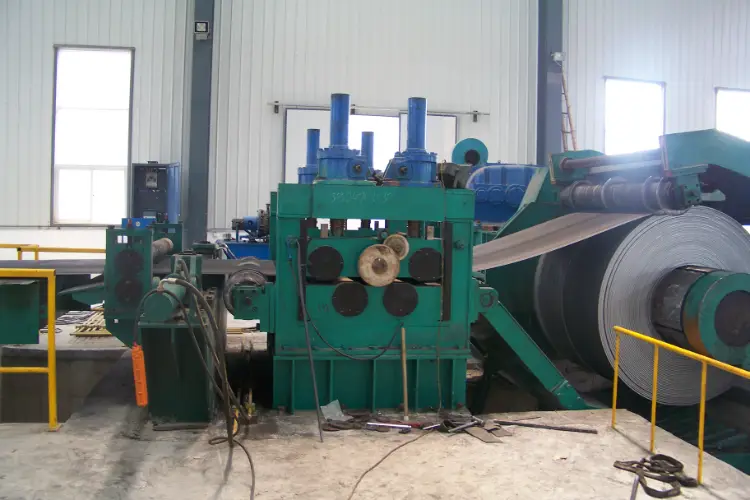
KR E70 Shipbuilding Steel Coil
KR E70 Shipbuilding Steel Coil: High-Strength Quenched & Tempered Steel for Offshore & Marine Engineering
Detailed data sheet on .KR E70 shipbuilding steel coil, equivalent to KR RE690 high-strength quenched and tempered steel. Includes chemical composition, mechanical and thermal properties, international equivalents, and application guidelines.
Suitable for cold forming, hot forming (with subsequent heat treatment), welding, machining, shot blasting, and priming
- Phone : +8618037372205
- Email : [email protected]
- WhatsApp: Contact via Whtsapp
- WeChat: +8618037372205
KR E70 Shipbuilding Steel Coil Introduction
.KR E70 shipbuilding steel coil is a high-strength quenched and tempered steel approved by the Korean Register (KR), corresponding to the grade RE690 in the KR Rules for the Classification of Steel Ships. It offers a minimum yield strength of 690 MPa and excellent low-temperature toughness (impact tested at -40°C). The steel is designed for critical offshore and marine structures that demand high load-bearing capacity, good weldability, and resistance to brittle fracture. Typical delivery condition is quenched and tempered (Q&T). The material is available as hot-rolled coils or plates and is widely used in jack-up rig legs,heavy-lift crane booms, and high-stress hull members. Its chemistry is carefully controlled to achieve a fine-grained microstructure, providing a balance of strength, toughness, and corrosion resistance in marine environments.
KR E70 Shipbuilding Steel Coil Chemical Composition
The chemical composition is controlled according to KR requirements for RE690 grade to ensure high strength, good weldability, and low-temperature toughness. Values are mass percentages; some elements may be adjusted depending on product thickness and manufacturer's practice, but must comply with the classification society limits.
| Element | Typical Value (wt%) | Remarks |
|---|---|---|
| Carbon (C) | ≤0.20 | Main hardenability element; limited for weldability |
| Silicon (Si) | ≤0.55 | Deoxidizer; improves strength |
| Manganese (Mn) | ≤0.90 – 1.70 | Increases hardenability and tensile strength |
| Phosphorus (P) | ≤0.025 | Controlled to avoid temper embrittlement |
| Sulfur (S) | ≤0.020 | Low S for improved toughness and cleanliness |
| Chromium (Cr) | ≤1.50 | Enhances hardenability and corrosion resistance |
| Nickel (Ni) | ≤2.50 | Improves low-temperature toughness |
| Molybdenum (Mo) | ≤0.70 | Increases hardenability and temper resistance |
| Copper (Cu) | ≤0.50 | May be present for weathering resistance |
| Vanadium (V) | ≤0.10 | Grain refinement; precipitation strengthening |
| Titanium (Ti) | ≤0.07 | Microalloying for grain refinement |
| Niobium (Nb) | ≤0.06 | Grain refinement and precipitation hardening |
| Boron (B) | ≤0.005 | Trace addition for hardenability in thick sections (if applicable) |
| Nitrogen (N) | ≤0.015 | Controlled to avoid detrimental nitrides |
| Ceq (IIW) | 0.50 – 0.65 (typical) | Carbon equivalent for weldability assessment |
KR E70 Shipbuilding Steel Coil Thermal and Electrical Physical Properties
Physical properties are typical for quenched and tempered high-strength steel with similar microstructure. Data are provided for general engineering calculations and may vary slightly depending on exact chemical composition and heat treatment. Values at room temperature unless otherwise noted.
| Property | Typical Value | Unit | Test Condition / Temperature |
|---|---|---|---|
| Density (ρ) | 7850 | kg/m³ | Room temperature |
| Elastic Modulus (E) | 205 | GPa | Room temperature |
| Shear Modulus (G) | 79 | GPa | Room temperature, calculated from E and ν |
| Poisson's ratio (ν) | 0.30 | – | Room temperature |
| Thermal expansion coefficient (α) | 11.5 – 12.5 | ×10⁻⁶ /K | Between 20°C and 100°C |
| Thermal conductivity (λ) | 38 – 45 | W/(m·K) | Room temperature |
| Specific heat capacity (cp) | 460 – 490 | J/(kg·K) | Room temperature |
| Electrical resistivity (ρ_e) | 0.25 – 0.35 | µΩ·m | Room temperature |
KR E70 Shipbuilding Steel Coil Mechanical Properties
Mechanical properties are determined on transverse test pieces taken from the specified product thickness in quenched and tempered condition. Values are minimum requirements as per KR rules. Impact test temperature for E-grade is -40°C. Sample direction is transverse unless otherwise specified.
| Property | Required Value | Unit | Test Condition / Remarks |
|---|---|---|---|
| Yield Strength (ReH) | ≥690 | MPa | Upper yield or 0.2% proof stress; room temperature |
| Tensile Strength (Rm) | 770 – 940 | MPa | Room temperature |
| Elongation (A5) | ≥14 | % | Gauge length 5.65√So; transverse specimen |
| Bend Test (Bend Angle 180°) | No cracks | Diameter = 4 × thickness (t ≤ 20 mm); larger ratio for thicker sections | |
| Charpy Impact Energy (KV) | ≥27 (average, 3 specimens) | J | Temperature: -40°C; single min. 20 J; transverse |
| Through-thickness reduction of area (optional) | ≥25 / ≥35 (Z25 / Z35) | % | When specified for lamellar tearing resistance (EN 10164) |
KR E70 Shipbuilding Steel Coil Fully Equivalent Grades – International Classification Society Standards for E-grade 690 MPa Yield Strength Q&T Steel
| Country / Region | Standard / Classification Society | Grade / Designation | Remarks |
|---|---|---|---|
| South Korea | Korean Register (KR) | RE690 (E70) | Original grade; E-grade impact test at -40°C |
| Norway / Germany | DNV GL (now DNV) | E690 | DNV standard for Q&T high strength structural steel |
| USA | American Bureau of Shipping (ABS) | EQ690 | ABS high strength quenched & tempered steel with E-grade (-40°C) |
| France | Bureau Veritas (BV) | E690 | BV rules for offshore structural steel |
| UK | Lloyd's Register (LR) | E690 | LR equivalent for offshore and shipbuilding |
| Italy | RINA | E690 | RINA certification for marine structures |
| Japan | ClassNK (Nippon Kaiji Kyokai) | KRE690 | NK designation for KR-type E-grade Q&T steel |
| International (IACS) | UR W11 | E690 | IACS unified requirement for high strength Q&T steel |
KR E70 Shipbuilding Steel Coil Application Introduction
KR E70 (RE690) steel coil is primarily used in marine and offshore applications where high strength, excellent weldability, and guaranteed low-temperature impact toughness are critical. Its combination of 690 MPa minimum yield strength and good ductility allows for weight savings in structural design, while the quenched and tempered condition ensures uniform properties through thickness. The material is typically processed by welding, thermal cutting, and cold or warm forming. Post-weld heat treatment is usually not required for thicknesses within specification limits, but preheating and low-hydrogen welding consumables are recommended to avoid cold cracking.
Product Applications: Steel coils and plates for shipyards and offshore fabricators, Structural members for self-elevating drilling units, Welded tubular sections (circular and rectangular) for jack-up legs, Crane booms and lattice boom sections, High-pressure piping systems (when supplementary tests are passed), Subsea structural components and ROV frames
Processed into products: Jack-up leg chords and braces, Spudcan components and lower hull connections, Heavy-lift crane main chords and lacing members, Ship hull longitudinal stiffeners and girders, Welded T-joints and cruciform joints with Z-quality requirements, Forged or machined pins and connectors of matching strength, Reinforcing plates for dynamic loading areas
Application industries: Shipbuilding (high-stress hulls, decks, hatch coamings), Offshore oil & gas (jack-up rig legs, spudcans, topside modules), Marine crane and heavy-lift equipment (booms, slewing rings), Renewable energy offshore (wind turbine substructures, floating platforms), Naval defense (high-strength hulls, blast-resistant structures), Heavy civil engineering (bridge components, pressure vessel support frames)
KR E70 Shipbuilding Steel Coil Similar / Alternative Materials With Comparable Strength and Toughness
| Country / Region | Standard / Specification | Grade / Designation | Remarks |
|---|---|---|---|
| Europe | EN 10025-6 | S690Q / S690QL | Quenched and tempered structural steel; impact test at -20°C or -40°C depending on suffix; may need supplemental testing for marine approval |
| USA | ASTM A514 / A517 | Grade Q / Grade F | Quenched and tempered high-yield-strength alloy steel plate; yield ≥690 MPa, tensile ≥760 MPa; Charpy test temperature can be specified down to -40°C |
| Japan | JIS G 3128 | SHY685 / SHY685N | High yield strength steel plate for welded structures; yield ≥685 MPa; low-temperature toughness options available |
| China | GB/T 16270 | Q690D / Q690E | High strength structural steel plates in quenched and tempered condition; Q690D (-20°C), Q690E (-40°C) |
| Russia | ГОСТ 19281 | 14ХГНДЦ / similar strength | High strength alloy steels; may be adapted for marine service with certification |
| Other Classification Societies | Various | F690 (or EQ690 with F-grade -60°C) | Higher toughness grade for more severe environments; otherwise same mechanical properties |
Notes:
Additional considerations:
- Thickness range: typically up to 100 mm in quenched and tempered condition; thicker sections may require special quenching procedures and supplementary tests.
- Weldability: Low hydrogen welding processes (SMAW, GMAW, SAW) are mandatory. Preheating and interpass temperature control according to carbon equivalent and plate thickness.
- Corrosion protection: In marine environments, coating and cathodic protection should be applied; the steel itself exhibits moderate atmospheric corrosion resistance (similar to other low alloy steels).
- Certification: Each delivery lot shall be accompanied by mill test certificates (EN 10204 3.1 or 3.2) showing chemical analysis, mechanical test results, and non-destructive testing if ordered.
- For specific projects, supplementary requirements such as through-thickness tensile test (Z-grade), ultrasonic testing, CTOD testing, or strain aging test may be specified.
- Share



