
JIS SUS316J1L Austenitic Stainless Steel
JIS SUS316J1L Austenitic Stainless Steel: Low-Carbon Cu-Mo Alloy for Superior Corrosion Resistance
In-depth technical data for SUS316J1L stainless steel to JIS G4304/G4305 standards, including chemical, mechanical, and thermal properties, plus global equivalents and applications.
Cold Rolling, Hot Rolling, Deep Drawing, Bending, Stretch Forming, Welding, Machining
- Phone : +8618037372205
- Email : [email protected]
- WhatsApp: Contact via Whtsapp
- WeChat: +8618037372205
JIS SUS316J1L Austenitic Stainless Steel Introduction
SUS316J1L is a Japanese industrial standard (JIS) low-carbon austenitic stainless steel, specifically designed for enhanced corrosion resistance in sulfuric acid and chloride environments. The controlled addition of copper (Cu: 1.00-3.00%) and molybdenum (Mo: 1.00-4.00%) significantly improves resistance to non-oxidizing acids and pitting, while the low carbon content (C ≤ 0.030%) minimizes susceptibility to intergranular corrosion after welding.
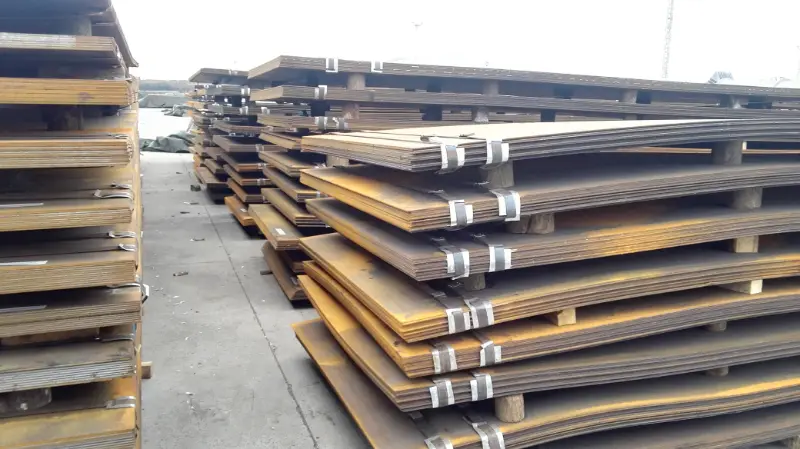
Primarily supplied as hot-rolled or cold-rolled plate, sheet, and coil under JIS G4304 and JIS G4305, this grade offers excellent formability, weldability, and toughness, even at cryogenic temperatures. Its unique chemical balance makes it a superior choice over standard SUS316L in aggressive chemical processing and marine environments, providing extended service life and structural integrity in critical industrial components.
JIS SUS316J1L Austenitic Stainless Steel Chemical Composition
The chemical composition of SUS316J1L is defined by JIS G4304 and JIS G4305 standards. The alloy features a precisely controlled low carbon content to prevent sensitization during welding. Key alloying elements are nickel (Ni) for austenitic structure stability, and synergistic additions of copper (Cu) and molybdenum (Mo) which significantly enhance resistance to sulfuric and other reducing acids, surpassing the performance of standard SUS316L grades.
| Element | Standard Value (wt%) | Remarks |
|---|---|---|
| Carbon (C) | ≤ 0.030 | Low carbon for enhanced weldability and intergranular corrosion resistance |
| Silicon (Si) | ≤ 1.00 | General deoxidizing element |
| Manganese (Mn) | ≤ 2.00 | Austenite stabilizer and deoxidizer |
| Phosphorus (P) | ≤ 0.045 | Controlled for optimal corrosion resistance and mechanical properties |
| Sulfur (S) | ≤ 0.030 | Improved machinability compared to low-sulfur grades |
| Nickel (Ni) | 12.00 - 16.00 | Primary austenite former, providing ductility and toughness |
| Chromium (Cr) | 16.00 - 19.00 | Essential for passive film formation and oxidation resistance |
| Molybdenum (Mo) | 1.00 - 4.00 | Key element for pitting and crevice corrosion resistance in chlorides |
| Copper (Cu) | 1.00 - 3.00 | Improves resistance to non-oxidizing acids like sulfuric acid |
JIS SUS316J1L Austenitic Stainless Steel Thermal and Electrical Physical Properties
Physical properties are crucial for design in thermal processing equipment. The typical data represents annealed SUS316J1L. The material exhibits a moderate thermal expansion coefficient necessary for an austenitic stainless steel, and its thermal conductivity is lower than carbon steels, a factor considered in heat exchanger design. The copper and molybdenum additions can slightly influence the austenitic structure's physical constants compared to standard SUS304 or SUS316L. These values are typical and may vary slightly with specific product form and processing history.
| Property Item | Standard Required Value | Unit | Test Conditions |
|---|---|---|---|
| Density (ρ) | 8.0 | g/cm³ | Room Temperature |
| Elastic Modulus (E) | 193 | GPa | Room Temperature |
| Shear Modulus (G) | 74 | GPa | Room Temperature |
| Poisson's Ratio (ν) | 0.31 | — | Room Temperature |
| Mean Coefficient of Thermal Expansion (α) | 16.0 | 10⁻⁶/K | 0 to 100°C |
| Mean Coefficient of Thermal Expansion (α) | 16.5 | 10⁻⁶/K | 0 to 200°C |
| Mean Coefficient of Thermal Expansion (α) | 17.0 | 10⁻⁶/K | 0 to 300°C |
| Mean Coefficient of Thermal Expansion (α) | 17.5 | 10⁻⁶/K | 0 to 400°C |
| Mean Coefficient of Thermal Expansion (α) | 18.0 | 10⁻⁶/K | 0 to 500°C |
| Thermal Conductivity (λ) | 13.0 | W/(m·K) | at 20°C |
| Thermal Conductivity (λ) | 16.3 | W/(m·K) | at 100°C |
| Thermal Conductivity (λ) | 21.5 | W/(m·K) | at 500°C |
| Specific Heat Capacity (c) | 500 | J/(kg·K) | at 20°C |
| Electrical Resistivity (ρₑ) | 0.74 | Ω·mm²/m | Room Temperature |
JIS SUS316J1L Austenitic Stainless Steel Mechanical Properties
Mechanical properties for solution-annealed SUS316J1L plate/coil are specified per JIS G4304 and G4305. The low carbon and high Ni content contribute to excellent ductility, deep drawability, and high work hardening capacity. The tensile strength and yield strength are balanced to provide good formability while maintaining structural integrity in fabricated equipment. The impact toughness is exceptionally high, even at sub-zero temperatures, making it suitable for cryogenic applications.
| Property Item | Standard Required Value | Unit | Test Conditions |
|---|---|---|---|
| Yield Strength (0.2% Proof Strength) | ≥ 175 | N/mm² (MPa) | Room Temperature, Longitudinal |
| Tensile Strength (Rm) | ≥ 480 | N/mm² (MPa) | Room Temperature, Longitudinal |
| Elongation (A) | ≥ 40 | % | Gauge Length: 50mm, Thickness ≤ 8mm |
| Hardness | ≤ 187 | HBW | As-delivered, solution annealed condition |
| Hardness | ≤ 90 | HRB | As-delivered, solution annealed condition |
| Hardness | ≤ 200 | HV | As-delivered, solution annealed condition |
| Bend Test (Bend Angle: 180°) | D=4t | Bend Diameter | Thickness ≤ 10mm; No cracks on outer surface |
JIS SUS316J1L Austenitic Stainless Steel Recommendation of Completely Equivalent Material Standards and Replaceable Designations
| Country/Region | Standard | Designation | Remarks |
|---|---|---|---|
| Japan | JIS G4304 / JIS G4305 | SUS316J1L | Original specification; Low C, Cu-Mo alloyed stainless steel. |
| International | ISO 15510 | X2CrNiMoCu 17-16-4 | Closest ISO designation for low-carbon Cu-Mo austenitic stainless steel. |
| Europe | EN 10088-2/-3 | 1.4435 (X2CrNiMo18-14-3) | Fully equivalent in terms of corrosion resistance class, with overlapping composition. |
| USA | ASTM A240/A240M | UNS S31603 (Modified) | A modified S31603 with Cu addition may be used, but a direct UNS equivalent does not fully capture the Cu range. |
| China | GB/T 3280 / GB/T 4237 | 022Cr17Ni12Mo2Cu2 | Chinese grade specifically developed to match the chemical composition of SUS316J1L. |
JIS SUS316J1L Austenitic Stainless Steel Application Introduction
SUS316J1L is the material of choice for environments where sulfuric acid, phosphoric acid, and chloride-bearing solutions are encountered. Its exceptional weldability and formability allow it to be fabricated into complex, large-scale equipment for long-term, maintenance-free operations. Key application sectors leverage its superior corrosion resistance to ensure safety, reliability, and cost-effectiveness over the component lifecycle.
Product Applications: Sulfuric Acid Storage Tanks and Transportation Vessels, Chemical Tanker Hulls and Cargo Piping, Shell-and-Tube Heat Exchangers, Petrochemical Distillation Columns and Structured Packing, Bleaching Equipment for Pulp Mills, Desalination Unit Evaporator Tubes and Flash Chambers, Flue Gas Scrubbers and Ducting
Processed into products: Reactor pressure vessel cladding, Internal agitator blades and shafts, Welded shell-and-tube heat exchanger tube sheets, Baffles, and Tie rods, Deep-drawn chemical storage vessel heads and nozzles, Bent and welded piping systems, Flanges, and Fittings for acid transport, Stamped plate heat exchanger channels and connections, Machined pump casings and valve bodies for severe service, Fabricated ducting expansion joints and dampers for FGD plants
Application industries: Chemical Processing Industry (CPI), Petrochemical and Oil & Gas, Pulp and Paper Manufacturing, Marine and Offshore Engineering, Thermal and Nuclear Power Generation, Food and Beverage Processing, Flue Gas Desulfurization (FGD) Systems
JIS SUS316J1L Austenitic Stainless Steel Recommendation of Similar/Comparable Alternative Materials
| Country/Region | Standard | Designation | Remarks |
|---|---|---|---|
| Japan | JIS G4304 / JIS G4305 | SUS316L | Standard Mo-alloyed low-C grade. Lacks intentional Cu addition, offering lower resistance to sulfuric acid compared to SUS316J1L. |
| Europe | EN 10088-2/-3 | 1.4404 (X2CrNiMo17-12-2) | Standard European 316L. Suitable for general chloride environments but inferior in hot sulfuric acid service. |
| USA | ASTM A240/A240M | UNS N08904 (904L) | Higher alloyed austenitic containing Cu and higher Ni/Mo. Provides superior corrosion resistance but at a significantly higher cost. |
| China | GB/T 3280 / GB/T 4237 | 06Cr17Ni12Mo2 (SUS316) | Higher carbon version. Sensitive to intergranular corrosion after welding without post-weld solution treatment, limiting its scope. |
Notes:
Welding Considerations: SUS316J1L exhibits excellent weldability using common processes like GTAW (TIG), GMAW (MIG), and SMAW (MMA). Low heat input and interpass temperature control (max 150°C) are recommended to preserve corrosion resistance. Matching or over-alloyed filler metals (e.g., AWS A5.9 ER316CuL) should be used to maintain the weld metal's Cu and Mo content.
Heat Treatment: The recommended solution annealing treatment is a hold at 1010–1150°C followed by rapid water quenching or fast air cooling. This treatment dissolves chromium carbides and sigma phases, ensuring maximum ductility and corrosion resistance. The grade cannot be hardened by heat treatment.
Cold Forming: Excellent formability allows for severe deep drawing, spinning, and bending. Due to high work hardening, intermediate annealing may be necessary for multi-stage deep drawing operations. Martensite transformation during cold work is minimal due to the stable austenitic structure.
- Share



