
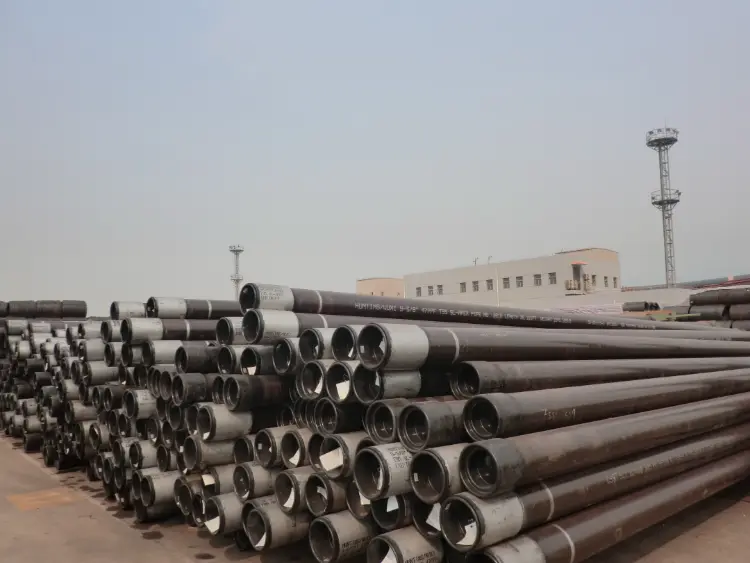
JIS G3459 SUS 321 TP Stainless Steel Pipe
JIS G3459 SUS 321 TP Stainless Steel Pipe: Titanium Stabilized Austenitic Grade for High-Temperature Service
Comprehensive data on JIS G3459 SUS 321 TP stainless steel pipe, including chemical composition, mechanical properties, physical constants, equivalent grades, and application guidance for high-temperature and corrosive environments.
Hot working (extrusion, rolling, forging), cold drawing, bending, flaring, welding using matching filler metals (e.g., ER347 or ER321), solution annealing followed by rapid cooling, and pickling/passivation.
- Phone : +8618037372205
- Email : [email protected]
- WhatsApp: Contact via Whtsapp
- WeChat: +8618037372205
JIS G3459 SUS 321 TP Stainless Steel Pipe Introduction
SUS 321 TP specified in JIS G3459 is a titanium-stabilized austenitic stainless steel pipe designed to resist intergranular corrosion after exposure to temperatures in the chromium carbide precipitation range (427–816°C). The addition of titanium (at least five times the carbon content) prevents the formation of chromium carbides, preserving corrosion resistance in welded assemblies and elevated-temperature service. This grade offers excellent strength and oxidation resistance up to approximately 900°C, combined with good ductility and toughness. It is widely used in chemical processing, petroleum refining, boiler and heat exchanger tubing, and general high-temperature piping systems where sensitization and subsequent intergranular attack must be avoided. The pipe is supplied in solution-annealed condition, typically followed by pickling or bright annealing to restore surface passivity.
JIS G3459 SUS 321 TP Stainless Steel Pipe Chemical Composition
Chemical requirements for SUS 321 TP according to JIS G4303 (reference for stainless steel bars, also applicable to pipe grade). Values represent heat analysis. Titanium content is controlled to be at least five times the total carbon plus nitrogen content to ensure stabilization against intergranular corrosion.
| Element | Specified Value (wt%) | Remarks |
|---|---|---|
| Carbon (C) | ≤ 0.08 | Maximum |
| Silicon (Si) | ≤ 1.00 | Maximum |
| Manganese (Mn) | ≤ 2.00 | Maximum |
| Phosphorus (P) | ≤ 0.045 | Maximum |
| Sulfur (S) | ≤ 0.030 | Maximum |
| Nickel (Ni) | 9.00 – 13.00 | Range |
| Chromium (Cr) | 17.00 – 19.00 | Range |
| Titanium (Ti) | ≥ 5 × (C+N) up to 0.60 | Stabilization requirement; typically 0.30–0.60 |
JIS G3459 SUS 321 TP Stainless Steel Pipe Thermal and Electrical Physical Properties
Physical properties for austenitic stainless steel type 321 at room temperature unless otherwise indicated. Values are typical and may vary slightly with exact composition and heat treatment condition. Data sourced from published literature for grade AISI 321 / EN 1.4541.
| Property | Typical Value | Unit | Test Condition / Temperature |
|---|---|---|---|
| Density (ρ) | 8.03 | g/cm³ | At 20°C |
| Modulus of Elasticity (E) | 193 | GPa | At 20°C |
| Shear Modulus (G) | 78 | GPa | Estimated from E and Poisson ratio |
| Poisson's Ratio (ν) | 0.27 – 0.30 | – | Typical range |
| Coefficient of Thermal Expansion (α) | 16.6 | 10⁻⁶ / K | 20 – 100°C |
| Coefficient of Thermal Expansion (α) | 17.2 | 10⁻⁶ / K | 20 – 300°C |
| Coefficient of Thermal Expansion (α) | 18.6 | 10⁻⁶ / K | 20 – 500°C |
| Thermal Conductivity (λ) | 16.3 | W/(m·K) | At 100°C |
| Thermal Conductivity (λ) | 21.5 | W/(m·K) | At 500°C |
| Specific Heat Capacity (cp) | 500 | J/(kg·K) | At 20°C |
| Electrical Resistivity (ρe) | 0.72 | μΩ·m | At 20°C |
JIS G3459 SUS 321 TP Stainless Steel Pipe Mechanical Properties
Mechanical property requirements as per JIS G3459 for stainless steel pipes in the solution-annealed condition. Values apply to longitudinal specimens taken from the pipe wall. For pipes with wall thickness ≤ 20 mm. Elongation requirements may vary with pipe dimensions (refer to standard for minimum elongation based on outer diameter and wall thickness).
| Property | Specified Value | Unit | Test Condition / Remarks |
|---|---|---|---|
| Tensile Strength (Rm) | ≥ 520 | MPa | Room temperature, longitudinal specimen |
| Yield Strength (ReH, 0.2% offset) | ≥ 205 | MPa | Room temperature, longitudinal specimen |
| Elongation (A) | ≥ 35 | % | Gauge length 50 mm, for nominal thickness ≤ 8 mm; for thicker walls refer to standard |
| Elongation (A) | ≥ 30 | % | Gauge length 50 mm, for outer diameter ≤ 100 mm and wall thickness > 8 mm (alternative value) |
| Bend Test (Flattening or Guided Bend) | No cracks or defects | – | Specified in JIS G3459; bend radius according to nominal diameter; performed on samples from pipe ends |
JIS G3459 SUS 321 TP Stainless Steel Pipe Fully Equivalent Standards and Substitute Grades
| Country/Region | Standard | Grade | Remarks |
|---|---|---|---|
| International | ISO 2604-2 | TS47 | Directly corresponds to titanium-stabilized 18Cr-9Ni pipe |
| USA | ASTM A312 / ASME SA312 | TP321 | Chemically and mechanically equivalent; widely accepted as direct substitute |
| EU | EN 10216-5 | 1.4541 (X6CrNiTi18-10) | Same nominal composition; mechanical properties closely align (Rm 500–700 MPa, ReH ≥ 190 MPa for thin wall) |
| China | GB/T 14976 | 0Cr18Ni10Ti / S32168 | Older Chinese designation 0Cr18Ni10Ti; revised to S32168 in new standards; fully interchangeable |
| Germany (former) | DIN 17456 / DIN EN 10216-5 | 1.4541 (X6CrNiTi1810) | Historical standard; now superseded by EN, but same material |
| UK (former) | BS 3605 | Type 321 S18 | Older British standard; identical chemical specification |
JIS G3459 SUS 321 TP Stainless Steel Pipe Application Introduction
SUS 321 TP pipes are primarily employed in environments demanding resistance to intergranular corrosion and prolonged high-temperature exposure. The titanium stabilization eliminates the risk of chromium carbide precipitation in the heat-affected zone of welds, allowing the pipe to be used in as-welded condition for many applications up to 427–816°C. Its good oxidation resistance and creep strength make it a cost-effective choice for many industrial heating and chemical processes. The grade is not recommended for heavy chloride environments or strong reducing acids where higher-alloyed stainless steels (e.g., duplex or superaustenitic) are more suitable.
Product Applications: Process piping systems for hot acids and organic compounds, Heat exchanger tubes and tube bundles, Boiler and superheater tubes, Furnace and reformer tubes, Steam and condensate lines, Expansion joints and bellows, Instrumentation tubing for high-temperature sensing
Processed into products: Pipe spools and fittings (elbows, tees, reducers, flanges) in high-temperature loops, Welded or seamless tubes for shell-and-tube heat exchangers, Finned tubes for air-cooled heat exchangers, Sensor protection tubes (thermowells), Exhaust manifolds and tailpipes in aircraft auxiliary power units, Distillation column trays and downcomers (when fabricated from pipe sections), Injection nozzles and quench pipes
Application industries: Oil and Gas Processing and Refining, Chemical and Petrochemical Plants, Power Generation (boilers, superheaters, reheater tubing), Heat Exchanger Manufacturing, Food and Beverage Processing (limited high-temp cleaning processes), Aerospace (exhaust components, ducting), Pharmaceutical (critical utility piping)
JIS G3459 SUS 321 TP Stainless Steel Pipe Similar or Approximate Alternative Materials
| Country/Region | Standard | Grade | Remarks |
|---|---|---|---|
| Japan | JIS G3459 | SUS 304 TP | Non-stabilized austenitic; susceptible to sensitization if exposed to 425–815°C; not recommended for welded assemblies operating in that range without post-weld solution annealing |
| Japan | JIS G3459 | SUS 316Ti TP | Molybdenum-bearing titanium-stabilized grade with improved pitting resistance; slightly lower strength; suitable where higher chloride resistance is needed |
| USA | ASTM A312 | TP347 | Niobium-stabilized (columbium); similar intergranular corrosion resistance but may have better high-temperature strength; welding behavior differs |
| EU | EN 10216-5 | 1.4878 (X8CrNiTi18-10) | Similar Ti-stabilized grade but with slightly higher carbon and Ti contents; often used for higher temperature service up to 850°C |
| International | ISO 2604-2 | TS46 | Stabilized with Ti+Nb; comparable but with dual stabilization; sometimes used as an alternative to TS47 |
Notes:
Welding Considerations: Use AWS ER347 or ER321 filler metal for matching chemistry and stabilization. Post-weld heat treatment is generally not required for service below 399°C; however, stress relief may be applied for thick sections or high residual stress environments. Heat Treatment: Solution annealing must be followed by rapid cooling to prevent the formation of sigma phase or grain boundary precipitates. Corrosion: Resists polythionic acid stress corrosion cracking in stabilized condition; suitable for refinery environments. Dual Certification: Often dual certified as 304/304L or 321/347 if composition overlaps; verify with supplier.
- Share



