
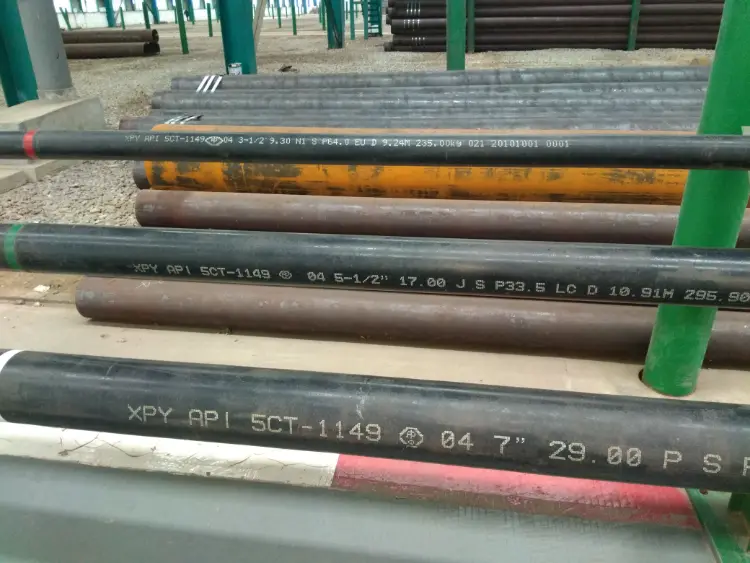
JIS G3459 SUS 316 TP Stainless Steel Pipe
JIS G3459 SUS 316 TP Stainless Steel Pipe: High Corrosion Resistance for Demanding Fluid Systems
Explore the technical specifications of JIS G3459 SUS 316 TP stainless steel pipe, including chemical composition, mechanical and physical properties, international equivalents, and typical applications in chemical, petrochemical, and food industries.
Cold working, hot working, welding (TIG, MIG, plasma), bending, flaring, and machining. Solution annealing is typically required after severe forming or welding to restore corrosion resistance.
- Phone : +8618037372205
- Email : [email protected]
- WhatsApp: Contact via Whtsapp
- WeChat: +8618037372205
JIS G3459 SUS 316 TP Stainless Steel Pipe Introduction
SUS 316 TP is an austenitic stainless steel pipe grade defined by Japanese Industrial Standard JIS G3459, primarily used for corrosion-resistant piping systems in a wide range of industries. It features a minimum 16% chromium, 10% nickel, and 2% molybdenum addition, which significantly enhances pitting and crevice corrosion resistance in chloride-containing environments compared to standard 304 grades.
The pipe is typically supplied in the solution-annealed condition, offering excellent toughness, ductility, and weldability. Common applications include chemical processing equipment, heat exchangers, food processing machinery, and offshore installations where reliability under moderate to high corrosive conditions is essential. The TP designation specifically denotes stainless steel pipes for general piping, with strict quality controls on both inside and outside surfaces.
JIS G3459 SUS 316 TP Stainless Steel Pipe Chemical Composition
Chemical composition limits for SUS 316 TP according to JIS G3459. The values are inherited from the base SUS 316 grade per JIS G4303, with strict control on harmful elements to ensure passivity and weldability. Molybdenum is the key addition for improved chloride resistance.
| Element | Specification (wt%) | Remarks |
|---|---|---|
| Carbon (C) | ≤ 0.08 | Controls carbide precipitation during welding |
| Silicon (Si) | ≤ 1.00 | Deoxidizer; excess may reduce ductility |
| Manganese (Mn) | ≤ 2.00 | Austenite stabilizer; helps hot workability |
| Phosphorus (P) | ≤ 0.045 | Impurity, kept low to prevent embrittlement |
| Sulfur (S) | ≤ 0.030 | Impurity, limits hot cracking during welding |
| Nickel (Ni) | 10.00 – 14.00 | Primary austenite stabilizer |
| Chromium (Cr) | 16.00 – 18.00 | Provides passivity and oxidation resistance |
| Molybdenum (Mo) | 2.00 – 3.00 | Enhances resistance to pitting and crevice corrosion |
JIS G3459 SUS 316 TP Stainless Steel Pipe Thermal and Electrical Physical Properties
Physical property data are typical for SUS 316 in the annealed condition and apply to the pipe grade. These values are taken from recognized databases and are consistent with EN 1.4401 / AISI 316. They serve as design guides and may vary slightly with processing history.
| Property | Typical Value | Unit | Condition / Temperature |
|---|---|---|---|
| Density (ρ) | 8.0 | g/cm³ | At 20°C |
| Modulus of Elasticity (E) | 193 | GPa | At 20°C |
| Shear Modulus (G) | 77 | GPa | At 20°C, calculated from E and ν |
| Poisson's Ratio (ν) | 0.30 | – | At 20°C, elastic range |
| Thermal Expansion Coefficient (α) | 16.0 | 10⁻⁶/K | 0 – 100°C |
| Thermal Expansion Coefficient (α) | 16.5 | 10⁻⁶/K | 0 – 315°C |
| Thermal Expansion Coefficient (α) | 17.5 | 10⁻⁶/K | 0 – 540°C |
| Thermal Conductivity (λ) | 16.3 | W/m·K | At 100°C |
| Thermal Conductivity (λ) | 21.5 | W/m·K | At 500°C |
| Specific Heat Capacity | 500 | J/kg·K | At 0–100°C |
| Electrical Resistivity (ρ_e) | 0.74 | µΩ·m | At 20°C |
JIS G3459 SUS 316 TP Stainless Steel Pipe Mechanical Properties
Mechanical property requirements for SUS 316 TP pipe per JIS G3459. Values are for solution-annealed condition at room temperature. Elongation requirements vary with wall thickness; thicker sections may have slightly lower elongation limits. A bend test verifies formability, and a hydrostatic or non-destructive test may replace the bend test per agreement.
| Property | Specification Value | Unit | Test Condition / Remarks |
|---|---|---|---|
| Tensile Strength (Rm) | ≥ 520 | MPa | JIS Z2241, specimen from pipe or test piece |
| Yield Strength (ReH 0.2% offset) | ≥ 205 | MPa | JIS Z2241, min. 0.2% proof stress |
| Elongation (A) | ≥ 35 | % | Wall thickness < 8 mm, gauge length 50 mm |
| Elongation (A) | ≥ 30 | % | Wall thickness 8 – 20 mm, gauge length 50 mm |
| Elongation (A) | ≥ 25 | % | Wall thickness > 20 mm, gauge length 50 mm |
| Bend Test (Bend Angle 90° or 180°) | No cracks or defects | – | Mandrel diameter = 4 × wall thickness; applies to pipe ≤ 50 mm OD |
| Hardness (HB / HRB / HV) | ≤ 187 HBW / ≤ 90 HRB / ≤ 200 HV | – | For reference only, not a mandatory requirement in JIS G3459 |
| Impact Energy (Charpy V-notch) | Not specified in standard | J | Austenitic grades typically very tough at ambient and cryogenic temperatures |
JIS G3459 SUS 316 TP Stainless Steel Pipe Completely Equivalent Material Standards and Replaceable Grades
| Country / Region | Standard | Grade | Remarks |
|---|---|---|---|
| USA | ASTM A312 | TP316 | Seamless and welded pipe for high-temperature and general corrosive service |
| USA | ASME SA312 | TP316 | Equivalent to ASTM A312 for pressure vessel applications |
| Europe | EN 10216-5 (seamless) / EN 10217-7 (welded) | 1.4401 (X5CrNiMo17-12-2) | Stainless steel pipe for pressure purposes, fully equivalent in composition and properties |
| ISO | ISO 9329-4 / ISO 9330-6 | X5CrNiMo17-12-2 | Harmonized international standard for seamless/welded tubes |
| China | GB/T 14976 | 0Cr17Ni12Mo2 (old) / 06Cr17Ni12Mo2 (new) | Seamless stainless steel pipe for fluid transport |
| Germany | DIN 17456 / DIN 17458 | 1.4401 (X5CrNiMo17-12-2) | Historical German standards, now superseded by EN but material identical |
| France | NF A49-217 / A49-249 | Z6CND17-11 / 1.4401 | French national standards aligned with EN |
JIS G3459 SUS 316 TP Stainless Steel Pipe Application Introduction
SUS 316 TP pipes are the workhorse for corrosive service where standard 304 does not provide sufficient resistance, especially against chlorides. The molybdenum addition suppresses pitting and crevice corrosion, making the material suitable for a wide range of aggressive media. The pipe can be supplied in thin-wall and heavy-wall configurations, with seamless or welded construction, and is readily fabricated into complex piping systems.
Product Applications: Process piping for corrosive chemicals (acids, caustic solutions), Heat exchanger tubes and headers, Sanitary tubing for food and pharmaceutical products, Hydraulic and instrumentation tubing in offshore platforms, Boiler tubes in fossil-fueled power stations, Exhaust gas recirculation (EGR) piping, Steam and condensate return lines
Processed into products: Flanged pipe sections and spools, Elbows, tees, reducers, and other butt-weld fittings, Valve bodies and bonnets (when fabricated from pipe), Nozzle reinforcements and branch connections, Piping supports and guides in corrosive atmospheres, Sampling probes and thermowells, Cryogenic liquid transfer lines (down to -196°C)
Application industries: Chemical and petrochemical processing, Oil and gas (upstream and downstream), Food and beverage production (dairy, brewing, sanitary lines), Pharmaceutical and biotechnology manufacturing, Desalination plants and water treatment, Marine and offshore engineering, Pulp and paper mills, Heat exchanger and condenser manufacturing
JIS G3459 SUS 316 TP Stainless Steel Pipe Closely Related or Alternative Material Recommendations
| Country / Region | Standard | Grade | Remarks |
|---|---|---|---|
| Japan | JIS G3459 | SUS 316L TP | Lower carbon (≤0.030) for better as-welded corrosion resistance; strength slightly lower but typical properties meet same minimums |
| Japan | JIS G3459 | SUS 316Ti TP | Titanium-stabilized version to prevent sensitization; used at elevated temperatures |
| USA | ASTM A312 / A213 | TP316 / TP316L | Identical composition range; L-grade preferred for welded fabrications |
| Europe | EN 10216-5 / 10217-7 | 1.4404 (X2CrNiMo17-12-2) | Low-carbon variant with enhanced intergranular corrosion resistance |
| Sweden | SS 2343 (SIS 14 23 43) | SS 2343-02 | Historical Swedish grade matching 316; still used in Nordic offshore |
| Russia | GOST 9940 / 9941 | 08Х17Н13М2 (08Cr17Ni13Mo2) | Closest Russian equivalent; careful check for Mo tolerance required |
Notes:
Welding: Use filler metal matching or over-alloyed (e.g., ER316L or ER316LSi). Post-weld heat treatment is generally not required for service below 400°C, but solution annealing is recommended in severely corrosive environments.
Corrosion: Intergranular attack may occur after slow cooling from 425–815°C; use low-carbon or stabilized versions if welding without solution annealing.
Pressure Testing: JIS G3459 requires each pipe to be either hydrostatically tested at a pressure that gives a hoop stress ≥ 60% of the specified minimum yield strength, or be examined by eddy current or ultrasonic methods per agreement.
Surface Condition: Pipes are typically supplied pickled, passivated, and free from scale. Special surface finishes for sanitary applications are available upon request.
- Share



