
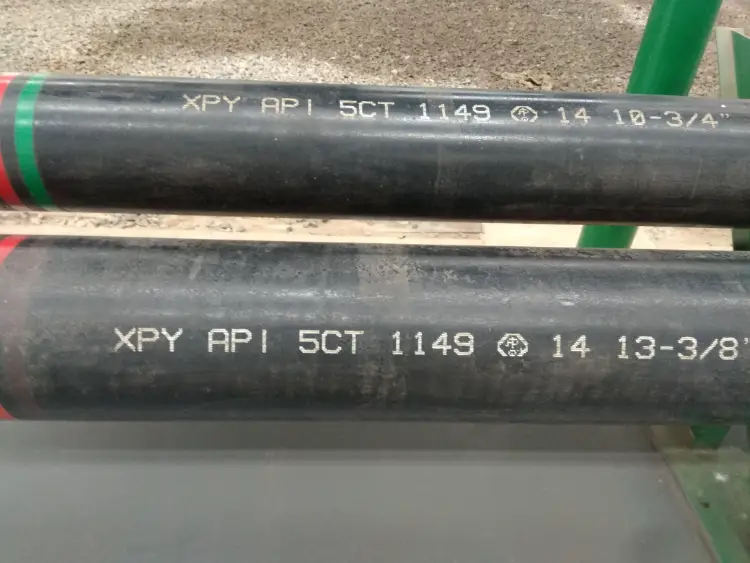
JIS G3459 SUS 316 LTP Stainless Steel Pipe
JIS G3459 SUS 316 LTP Stainless Steel Pipe: Low-Carbon Austenitic Grade for Cryogenic & Corrosive Services
Detailed material data for JIS G3459 SUS 316 LTP stainless steel pipe. Covers chemical composition, mechanical and physical properties, international equivalents, similar grades, and application guidance for cryogenic and corrosive environments.
Hot rolling, cold drawing, welding (with appropriate filler), bending, flaring, machining
- Phone : +8618037372205
- Email : [email protected]
- WhatsApp: Contact via Whtsapp
- WeChat: +8618037372205
JIS G3459 SUS 316 LTP Stainless Steel Pipe Introduction
SUS 316 LTP is a low-carbon, molybdenum-bearing austenitic stainless steel pipe specified under Japanese Industrial Standard JIS G3459 for piping applications. The 'L' designation indicates a maximum carbon content of 0.03%, which minimizes carbide precipitation during welding and ensures excellent resistance to intergranular corrosion in the as-welded condition. The addition of 2.00–3.00% molybdenum significantly enhances pitting and crevice corrosion resistance in chloride environments compared to standard 304L. The 'TP' suffix denotes a tubular product intended for pressure service, and here it is specifically referenced for low-temperature applications (often indicated by 'LT' in the industry), where the grade retains excellent toughness and ductility at sub-zero temperatures. Key attributes include:
- Outstanding weldability without post-weld annealing
- Superior corrosion resistance in acidic, chloride, and marine atmospheres
- High strength and good creep resistance at moderately elevated temperatures
- Excellent impact toughness at cryogenic temperatures (down to -196°C)
- Good formability and machinability typical of austenitic stainless steels
JIS G3459 SUS 316 LTP Stainless Steel Pipe Chemical Composition
The chemical composition of SUS 316 LTP conforms to JIS G3459 for SUS 316L. The low carbon content (<0.03%) prevents sensitization during welding. Molybdenum (2.00–3.00%) is the key alloying element for improved pitting resistance. Note: All values are in weight percent as per the standard ladle analysis. Individual elements may have tighter compositional ranges depending on the pipe dimensions and supplementary requirements.
| Element | Standard Value | Remarks |
|---|---|---|
| Carbon (C) | ≤ 0.03 | Low carbon for weldability without sensitization |
| Silicon (Si) | ≤ 1.00 | General purpose range |
| Manganese (Mn) | ≤ 2.00 | Austenite stabilizer, aids deoxidation |
| Phosphorus (P) | ≤ 0.045 | Residual element control |
| Sulfur (S) | ≤ 0.030 | Improved machinability if specified, normally low for welding |
| Nickel (Ni) | 12.00 – 15.00 | Stabilizes austenite phase, enhances corrosion resistance |
| Chromium (Cr) | 16.00 – 18.00 | Primary element for passivation and oxidation resistance |
| Molybdenum (Mo) | 2.00 – 3.00 | Critical for pitting and crevice corrosion resistance in chlorides |
| Iron (Fe) | Balance | Remainder |
JIS G3459 SUS 316 LTP Stainless Steel Pipe Thermal and Electrical Physical Properties
Physical properties are typical for annealed SUS 316L (equivalent to SUS 316 LTP) and are provided as a general guide. They are not mandatory in JIS G3459 but are essential for design calculations involving heat transfer, thermal expansion, and electromagnetic considerations. Values are valid for temperatures between 20 °C and 100 °C unless otherwise noted.
- Thermal conductivity increases slightly with temperature, while electrical resistivity also rises.
- Thermal expansion coefficient is intermediate among austenitic grades; proper allowance must be made for piping systems.
| Property | Standard Requirement Value | Unit | Test Condition |
|---|---|---|---|
| Density (ρ) | 8.0 | g/cm³ | 20 °C |
| Modulus of Elasticity (E) | 193 | GPa | 20 °C, tension |
| Shear Modulus (G) | 77 | GPa | 20 °C, calculated |
| Poisson's Ratio (ν) | 0.27 – 0.30 | - | 20 °C |
| Thermal Expansion Coefficient (α) | 16.0 | 10⁻⁶/K | 20–100 °C range |
| Thermal Expansion Coefficient (α) | 16.5 | 10⁻⁶/K | 20–200 °C range |
| Thermal Expansion Coefficient (α) | 17.5 | 10⁻⁶/K | 20–500 °C range |
| Thermal Conductivity (λ) | 15 | W/(m·K) | 20 °C |
| Thermal Conductivity (λ) | 16 | W/(m·K) | 100 °C |
| Specific Heat Capacity | 500 | J/(kg·K) | 20 °C |
| Electrical Resistivity (ρ_e) | 0.74 | µΩ·m | 20 °C |
JIS G3459 SUS 316 LTP Stainless Steel Pipe Mechanical Properties
Mechanical properties are guaranteed at room temperature for solution-annealed condition per JIS G3459. The values listed represent minimum requirements for standard pipe sizes. Actual values may be higher depending on the degree of cold work and thickness.
- Elongation is measured using a gauge length of 50 mm for strip/plate specimens or proportional to diameter for pipe specimens.
- Hardness values are not mandatory in JIS G3459 but are typical for this grade (≤90 HRB or ≤200 HV).
- Impact toughness is excellent at low temperatures; typical Charpy V-notch at -196 °C exceeds 60 J.
| Property | Standard Requirement Value | Unit | Test Condition |
|---|---|---|---|
| Yield Strength (0.2% offset) | ≥ 175 | MPa | Room temperature, longitudinal direction |
| Tensile Strength (Rm) | ≥ 480 | MPa | Room temperature, longitudinal direction |
| Elongation (A) | ≥ 35 | % | Gauge length 50 mm (or proportional); transverse or longitudinal |
| Bend Test (Bend Diameter) | No cracks | - | Bend angle 180°, mandrel diameter 4× wall thickness; for welded pipe, weld ductility verified |
| Hardness (Rockwell B) | ≤ 90 | HRB | Typical value, not mandatory |
| Impact Toughness (Charpy V-notch) | ≥ 60 (typical) | J | -196 °C, for information only |
JIS G3459 SUS 316 LTP Stainless Steel Pipe Fully Equivalent Material Standards and Replaceable Grades
| Country/Region | Standard | Grade | Remarks |
|---|---|---|---|
| Japan | JIS G3459 | SUS 316 LTP | Original specification for low-temperature pipe; identical to SUS 316L in JIS G4303/4304 |
| USA | ASTM A312 / A312M | TP316L | Seamless and welded austenitic stainless steel pipe; same alloy class |
| USA | ASTM A269 | TP316L | Seamless and welded tube for general service |
| Europe | EN 10216-5 | 1.4404 (X2CrNiMo17-12-2) | Seamless steel tubes for pressure purposes, fully equivalent chemistry |
| Europe | EN 10217-7 | 1.4404 | Welded steel tubes for pressure purposes |
| China | GB/T 14976 | 022Cr17Ni12Mo2 (old 00Cr17Ni14Mo2) | Stainless steel seamless tubes for fluid transport, equivalent to 316L |
| International | ISO 1127 | D3-T5 (1.4404) | Stainless steel tubes — Dimensions, tolerances and conventional masses per unit length |
JIS G3459 SUS 316 LTP Stainless Steel Pipe Application Introduction
SUS 316 LTP pipe is engineered for applications demanding a combination of low-temperature toughness, reliable welded performance, and resistance to a wide range of corrosive media. Its low carbon content makes it the preferred choice for welded constructions that cannot be post-weld solution annealed. The molybdenum addition provides effective protection in environments containing chlorides, sulfur compounds, and organic acids. Key benefits for cryogenic service: The fully austenitic microstructure does not transform to brittle martensite at low temperatures, retaining ductility and impact strength even at -196°C (liquid nitrogen). Thus, it is widely used in LNG, liquid oxygen, and liquid hydrogen piping systems.
Product Applications: Cryogenic transfer lines and manifolds, Heat exchanger tubes and piping, Process piping in chemical plants, Hygienic pipelines for food and pharmaceutical processing, Instrumentation tubing, Sprinkler systems in corrosive atmospheres, Hydraulic and pneumatic lines in offshore platforms
Processed into products: Pipe spools, elbows, tees, reducers, Flanges (WN, SO, blind) and fittings, Valves and pump parts (body, trim), Expansion joints and bellows, Orifice plates and flow elements, Pressure vessel shells and internals (when made from pipe stock), Boiler and superheater tubes
Application industries: Oil & Gas (LNG liquefaction, regasification, and transport), Chemical and Petrochemical Processing (reactors, heat exchangers, piping for corrosive fluids), Cryogenics (storage and distribution of liquid gases, vacuum-insulated piping), Marine and Offshore (seawater cooling systems, desalination plants), Food, Beverage, and Pharmaceutical (sanitary tubing, clean-in-place systems), Pulp and Paper (bleaching equipment, digester lines), Power Generation (condenser tubing, nuclear service water systems)
JIS G3459 SUS 316 LTP Stainless Steel Pipe Closely Related / Similar Alternative Material Recommendations
| Country/Region | Standard | Grade | Remarks |
|---|---|---|---|
| Japan | JIS G3459 | SUS 304 LTP | Lower alloy content, no Mo; suitable for less corrosive environments but comparable cryogenic toughness |
| USA | ASTM A312 | TP304L | 304L equivalent, lower pitting resistance, similar low-temperature service |
| Europe | EN 10216-5 | 1.4401 (X5CrNiMo17-12-2) | Standard carbon 316, slightly higher carbon (≤0.07) may require post-weld annealing for full corrosion resistance |
| Global | - | Alloy 317L (S31703) | Higher Mo content (3.0–4.0) for enhanced pitting resistance; increased cost and strength |
| Global | - | Duplex 2205 (S32205) | Higher strength and better chloride SCC resistance, but lower toughness at very low temperatures compared to 316L |
Notes:
- For welded pipes, the weld seam shall be full penetration and may be subjected to radiographic or ultrasonic inspection as per supplementary JIS requirements. The base metal chemistry for welded pipe remains that of SUS 316L, and the filler metal should be chosen accordingly (e.g., AWS ER316L).
- Surface finish is typically pickled and passivated or bright annealed (BA) for sanitary applications. Roughness values (Ra) can be supplied to customer specifications.
- Low-temperature impact testing per JIS or ASTM A370 is often added as a supplementary requirement when pipes are destined for cryogenic services; guaranteed minimum values are not in the basic standard but are agreed upon between purchaser and manufacturer.
- The 'LTP' designation is not an official JIS symbol but is widely used in industry to denote 'Low Temperature Pipe', highlighting that this specific product form is certified for low-temperature use. The formal JIS grade designation remains SUS 316L for this material under G3459.
- Share



