
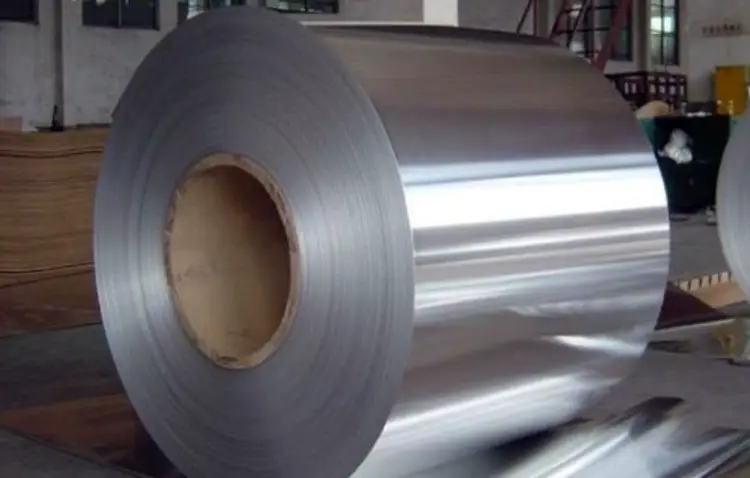
GL D500 Shipbuilding Steel Coil
GL D500 Shipbuilding Steel Coil: High-Tensile Grade for Marine & Offshore Engineering
Comprehensive material data for GL D500 shipbuilding steel (DH500) including chemical composition, mechanical properties, physical values, international equivalents, and application guidance.
Hot rolling, normalizing rolling (N), thermomechanical rolling (M), cold forming, flame cutting, welding (SAW, SMAW, GMAW, FCAW)
- Phone : +8618037372205
- Email : [email protected]
- WhatsApp: Contact via Whtsapp
- WeChat: +8618037372205
GL D500 Shipbuilding Steel Coil Introduction
GL D500 is a high-strength structural steel grade certified by Germanischer Lloyd (now DNV GL) for ship and offshore construction. It belongs to the DH500 class, indicating a minimum yield strength of 500 MPa and a Charpy impact test temperature of -20 °C. This thermomechanically rolled or normalized fine‑grain steel offers an excellent balance of strength, toughness, and weldability, making it suitable for weight-critical hull members, columns, and tension legs. The coil form permits efficient processing into large plates, profiles, and tubular structures. Typical delivery conditions are normalized rolled (N) or thermomechanically rolled (M).
- Yield strength ≥ 500 MPa for thickness ≤ 50 mm
- Excellent low‑temperature toughness (D‑class, -20 °C)
- Good formability and through‑thickness properties
- Weldable with low‑hydrogen procedures
GL D500 Shipbuilding Steel Coil Chemical Composition
The composition is designed to achieve high strength and toughness through fine‑grain microstructure and controlled additions of microalloying elements. Carbon equivalent (CEV) is typically limited to ensure good weldability. Values are based on GL Rules for DH500 grade.
| Element | Standard Value (max unless range given) | Remarks |
|---|---|---|
| Carbon (C) | 0.20 % | max |
| Silicon (Si) | 0.55 % | max |
| Manganese (Mn) | 1.70 % | max |
| Phosphorus (P) | 0.025 % | max |
| Sulfur (S) | 0.025 % | max |
| Chromium (Cr) | 0.80 % | max |
| Nickel (Ni) | 0.80 % | max |
| Molybdenum (Mo) | 0.40 % | max |
| Copper (Cu) | 0.50 % | max |
| Niobium (Nb) | 0.05 % | max |
| Vanadium (V) | 0.12 % | max |
| Titanium (Ti) | 0.05 % | max |
| Aluminium (Al, acid‑soluble) | ≥ 0.015 % | min, for grain refinement |
| Nitrogen (N) | 0.012 % | max |
| Boron (B) | 0.0005 % | may be present in microalloyed grades |
GL D500 Shipbuilding Steel Coil Physical and Electrical Properties
Physical properties are representative for high‑strength low‑alloy steels and are suitable for engineering calculations. Actual values may vary slightly with exact chemical composition and heat treatment. Data at room temperature unless otherwise stated.
| Property | Typical Value | Unit | Test Condition / Remarks |
|---|---|---|---|
| Density (ρ) | 7850 | kg/m³ | ambient temperature |
| Modulus of elasticity (E) | 210 | GPa | at 20 °C |
| Shear modulus (G) | approx. 80 | GPa | calculated from E and ν |
| Poisson's ratio (ν) | 0.3 | – | elastic region, room temperature |
| Thermal expansion coefficient (α) | 12.0 × 10⁻⁶ | /K | 20 – 100 °C |
| Thermal expansion coefficient (α) | 12.8 × 10⁻⁶ | /K | 20 – 200 °C |
| Thermal expansion coefficient (α) | 13.5 × 10⁻⁶ | /K | 20 – 300 °C |
| Thermal conductivity (λ) | approx. 50 | W/(m·K) | at 20 °C |
| Specific heat capacity (cp) | approx. 460 | J/(kg·K) | at 20 °C |
| Electrical resistivity (ρe) | approx. 0.25 × 10⁻⁶ | Ω·m | at 20 °C, ~ 0.25 μΩ·m |
GL D500 Shipbuilding Steel Coil Mechanical Properties
Properties are valid for thickness ≤ 50 mm in the as‑delivered condition (N or M). For thicker plates, consult GL rules. Impact test specimens are taken longitudinal to rolling direction. Bend test is performed with a 180° angle; crack‑free condition required.
| Property | Standard Requirement Value | Unit | Test Condition / Remarks |
|---|---|---|---|
| Yield strength (ReH) | ≥ 500 | MPa | t ≤ 50 mm, transverse direction |
| Tensile strength (Rm) | 610 – 770 | MPa | t ≤ 50 mm |
| Elongation (A) | ≥ 16 | % | Gauge length L0 = 5.65√S0, longitudinal |
| Impact energy (KV) | ≥ 27 | J | Longitudinal, -20 °C (D‑class) |
| Impact energy (KV) | ≥ 20 | J | Transverse, -20 °C (if agreed) |
| Bend test (mandrel diameter) | 3 × thickness (t) | – | t ≤ 16 mm, 180° bend |
| Bend test (mandrel diameter) | 4 × thickness (t) | – | 16 < t ≤ 25 mm, 180° bend |
| Bend test (mandrel diameter) | 5 × thickness (t) | – | 25 < t ≤ 40 mm, 180° bend |
| Bend test (mandrel diameter) | 6 × thickness (t) | – | 40 < t ≤ 50 mm, 180° bend |
GL D500 Shipbuilding Steel Coil Fully Equivalent International Standards and Substitute Grades
| Country / Region | Standard / Classification Society | Grade Designation | Remarks |
|---|---|---|---|
| International | DNV GL | DH500 | Unified after merger, replacing former GL D500 |
| USA | ABS (American Bureau of Shipping) | DH500 | ABS Rules, Part 2, Chapter 1 |
| UK | Lloyd's Register (LR) | DH500 | LR Rules, Chapter 3, Section 2 |
| France | Bureau Veritas (BV) | DH500 | BV Rules, Pt.2, Ch.1 |
| Italy | RINA | DH500 | RINA Rules, Part D, Chapter 2 |
| Japan | ClassNK (NK) | KD500 | NK Rules, Part K |
| China | CCS (China Classification Society) | DH500 | CCS Rules, Part 3 |
| Korea | KR (Korean Register) | DH500 | KR Rules, Pt.2, Ch.1 |
| Russia | RS (Russian Maritime Register) | DH500 | RS Rules, Part XII |
| Poland | PRS (Polish Register of Shipping) | DH500 | PRS Rules, Part 4 |
GL D500 Shipbuilding Steel Coil Application Introduction
GL D500 (DH500) is specifically designed for welded structures in ship and offshore applications where high strength and reduced weight are critical. It is delivered as coil for efficient fabrication of long members and large‑area panels. Typical uses include:
Product Applications: Hull plates and stiffeners, Deck and bottom longitudinals, Transverse web frames, Bulkhead panels, Jack‑up leg rack plates, Helideck support structures
Processed into products: Shell plates and flat bar stiffeners, Angle, channel, and tee sections via hot‑rolled coil slitting and forming, Welded I‑beams and box girders, Pipe and tube for structural legs, Cut‑to‑length blanks for welded assemblies
Application industries: Shipbuilding (especially high‑stress zones of container ships, bulk carriers, tankers), Offshore oil & gas (jack‑up rig legs, platform decks, flare booms), Marine & port equipment (crane structures, heavy‑duty ramps), Civil engineering (bridge components, towers, pile foundations)
GL D500 Shipbuilding Steel Coil Similar / Analogous Materials for Comparison or Possible Substitution
| Country / Region | Standard / Specification | Grade | Remarks |
|---|---|---|---|
| Europe | EN 10025-6 | S500Q / S500QL / S500QL1 | Quenched & tempered fine‑grain steel; yield 500 MPa; requires DH500‑specific certification for marine use |
| Europe | EN 10225 | S500G2+M | Offshore structural steel; TMCP condition; often used for fixed platforms |
| USA | ASTM A709 / A709M | Grade 50S (345 MPa) / HPS 70W (485 MPa) | Limited to ≤345–485 MPa; not direct substitute but similar weldable high‑strength concept |
| USA | ASTM A514 / A514M | Grade Q | Q&T plate up to 690 MPa; higher strength, limited carbon equivalent; needs approval for shipbuilding |
| International | ISO 630-6 | S500Q | Hot‑rolled structural steel with minimum yield 500 MPa; properties close to DH500 |
| Japan | JIS G 3106 | SM570 (590 MPa tensile class) | Rolled structural steel; yield ≥ 460 MPa; close but not identical; requires supplementary marine certification |
Notes:
Welding: Low hydrogen consumables and preheating (typically 50‑150 °C depending on thickness) are recommended to avoid cold cracking. Forming: Minimum bending radius for cold forming should follow EN 10025‑2 or GL guidelines (typically ≥3t). Through‑thickness: If Z‑direction properties are required, order with option Z35 as per EN 10164. Certification: Each coil is supplied with GL material certificate 3.1 or 3.2 according to EN 10204. Corrosion: As carbon steel, expect atmospheric corrosion; use protective coatings or cathodic protection in marine environment.
- Share



