
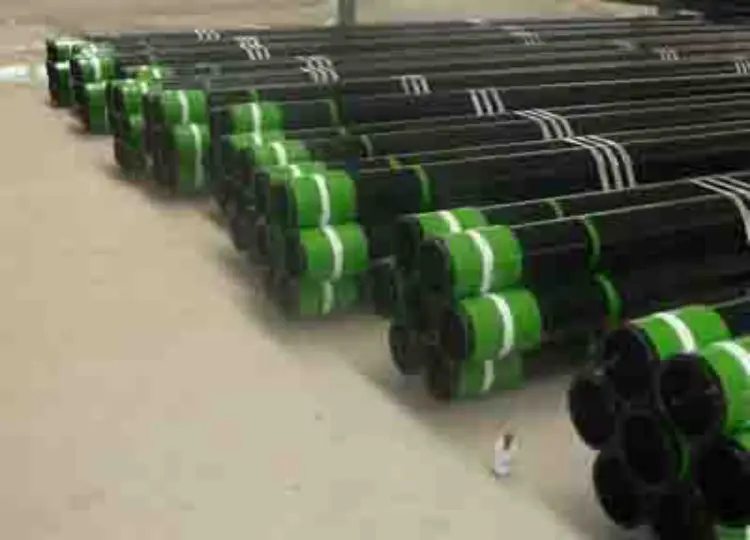
GB/T 9711 L290 Pipeline Steel
L290 Pipeline Steel: Chemical Composition, Mechanical & Physical Properties per GB/T 9711
Complete technical data for L290 steel grade used in line pipe according to GB/T 9711 standard, covering chemical composition, mechanical strength, thermal and electrical properties, international equivalents and application guidance.
Forming, welding (HFW, SAW, ERW), hot‑bending, cold‑bending, machining
- Phone : +8618037372205
- Email : [email protected]
- WhatsApp: Contact via Whtsapp
- WeChat: +8618037372205
GB/T 9711 L290 Pipeline Steel Introduction
L290, designated in the Chinese standard GB/T 9711, is a low‑carbon pipeline steel primarily used for manufacturing welded and seamless line pipes in oil‑gas transportation systems. With a minimum yield strength of 290 MPa, it offers an optimum balance between strength, weldability and toughness. The steel is micro‑alloyed with small additions of niobium, vanadium or titanium to refine grain size and improve hardenability, ensuring reliable performance under moderate pressure and temperature conditions. L290 is equivalent to API 5L X42 and ISO 3183 L290, making it globally accepted for cross‑country pipelines, gathering lines and distribution networks.
Key attributes include:
- Yield strength ≥ 290 MPa (transverse – 0.5% total extension)
- Tensile strength ≥ 415 MPa
- Excellent notch toughness even at sub‑zero service temperatures
- Good formability and field weldability
GB/T 9711 L290 Pipeline Steel Chemical Composition
The table lists the elemental limits for L290 grade per GB/T 9711‑2017. Values reflect product specification level 2 (PSL2), which is commonly specified for critical service; PSL1 requirements (broader limits) are noted in remarks. Micro‑alloying elements Nb, V and Ti may be added singly or in combination to achieve the required mechanical properties, but the total content shall not exceed 0.15%. Carbon equivalent (CEIIW) is typically controlled ≤ 0.43% for good weldability.
| Element | Value (PSL2) – max unless range | Remarks |
|---|---|---|
| C | ≤ 0.22 | PSL1 max 0.28 |
| Si | ≤ 0.45 | Typical range 0.10–0.35 |
| Mn | ≤ 1.40 | PSL1 max 1.40 |
| P | ≤ 0.025 | PSL1 max 0.030 |
| S | ≤ 0.015 | PSL1 max 0.030 |
| Nb | ≤ 0.05 | If added, typical 0.02–0.04 |
| V | ≤ 0.05 | If added |
| Ti | ≤ 0.04 | If added |
| Nb+V+Ti | ≤ 0.15 | Combined micro‑alloy limit |
| N | ≤ 0.012 | Not always reported |
| Al | ≥ 0.015 (total) | Fine grain practice requires adequate deoxidation |
| Cu | ≤ 0.50 | Residual element |
| Ni | ≤ 0.50 | Residual |
| Cr | ≤ 0.50 | Residual |
| Mo | ≤ 0.50 | Residual |
GB/T 9711 L290 Pipeline Steel Thermal and Electrical Physical Properties
The physical constants listed below are representative for low‑alloy carbon steel of the L290 class under ambient conditions. These are not standardised requirements but serve as engineering reference data. Values may slightly vary depending on exact composition and microstructure.
| Property | Typical value | Unit | Test condition / Remarks |
|---|---|---|---|
| Density (ρ) | 7.85 | g/cm³ | At 20 °C |
| Elastic modulus (E) | 205 | GPa | At 20 °C, average for carbon steel |
| Shear modulus (G) | 80 | GPa | At 20 °C (calculated from E and Poisson's ratio) |
| Poisson's ratio (ν) | 0.30 | – | At 20 °C, within elastic range |
| Linear thermal expansion coefficient (α) | 12.0 × 10⁻⁶ | K⁻¹ | Between 20 °C and 100 °C (typical range 11.0–13.0) |
| Thermal conductivity (λ) | 50 | W/(m·K) | At 20 °C (can reduce to ~45 at 200 °C) |
| Specific heat capacity (c) | 485 | J/(kg·K) | At 20 °C (increases with temperature) |
| Electrical resistivity (ρe) | 0.20 | μΩ·m | At 20 °C, typical for mild steel |
GB/T 9711 L290 Pipeline Steel Mechanical Properties
The mechanical properties tabulated correspond to transverse strip or round bar specimens taken from the pipe body according to GB/T 9711‑2017. The yield strength is determined by the 0.5% total extension method (Rt0.5). For welded pipe, the weld seam shall show tensile strength no lower than the minimum specified for the base metal. Impact energy values apply to PSL2 grade and depend on the specified design temperature.
| Property | Specified value | Unit | Test condition |
|---|---|---|---|
| Yield strength (Rt0.5) | 290 – 495 | MPa | Transverse, ambient temperature |
| Tensile strength (Rm) | 415 – 655 | MPa | Transverse, ambient temperature |
| Yield-to-tensile ratio (Rt0.5/Rm) | ≤ 0.93 | – | For PSL2, unless otherwise agreed |
| Elongation after fracture (A) | ≥ 22 | % | Gauge length 50 mm (or 5.65√S0); can be adjusted per wall thickness per standard |
| Bend test | No cracks or openings | – | Bend angle 180°; mandrel diameter per standard; room temperature |
| Charpy V‑notch impact energy (KV2) | ≥ 27 (average) / ≥ 20 (single) | J | Transverse specimens; test temperature typically 0°C, –10°C or –20°C as agreed |
| Hardness | ≤ 220 HV10 | – | Weld and heat‑affected zone; for sour service can be lower |
GB/T 9711 L290 Pipeline Steel Fully Corresponding Standards and Replaceable Grades
| Country / Region | Standard | Grade | Remarks |
|---|---|---|---|
| USA / International | API Specification 5L (46th Ed.) | X42 (PSL1 / PSL2) | Equivalent strength and chemistry; interchangeable for pipeline projects |
| International | ISO 3183:2019 | L290 | Direct adoption of GB/T 9711 grade |
| Europe | EN 10208‑2:2009 | L290GA, L290GB | GA for non‑sour, GB for sour service; slightly tighter chemistry in GB |
| Canada | CSA Z245.1‑18 | Grade 290 | Same strength level; used in Canadian pipeline regulations |
| Russia / CIS | GOST 20295‑85 | K52 | Approximate equivalent; tensile strength slightly different |
GB/T 9711 L290 Pipeline Steel Application Introduction
L290 pipeline steel is extensively employed in the oil & gas industry for medium‑strength line pipe. Its good weldability (CEIIW ≤ 0.43) permits efficient field girth welding with minimal preheating, and its sufficient toughness safeguards against brittle fracture in buried, ambient‑temperature and mildly chilled services.
Typical applications include:
- On‑shore and shallow‑water natural gas transmission
- Crude oil and product gathering networks
- Water‑injection and utility piping within station boundaries
- Structural tubular members in compressive and bending‑dominated designs
Product Applications: Long‑distance pipeline (ERW/HFI, SAW, seamless), Gathering and flow lines, Distribution mains, Casing and tubing (limited to lower pressure), Pipe‑type structural beams and columns
Processed into products: Straight and spiral‑welded pipes (pipe body), Induction bends and hot‑formed elbows (fittings of same grade), Flanges and tees (matching strength welded fabrication), Reducer and transition pieces, Repair sleeves and line‑pipe repair components
Application industries: Oil and Gas Exploration & Transmission, Petrochemical and Refinery Plant Piping, Water and Sewage Infrastructure, Power Generation (cooling water lines), Construction and Civil Engineering (piling, structural tubes)
GB/T 9711 L290 Pipeline Steel Similar / Close‑Alternative Materials
| Country / Region | Standard | Grade | Remarks |
|---|---|---|---|
| China | GB/T 9711‑2017 | L245 | Lower yield strength (≥245 MPa); suitable for less demanding pressure requirements |
| China | GB/T 9711‑2017 | L360 | Higher yield (≥360 MPa); stronger but toughness and weldability remain excellent |
| USA / International | API 5L | X46 | Minimum yield 320 MPa; close in strength, often used as a direct substitute |
| USA / International | API 5L | X52 | Minimum yield 360 MPa; next step up if higher strength is needed |
| Europe | EN 10208‑2 | L245NB | Similar low‑end strength; matches L245 but close to L290 when heavy‑wall properties are considered |
Notes:
When ordering, additional tests such as DWTT (Drop‑Weight Tear) or CTOD may be invoked for fracture‑critical applications. For sour service (H₂S environment), supplementary requirements of Annex H of GB/T 9711‑2017 (based on NACE MR0175/ISO 15156) must be satisfied, which includes stricter hardness limits (e.g. ≤ 250 HV10 or ≤ 22 HRC) and controlled sulphur content ≤ 0.002%. The steel is typically produced via controlled rolling or normalising rolling, achieving fine‑grained ferrite‑pearlite microstructure.
Welding consumables shall be selected to match the base metal strength and toughness; preheating not normally required below 10 °C for wall thicknesses up to 15 mm.
- Share



