
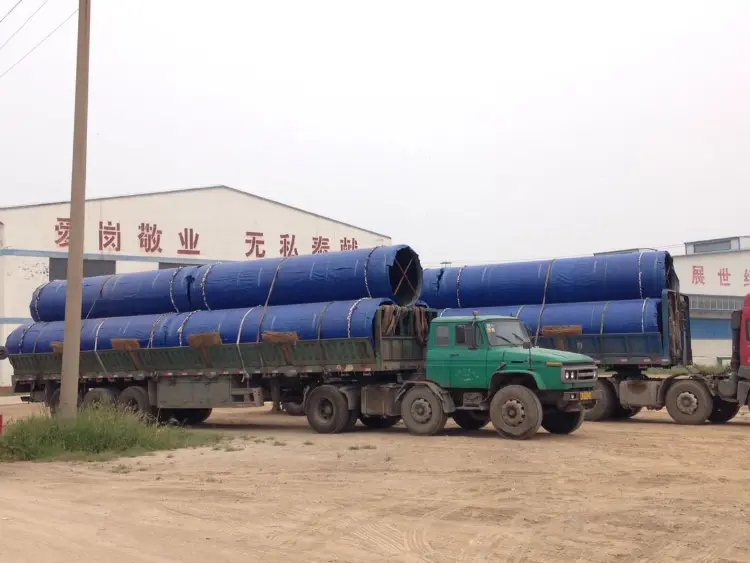
EN10219 S235JRH LSAW Pipe
EN10219 S235JRH LSAW Pipe: Cold-Formed Structural Hollow Section & Material Data
Comprehensive material properties of S235JRH low-carbon structural steel for cold-formed welded hollow sections (including LSAW pipes) according to EN10219-1, with chemical, mechanical, thermal, and electrical data, equivalent grades, and application insights.
Cold forming, longitudinal submerged arc welding (LSAW), high-frequency welding (ERW), bending, cutting, drilling, welding, galvanizing, painting.
- Phone : +8618037372205
- Email : [email protected]
- WhatsApp: Contact via Whtsapp
- WeChat: +8618037372205
EN10219 S235JRH LSAW Pipe Introduction
EN10219 S235JRH is a hot-rolled or cold-formed structural steel grade intended for the manufacture of welded circular, square or rectangular hollow sections suitable for construction and mechanical applications. The designation S235 indicates a minimum yield strength of 235 MPa, while JRH denotes specified impact energy at room temperature (JR) and hollow section (H). It offers good weldability, formability, and moderate strength, making it an economical choice for structural frameworks, columns, beams, and piling. The LSAW (Longitudinally Submerged Arc Welded) pipe variant is produced from hot-rolled coils or plates, formed and welded longitudinally, ensuring consistent wall thickness and high dimensional accuracy. Typical delivery conditions include as-welded (+AW), normalized (+N), or stress-relieved (+SR) depending on the service requirements.
EN10219 S235JRH LSAW Pipe Chemical Composition
The chemical composition conforms to the ladle analysis requirements of EN 10219-1:2006 for grade S235JRH. The steel is non-alloy and aluminum-killed. Maximum phosphorus and sulfur contents are controlled to ensure good weldability and toughness. Nitrogen is limited to avoid strain ageing. Micro-alloying elements such as Nb, V, or Ti are not mandatory but may be present in trace amounts as permitted by the standard.
| Chemical Element | Standard Value (max, %) | Remarks |
|---|---|---|
| Carbon (C) | ≤ 0.20 | For thickness ≤ 40 mm |
| Silicon (Si) | ≤ — | Not specified; typical ≤ 0.55 |
| Manganese (Mn) | ≤ 1.40 | |
| Phosphorus (P) | ≤ 0.040 | |
| Sulfur (S) | ≤ 0.040 | |
| Nitrogen (N) | ≤ 0.009 | If sufficient quantities of Al or other nitrogen-binding elements are present |
| Aluminum (Al) | ≥ 0.020 (total) | When used for nitrogen binding |
| Others (Nb, V, Ti) | Not specified | May be present as residuals |
EN10219 S235JRH LSAW Pipe Thermal and Electrical Physical Properties
These values are representative for carbon-manganese structural steels similar to S235 grade. They are not mandated by EN 10219 but are useful for calculations and design. The properties may vary slightly depending on the exact composition and manufacturing process.
| Property | Typical Value | Unit | Test Condition / Remarks |
|---|---|---|---|
| Density (ρ) | 7.85 × 10³ | kg/m³ | At 20 °C |
| Modulus of elasticity (E) | 210 | GPa | At 20 °C |
| Shear modulus (G) | ~81 | GPa | Calculated from E and ν |
| Poisson's ratio (ν) | 0.3 | — | At 20 °C, elastic range |
| Coefficient of thermal expansion (α) | 12.0 × 10⁻⁶ | K⁻¹ | 20–100 °C |
| Coefficient of thermal expansion (α) | 12.8 × 10⁻⁶ | K⁻¹ | 20–200 °C |
| Coefficient of thermal expansion (α) | 13.5 × 10⁻⁶ | K⁻¹ | 20–300 °C |
| Thermal conductivity (λ) | ~50 | W/(m·K) | At 20 °C |
| Specific heat capacity (cₚ) | ~490 | J/(kg·K) | At 20 °C |
| Electrical resistivity (ρₑ) | 0.15 – 0.25 | µΩ·m | At 20 °C |
EN10219 S235JRH LSAW Pipe Mechanical Properties
The mechanical properties are tested on base material strip/plate before forming or on flattened test pieces taken from the hollow section in accordance with EN 10219-1. The values are valid for wall thickness ≤ 40 mm. Impact toughness is verified by Charpy V-notch test at 20 °C (JR quality). For LSAW pipes, the weld seam properties must meet the same tensile requirements as the parent metal; transverse tensile specimens may be required by purchaser.
| Property | Standard Requirement / Typical Value | Unit | Test Condition / Remarks |
|---|---|---|---|
| Yield Strength (ReH) | ≥ 235 | MPa | Wall thickness ≤ 16 mm |
| Yield Strength (ReH) | ≥ 225 | MPa | Wall thickness 16 < t ≤ 40 mm |
| Tensile Strength (Rm) | 360 – 510 | MPa | Transverse or longitudinal specimen |
| Elongation after fracture (A) | ≥ 24 | % | Longitudinal, gauge length L₀ = 5.65√S₀ |
| Elongation after fracture (A) | ≥ 22 | % | Transverse, gauge length L₀ = 5.65√S₀ |
| Impact energy (KV₂) | ≥ 27 | J | Charpy V-notch, longitudinal, at 20 °C (average of 3 tests) |
| Weld tensile test | Rₘ ≥ min base metal value | MPa | Transverse weld specimen will meet 360–510 MPa |
EN10219 S235JRH LSAW Pipe Fully Equivalent Material Standards and Substitutable Grades
| Country/Region | Standard | Grade / Designation | Remarks |
|---|---|---|---|
| EU/EFTA | EN 10219-1 | S235JRH | Cold-formed welded hollow section |
| EU/EFTA | EN 10210-1 | S235JRH | Hot-finished hollow section; mechanical properties identical, delivery condition different |
| International | ISO 630-2 | E235 | Non-alloy structural steel; equivalent strength level, not specifically for hollow sections |
| China | GB/T 6728 | Q235B | Cold-formed welded hollow section; similar composition and mechanical properties, impact quality B (20 °C) |
| USA | ASTM A500 | Grade B | Cold-formed welded and seamless carbon steel structural tubing; yield ≥ 315 MPa (round) vs 235 MPa for S235JRH; stronger but often interchangeable with design modification |
| Japan | JIS G3466 | STKR400 | Carbon steel square and rectangular tubes for general structure; yield ≥ 235 MPa |
EN10219 S235JRH LSAW Pipe Application Introduction
S235JRH LSAW pipe and hollow sections provide an excellent balance of cost, weldability, and moderate strength, making them widely adopted in structural and general engineering. They can be easily processed by welding, cutting, drilling, bending, and galvanizing. Common applications include:
- Primary members in steel frame buildings (columns, beams, truss chords)
- Bridges and pedestrian overpasses
- Piling and foundation tubes
- Racks, shelving, and storage systems
- Agricultural machinery frames
- Scaffolding and temporary structures
- Sign and lighting poles
- Conveyor rollers and mechanical parts
- Low-pressure fluid transport pipes (if leak-tightness is ensured)
Product Applications: Steel frames for high-rise buildings and warehouses, Bridge girders and arches, Pile pipes for deep foundations, Tubular scaffolding and formwork, Lighting columns and traffic sign poles, Greenhouse structures, Roller conveyor tubes, Fencing posts and handrails, Agricultural sprayer booms and frames
Processed into products: Circular hollow section (CHS) columns and braces, Square/rectangular hollow section beams and purlins, Welded T-joints and K-joints in trusses, Sleeve connectors and splice joints, Flange-mounted pipe stubs, Cut and drilled base plates, Threaded end couplings for micropiles, Rollers with bearing housings, Adapter pieces for structural connections
Application industries: Civil and structural engineering, Construction and infrastructure, Mechanical and automotive manufacturing, Agricultural equipment, Material handling and storage, Shipbuilding (non-critical structures), Offshore and marine (topsides, walkways)
EN10219 S235JRH LSAW Pipe Similar / Approximate Substitute Materials
| Country/Region | Standard | Grade / Designation | Remarks |
|---|---|---|---|
| EU | EN 10025-2 | S235JR | Hot-rolled plate/strip; same strength level, used as base material for formed sections; impact quality JR (20 °C) |
| Germany (legacy) | DIN 17100 | St 37-2 / RSt 37-2 | Historical grade; rarely used now; similar to S235JR |
| USA | ASTM A36 | — | Structural steel plate; yield ≥ 250 MPa [36 ksi], tensile 400–550 MPa; can be used for welded pipe fabrication |
| Russia / CIS | GOST 380 | St3sp | Low-carbon steel, similar carbon-manganese base; yield ≥ 235 MPa for thickness ≤ 25 mm |
| India | IS 2062 | E250 Fe 410WA | Strength similar; impact test at 20 °C available on request |
Notes:
EN 10219 S235JRH is suitable for galvanizing and painting without special pre-treatment beyond surface cleaning. For dynamic loading or fatigue-critical applications, the design must consider the influence of the as-welded condition, possible stress concentrations at the weld seam, and the lower notch toughness of the JR quality compared to J0 or J2 grades. When higher toughness at low temperatures is required, consider upgrading to S235J0H (0 °C) or S235J2H (-20 °C) within the same standard. The LSAW process permits the use of heavier wall thicknesses (> 20 mm) compared to ERW, making it ideal for massive columns and deep-water piles. Flattening or bending test requirements may be specified by the purchaser according to EN 10219-1, Annex B. Full traceability and 3.1 inspection certificate as per EN 10204 are commonly supplied.
- Share



