
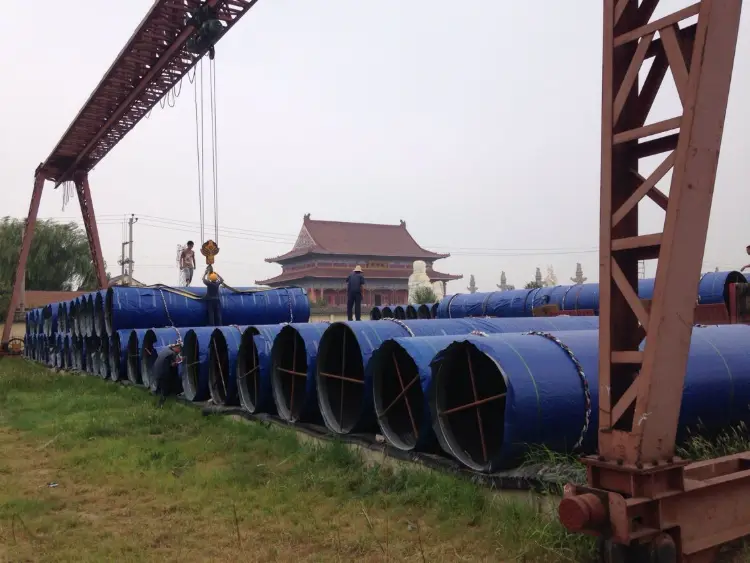
EN 10025-6 S620Q ERW Pipe
EN 10025-6 S620Q ERW Pipe: High-Strength Quenched & Tempered Structural Steel
Detailed material data for S620Q steel according to EN 10025-6, typically supplied as ERW pipe. Includes chemical composition, mechanical properties, thermal and electrical properties, international equivalents, and application guidance.
Quenching and tempering (Q&T); can be subsequently cold formed, welded, machined
- Phone : +8618037372205
- Email : [email protected]
- WhatsApp: Contact via Whtsapp
- WeChat: +8618037372205
EN 10025-6 S620Q ERW Pipe Introduction
S620Q is a high-strength structural steel grade defined in EN 10025-6, delivered in the quenched and tempered condition (indicated by the 'Q' suffix). With a minimum yield strength of 620 MPa for thicknesses up to 50 mm, it offers an excellent combination of high strength, good toughness, and weldability. The steel is designed for use in heavily loaded welded structures, such as cranes, bridges, offshore platforms, and pressure vessels. Its fine-grain microstructure ensures reliable mechanical properties, while controlled chemistry limits provide good formability and resistance to brittle fracture at low temperatures. When manufactured into ERW (Electric Resistance Welded) pipes, S620Q enables lightweight yet robust piping and structural hollow sections, reducing overall structural weight without compromising safety. The designation EN 10025-6 S620Q guarantees compliance with European standards, covering strict requirements for chemical composition, carbon equivalent value, impact toughness (typically at -20°C), and manufacturing process control.
EN 10025-6 S620Q ERW Pipe Chemical Composition – Ladle Analysis as per EN 10025-6
The chemical composition of S620Q is carefully controlled to achieve the required mechanical properties and weldability. Maximum limits are specified for elements that influence hardenability, while micro-alloying elements (Nb, V, Ti) are added for grain refinement and precipitation strengthening. Carbon equivalent (CEV) is limited to ensure good weldability; for S620Q maximum CEV is typically ≤0.52 for product thicknesses up to 50 mm, but the exact value may be agreed upon. The high purity (low P and S) guarantees high toughness and resistance to lamellar tearing.
| Element | Value (max %) | Remarks |
|---|---|---|
| Carbon (C) | 0.20 | Depends on thickness; typical range 0.16-0.20 |
| Silicon (Si) | 0.80 | Deoxidiser; higher values may be allowed if required |
| Manganese (Mn) | 1.70 | Provides strength and hardenability |
| Phosphorus (P) | 0.025 | Controlled for toughness |
| Sulfur (S) | 0.015 | Low sulfur for improved cleanliness |
| Chromium (Cr) | 1.50 | Enhances hardenability |
| Nickel (Ni) | 2.0 | Improves toughness, especially at low temperatures |
| Molybdenum (Mo) | 0.70 | Increases hardenability and high-temperature strength |
| Niobium (Nb) | 0.06 | Grain refiner and precipitation strengthener |
| Vanadium (V) | 0.12 | Precipitation strengthening |
| Titanium (Ti) | 0.05 | Grain refinement, nitrogen fixation |
| Aluminium (Al total) | ≥0.015 | Typically fine-grain practice, minimum soluble Al agreed upon |
| Boron (B) | 0.005 | Optional; used to increase hardenability |
| Zirconium (Zr) | 0.15 | Optional |
| Copper (Cu) | 0.50 | Residual element; may be adjusted for weathering steel grades |
| Nitrogen (N) | 0.015 | Must be bound by Al, Ti, etc. |
EN 10025-6 S620Q ERW Pipe Thermal and Electrical Physical Properties
These physical properties are typical for low-alloy quenched and tempered structural steels at room temperature, unless otherwise stated. The values do not vary significantly among grades like S620Q, S690Q, etc. They are suitable for engineering calculations in design. Thermal expansion coefficient must be considered when joining to other materials, and thermal conductivity affects welding preheat requirements. Resistivity is important for electric resistance welding (ERW) processes.
| Property | Typical Value | Unit | Test Condition / Remarks |
|---|---|---|---|
| Density (ρ) | 7.85 | g/cm³ | At 20°C |
| Modulus of Elasticity (E) | 210 | GPa | At 20°C |
| Shear Modulus (G) | ~81 | GPa | Calculated from E and ν |
| Poisson's Ratio (ν) | 0.3 | - | Elastic range |
| Thermal Expansion Coefficient (α) | 12.0 × 10⁻⁶ | K⁻¹ | 20°C to 100°C |
| Thermal Expansion Coefficient (α) | 13.0 × 10⁻⁶ | K⁻¹ | 20°C to 200°C |
| Thermal Conductivity (λ) | 42 | W/(m·K) | At 20°C |
| Thermal Conductivity (λ) | 38 | W/(m·K) | At 100°C |
| Specific Heat Capacity | 460 | J/(kg·K) | At 20°C |
| Electrical Resistivity (ρ_e) | 0.22 | µΩ·m | At 20°C |
EN 10025-6 S620Q ERW Pipe Mechanical Properties – S620Q to EN 10025-6
Mechanical properties are valid for flat products in the quenched and tempered condition. The values below are for thickness ≤ 50 mm. For thicker products, slightly reduced strength values may apply as per the standard. Impact toughness is given for longitudinal specimens; transverse values are available on agreement. The bend test serves as a formability check. For ERW pipes, the mechanical properties of the base material (strip) apply, but the welding zone must also meet the specified minimum values after proper weld seam treatment.
| Property | Requirement / Value | Unit | Condition / Notes |
|---|---|---|---|
| Yield Strength (ReH) | ≥620 | MPa | Thickness ≤ 50 mm; transverse (t) or longitudinal (l) direction |
| Yield Strength (ReH) | ≥580 | MPa | Thickness > 50 mm to 100 mm (typical, refer to standard) |
| Tensile Strength (Rm) | 700 – 890 | MPa | Thickness ≤ 50 mm |
| Tensile Strength (Rm) | 650 – 830 | MPa | Thickness > 50 mm to 100 mm (typical) |
| Elongation (A5) | ≥14 | % | Longitudinal, gauge length 5.65√So |
| Bend Test (D = mandrel diameter) | D = 3t | - | Transverse bend; t = product thickness, bending angle 180° |
| Bend Test (D = mandrel diameter) | D = 4t | - | Longitudinal bend; 180° angle |
| Impact Energy (KV₂, -20°C) | ≥27 | J | Longitudinal Charpy V-notch; S620Q grade (default temperature -20°C) |
| Impact Energy (KV₂, -20°C) | ≥27 | J | Transverse (optional, value as per agreement) |
EN 10025-6 S620Q ERW Pipe Fully Equivalent Material Standards and Replaceable Grades
| Country/Region | Standard | Grade | Remarks |
|---|---|---|---|
| Europe | EN 10025-6 | S620Q | Original standard; quenched and tempered, impact temperature -20°C |
| International | ISO 4950-2:1995 | E620DD | High yield strength flat products; -20°C impact test; chemical and mechanical properties equivalent |
| China | GB/T 16270-2009 | Q620D | Quenched and tempered high-strength structural steel plates; impact test temperature -20°C; comparable to S620Q |
EN 10025-6 S620Q ERW Pipe Application Introduction
S620Q ERW pipes and plates are predominantly used in demanding structural applications where weight reduction, high load capacity, and good weldability are essential. The quenched and tempered condition ensures high yield strength and adequate toughness, even in sub-zero environments. Typical guidelines include:
- Preheating before welding (recommended temperature from 100°C to 175°C depending on thickness and carbon equivalent).
- Post-weld heat treatment is usually not required for thicknesses below 50 mm, but stress relieving may be applied if needed.
- Forming operations (bending, rolling) should be performed with sufficient capacity to overcome the high strength, avoiding excessive cold deformation.
- For ERW pipe production, the strip edges must be clean and square; the weld seam can be normalized (in-line or offline) to restore toughness.
Product Applications: ERW structural pipes and hollow sections (square, rectangular, circular), Heavy-gauge welded tubes for high-pressure service, Crane lattice booms and telescopic boom sections, Steel deck plates for offshore installations, Welded bridge box girders and supporting frames, Pressure vessel shells and heads, Hydraulic cylinder bodies for heavy equipment
Processed into products: Pipe spools and flanged connections for high-pressure fluid transport, Boom segments (crane and excavator booms), Transition pieces between wind turbine tower and foundation, Tubular nodes in truss bridges and space frames, Piping manifolds and pressure accumulators, Structural hollow section columns in multi-storey buildings, Reinforcement rings and collars in pressure vessel construction
Application industries: Mobile crane and heavy lifting equipment, Bridge construction (main girders, arches), Offshore and marine structures (jack-up rigs, platforms), Pressure vessels and piping systems (high-pressure hydraulic lines), Mining and earthmoving machinery (heavy-duty booms, chassis), Building and civil engineering (trusses, columns in earthquake-resistant frames), Wind energy (tower sections, transition pieces)
EN 10025-6 S620Q ERW Pipe Similar / Alternative Material Recommendations
| Country/Region | Standard | Grade | Remarks |
|---|---|---|---|
| Europe | EN 10025-6 | S690Q | Higher yield strength (≥690 MPa), similar chemical concept; suitable where higher strength can reduce wall thickness |
| Europe | EN 10025-6 | S620QL / S620QL1 | Same strength level but with improved low-temperature toughness (QL: -40°C, QL1: -60°C); recommended for cryogenic applications |
| USA | ASTM A514/A514M | Grade B | Minimum yield 690 MPa, quenched and tempered; close in application, but strength slightly higher |
| Japan | JIS G3128 | SHY685 | High yield strength steel for welded structures, yield strength ≥685 MPa, quenched and tempered; useful reference |
| Europe | EN 10025-6 | S550Q | Lower strength (≥550 MPa) alternative if S620Q exceeds requirements; better formability and weldability |
Notes:
Additional remarks:
- S620Q steel can be supplied with enhanced cold formability on agreement (e.g., greater elongation or smaller bend radii).
- For ERW pipes, the final pipe may be subjected to a normalizing treatment of the weld seam to ensure mechanical properties meet those of the parent material.
- Impact test temperature can be changed to -40°C (QL) or -60°C (QL1) if specified; the grade then changes accordingly.
- In highly corrosive environments, a weathering version (e.g., S620QWP) or a coating system should be considered.
- All data are in accordance with EN 10025-6:2004+A1:2009. For specific thickness > 50 mm or special agreements, the standard should be consulted for individual values.
- Share



