
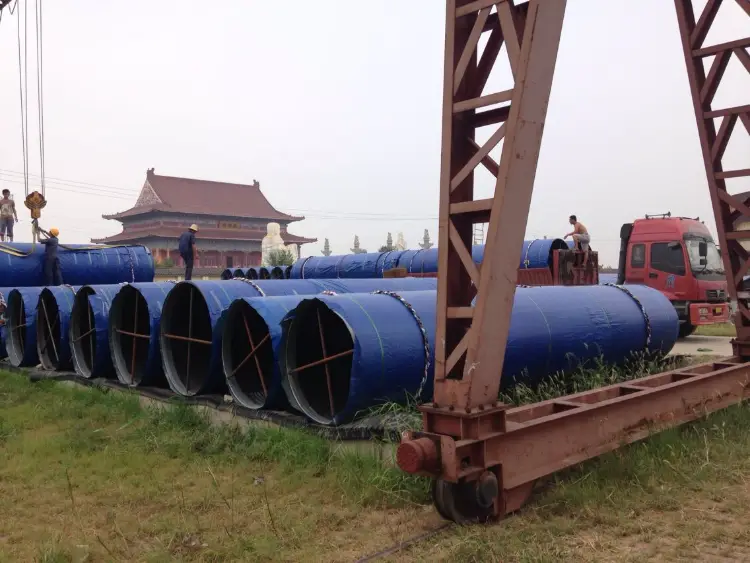
EN 10025-3 S355NH Steel for LSAW Pipes
EN 10025-3 S355NH Steel for LSAW Pipes - Normalized Fine‑Grain Structural Hollow Sections
Complete material data for S355NH grade used in longitudinal submerged arc welded (LSAW) pipes under EN 10219 delivery conditions. Includes chemical, mechanical, thermal, and electrical properties with international equivalents.
Hot rolling followed by normalizing or normalizing rolling; welding (SAW/LSAW, SMAW, GMAW) with appropriate consumables; cold forming limited by wall thickness and radius; hot forming possible
- Phone : +8618037372205
- Email : [email protected]
- WhatsApp: Contact via Whtsapp
- WeChat: +8618037372205
EN 10025-3 S355NH Steel for LSAW Pipes Introduction
S355NH is a normalized fine‑grain structural steel delivered in the form of hollow sections or parent plate for welded pipes. The designation S355NH indicates a minimum yield strength of 355 MPa, 'N' for normalized or normalized rolled condition, and 'H' for hollow section. When used in LSAW (Longitudinal Submerged Arc Welded) pipes, the material is often ordered to the dimensional and technical delivery requirements of EN 10219 for cold‑formed welded structural hollow sections, while the chemical composition and base metal mechanical properties comply with EN 10025‑3 or EN 10210.
Key characteristics:
- Good weldability and cold‑forming capacity
- Excellent toughness at low temperatures (down to ‑50 °C with options)
- Uniform mechanical properties through the thickness (Z‑quality available)
- Used for offshore structures, bridges, high‑rise buildings, and heavy machinery
EN 10025-3 S355NH Steel for LSAW Pipes Chemical Composition
Composition limits according to EN 10025‑3 for S355N/S355NH. Values apply to product thickness ≤ 100 mm. For LSAW pipes made from normalized plate, these limits are guaranteed for the base metal.
- CEV maximum 0.43% for thickness ≤ 30 mm, 0.45% for 30–100 mm (CEV = C + Mn/6 + (Cr+Mo+V)/5 + (Ni+Cu)/15).
- Options for improved through‑thickness properties (Z15, Z25, Z35) require lower sulfur content.
| Element | Standard value (wt.%) | Remarks |
|---|---|---|
| Carbon (C) | ≤ 0.20 | Ladle analysis; thicker section may require ≤ 0.18 |
| Silicon (Si) | ≤ 0.50 | Silicon-killed fine‑grain practice |
| Manganese (Mn) | 1.00 – 1.65 | Higher Mn for strength and toughness |
| Phosphorus (P) | ≤ 0.030 | ≤ 0.025 for Z‑quality options |
| Sulfur (S) | ≤ 0.025 | ≤ 0.010 for Z25; ≤ 0.005 for Z35 |
| Nitrogen (N) | ≤ 0.015 | Nitrogen bound by Al, V or Nb |
| Aluminum (Al total) | ≥ 0.020 | Minimum for fine‑grain treatment |
| Niobium (Nb) | ≤ 0.05 | Micro‑alloying element |
| Vanadium (V) | ≤ 0.12 | May be present depending on product thickness |
| Titanium (Ti) | ≤ 0.03 | Optional grain refiner |
| Chromium (Cr) | ≤ 0.30 | Residual; may be specified lower for through‑thickness properties |
| Nickel (Ni) | ≤ 0.50 | Residual; Ni content up to 0.50% permitted |
| Molybdenum (Mo) | ≤ 0.10 | Residual |
| Copper (Cu) | ≤ 0.55 | Residual; Cu may be present from scrap use |
EN 10025-3 S355NH Steel for LSAW Pipes Thermal and Electrical Physical Properties
Physical properties for normalized fine‑grain structural steel S355NH. Values are representative for carbon‑manganese steel with low alloy content. They may vary slightly with product form and exact composition.
- Density is standard for steel: 7850 kg/m³.
- Modulus of elasticity is temperature‑dependent; the value at 20 °C is given.
- Thermal expansion coefficient and conductivity are valid from 20 °C to indicated temperature.
| Property | Typical Value | Unit | Test Condition / Remarks |
|---|---|---|---|
| Density (ρ) | 7850 | kg/m³ | At 20 °C |
| Elastic modulus (E) | 210 | GPa | At 20 °C |
| Shear modulus (G) | 81 | GPa | Calculated from E and ν |
| Poisson's ratio (ν) | 0.3 | - | At 20 °C |
| Thermal expansion coefficient (α) | 12.0 | 10⁻⁶/K | 20–100 °C |
| Thermal expansion coefficient (α) | 13.5 | 10⁻⁶/K | 20–300 °C |
| Thermal conductivity (λ) | 52 | W/(m·K) | At 20 °C |
| Thermal conductivity (λ) | 48 | W/(m·K) | At 300 °C |
| Specific heat capacity (cp) | 460 | J/(kg·K) | At 20 °C |
| Specific heat capacity (cp) | 520 | J/(kg·K) | At 300 °C |
| Electrical resistivity (ρe) | 0.22 – 0.25 | µΩ·m | At 20 °C |
EN 10025-3 S355NH Steel for LSAW Pipes Mechanical Properties
Tensile and impact properties according to EN 10025‑3 for S355N (thickness ≤ 100 mm). For LSAW pipes, the values refer to the parent plate properties; weld seam properties are separately specified.
- The yield strength decreases with increasing thickness.
- Minimum impact energy is guaranteed at ‑20 °C for main grade; sub‑grades (NL, etc.) can offer options down to ‑50 °C.
| Property | Standard Requirement | Unit | Test Condition / Thickness Range |
|---|---|---|---|
| Yield strength (ReH) | ≥ 355 | MPa | t ≤ 16 mm |
| Yield strength (ReH) | ≥ 345 | MPa | 16 < t ≤ 40 mm |
| Yield strength (ReH) | ≥ 335 | MPa | 40 < t ≤ 63 mm |
| Yield strength (ReH) | ≥ 325 | MPa | 63 < t ≤ 80 mm |
| Yield strength (ReH) | ≥ 315 | MPa | 80 < t ≤ 100 mm |
| Tensile strength (Rm) | 470 – 630 | MPa | t ≤ 100 mm |
| Tensile strength (Rm) | 450 – 600 | MPa | 100 < t ≤ 200 mm (informative, outside EN 10025‑3 scope) |
| Elongation (A, 5.65√So) | ≥ 22 | % | t ≤ 16 mm, longitudinal |
| Elongation (A) | ≥ 21 | % | 16 < t ≤ 40 mm, longitudinal |
| Elongation (A) | ≥ 20 | % | 40 < t ≤ 63 mm, longitudinal |
| Elongation (A) | ≥ 19 | % | 63 < t ≤ 100 mm, longitudinal |
| Impact energy (KV, ‑20 °C) | ≥ 40 (min), ≥ 55 (average) | J | Standard requirement for S355N; S355NL at ‑50 °C: same values |
| Bend test (mandrel diameter) | No cracking | - | 180° bending with d = 3a (t ≤ 16 mm), d = 4a (t > 16 mm); 'a' = thickness |
EN 10025-3 S355NH Steel for LSAW Pipes Perfectly Equivalent Material Standards and Substitute Grades
| Country / Region | Standard | Grade | Remarks |
|---|---|---|---|
| Europe (EU) | EN 10025‑3 | S355N (plate); S355NH (hollow section) | Identical chemistry and properties |
| Europe (EU) | EN 10210 | S355NH | Hot finished structural hollow section, same base steel |
| International | ISO 630‑3 | S355N | Direct equivalent in ISO system |
| China | GB/T 1591 | Q355D (normalized) | Closest matching Chinese grade; verify yield variability and impact temperature |
| Japan | JIS G 3106 | SM490B | Similar normalized fine‑grain steel; compare tensile range and YS |
| USA | ASTM A572/A572M | Grade 50 [345] with supplementary normalized requirement | Not an exact match; additional agreement on CEV, impact, and fine‑grain practice needed |
EN 10025-3 S355NH Steel for LSAW Pipes Application Introduction
S355NH in the form of LSAW pipes is widely chosen for load‑bearing structures that demand reliable toughness, easy weldability, and a guaranteed minimum strength level after normalizing.
Key advantages include:
- Excellent lamellar tearing resistance (Z‑quality options up to Z35) for highly restrained welded joints
- Consistent mechanical properties across thick walls, important for heavy‑wall LSAW pipes
- Suitability for service temperatures down to ‑50 °C with S355NL sub‑grade
Product Applications: LSAW welded pipes with outer diameters from 406 mm up to 1626 mm and wall thickness up to 100 mm, Structural hollow sections (round, square, rectangular) under EN 10210, Cut‑to‑length plates for welded built‑up sections, Flanges and stiffening rings for tubular joints, Pile sleeves and grouted connections for offshore wind
Processed into products: Longitudinal seam‑welded pipe segments for jacket structures, Transition pieces (conical cans) fabricated by rolling and welding, Chords and braces for offshore platform jackets, Mono‑pile foundations for wind turbines, Bridge arch ribs made from bent and welded pipe, Telescopic crane boom sections, Riser pipes and caissons
Application industries: Offshore and marine engineering (jacket legs, piles, conductor pipe), Wind energy (turbine tower sections, transition pieces, monopile foundations), Civil construction and infrastructure (bridge piers, high‑rise building columns, stadium trusses), Mining and heavy equipment (boom sections, crane masts), Pressure equipment (shells and rings for vessels when additional PED compliance is achieved), Line pipe for non‑sour service in arctic regions if impact toughness is extended
EN 10025-3 S355NH Steel for LSAW Pipes Similar / Comparable Alternative Materials
| Country / Region | Standard | Grade | Remarks |
|---|---|---|---|
| Europe (EU) | EN 10025‑4 | S355ML | Thermomechanically rolled fine‑grain steel; similar strength, different processing, often lower CEV |
| Europe (EU) | EN 10219 | S355J2H | Cold‑formed hollow section; base material is hot‑rolled non‑alloy structural steel; lower low‑temperature toughness requirement |
| China | GB/T 1591 | Q355E | Normalized or TMCP fine‑grain steel with impact test at ‑40 °C; closely matches S355NL |
| USA | ASTM A572/A572M | Grade 50 [345] with Charpy requirement | May be used as alternative but need to ensure limited S and P, fine‑grain practice, and through‑thickness properties if required |
| API (worldwide) | API Spec 5L | X52N (PSL2) | Pipe line grade with normalization; strength range overlaps (YS min 360 MPa, TS 460–760 MPa); dimensional standards differ |
Notes:
- When S355NH is supplied as parent plate for LSAW pipe manufacturing, the pipe producer shall ensure that the forming and welding procedures do not degrade the normalized base metal properties. Supplementary testing of the heat‑affected zone (HAZ) may be required.
- Through‑thickness properties (Z15, Z25, Z35) can be ordered according to EN 10164 to reduce risk of lamellar tearing in critical full‑penetration weld details.
- The CEV limits are typically relaxed compared to thermomechanically rolled steels; pre‑heat recommendations should follow EN 1011‑2 for welding.
- For LSAW pipes designated only to EN 10219 without mentioning the parent steel standard, mechanical properties from the pipe (including weld) may be based on full‑section testing; in such cases the values in the mechanical table should be verified with the pipe specification.
- Share



