
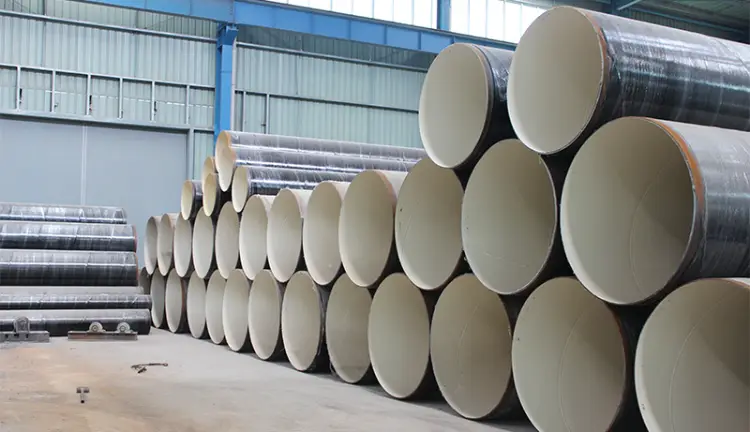
DIN 17400 1.4438 Stainless Steel Pipe
1.4438 Stainless Steel Pipe: UNS S31703 Austenitic Alloy for Superior Corrosion Resistance
Explore 1.4438 (X2CrNiMo18-15-4) stainless steel pipe under DIN 17400 / EN 10216-5, with full chemical composition, mechanical and thermal properties, international equivalents, and application guidance.
Hot forming, cold forming, welding (TIG, MIG, SAW), machining (with appropriate tools), solution annealing
- Phone : +8618037372205
- Email : [email protected]
- WhatsApp: Contact via Whtsapp
- WeChat: +8618037372205
DIN 17400 1.4438 Stainless Steel Pipe Introduction
1.4438, designated X2CrNiMo18-15-4, is a low-carbon, molybdenum-alloyed austenitic stainless steel offering excellent resistance to pitting, crevice corrosion, and stress corrosion cracking in chloride-bearing environments.
- It belongs to the 317L family and is particularly suited for chemical, petrochemical, and marine applications.
- The material is typically supplied in solution-annealed condition, exhibiting good formability and weldability.
- Key characteristics include high ductility, superior corrosion resistance, and reliable mechanical properties across a wide temperature range.
DIN 17400 1.4438 Stainless Steel Pipe Chemical Composition
Chemical composition according to EN 10216-5:2013 and EN 10088-1 for grade 1.4438 seamless stainless steel tubes. The alloy is characterized by high molybdenum (3.0–4.0%) and nickel (13.0–16.0%) contents, ensuring superior resistance to aggressive chloride media.
- Low carbon improves intergranular corrosion resistance after welding.
- Sulfur is controlled at very low levels for enhanced hot workability.
| Element | Value (%) | Remarks |
|---|---|---|
| Carbon (C) | ≤ 0.030 | Low carbon for improved weld sensitization resistance |
| Silicon (Si) | ≤ 1.00 | Deoxidizer; upper limit ensures formability |
| Manganese (Mn) | ≤ 2.00 | Austenite stabilizer; aids hot workability |
| Phosphorus (P) | ≤ 0.045 | Residual element; restricted for corrosion and toughness |
| Sulfur (S) | ≤ 0.015 | Controlled for inclusion shaping and pitting resistance |
| Chromium (Cr) | 17.0 – 19.0 | Primary element for passivation and corrosion resistance |
| Nickel (Ni) | 13.0 – 16.0 | Austenite stabilizer; provides ductility and SCC resistance |
| Molybdenum (Mo) | 3.0 – 4.0 | Key addition for pitting and crevice corrosion resistance |
| Nitrogen (N) | ≤ 0.11 | Increases strength; controlled to avoid nitride formation |
| Iron (Fe) | Balance | Remainder |
DIN 17400 1.4438 Stainless Steel Pipe Physical Properties
Physical properties for 1.4438 austenitic stainless steel based on EN 10088-1 and published technical data. The material exhibits moderate density, high thermal expansion, and lower thermal conductivity compared to carbon steels, typical of austenitic grades.
- Properties may vary slightly depending on manufacturing route and heat treatment.
- Values are provided for a range of temperatures where applicable.
| Property | Standard Value | Unit | Test Condition / Temperature |
|---|---|---|---|
| Density (ρ) | 7.98 | kg/dm³ | 20 °C |
| Modulus of Elasticity (E) | 200 | GPa | 20 °C |
| Modulus of Elasticity (E) | 194 | GPa | 100 °C |
| Modulus of Elasticity (E) | 186 | GPa | 200 °C |
| Shear Modulus (G) | 77 | GPa | 20 °C (calculated from E and ν) |
| Poisson's Ratio (ν) | 0.30 | – | 20 °C |
| Thermal Expansion Coefficient (α) | 16.0 | 10⁻⁶/K | 20 – 100 °C |
| Thermal Expansion Coefficient (α) | 17.0 | 10⁻⁶/K | 20 – 200 °C |
| Thermal Expansion Coefficient (α) | 17.5 | 10⁻⁶/K | 20 – 300 °C |
| Thermal Expansion Coefficient (α) | 18.0 | 10⁻⁶/K | 20 – 400 °C |
| Thermal Conductivity (λ) | 15 | W/(m·K) | 20 °C |
| Thermal Conductivity (λ) | 16 | W/(m·K) | 100 °C |
| Thermal Conductivity (λ) | 18 | W/(m·K) | 200 °C |
| Thermal Conductivity (λ) | 20 | W/(m·K) | 300 °C |
| Specific Heat Capacity (cp) | 500 | J/(kg·K) | 20 °C |
| Electrical Resistivity (ρe) | 0.85 | Ω·mm²/m (µΩ·m) | 20 °C |
DIN 17400 1.4438 Stainless Steel Pipe Mechanical Properties
Mechanical properties for 1.4438 seamless tubes according to EN 10216-5:2013, valid for wall thickness up to 50 mm. The alloy shows excellent combination of strength and ductility, with yield strength above 220 MPa and elongation exceeding 35% in longitudinal direction.
- Impact toughness is not a mandatory requirement for austenitic stainless steel tubes per this standard, but the material possesses high toughness down to cryogenic temperatures.
- Bending test is not specified for tubular products; alternative tests such as flattening or flaring apply.
| Property | Standard Value | Unit | Test Condition |
|---|---|---|---|
| 0.2% Yield Strength (Rp0.2) | ≥ 220 | MPa | Room temperature, longitudinal specimen, wall thickness ≤ 50 mm |
| Tensile Strength (Rm) | 530 – 730 | MPa | Room temperature, longitudinal specimen |
| Elongation (A) | ≥ 35 | % | Longitudinal, L0=5.65√S0, wall thickness ≤ 30 mm |
| Elongation (A) | ≥ 30 | % | Longitudinal, wall thickness 30 < t ≤ 50 mm |
DIN 17400 1.4438 Stainless Steel Pipe Exact Equivalent Material Standards and Substitute Grades
| Country/Region | Standard | Grade | Remarks |
|---|---|---|---|
| European Union | EN 10088-1/2/3, EN 10216-5, EN 10217-7 | 1.4438 (X2CrNiMo18-15-4) | Primary designation |
| USA | ASTM A312/A312M, A240/A240M, A479/A479M | 317L (UNS S31703) | Chemical and mechanical equivalence |
| Japan | JIS G3459, JIS G4304, JIS G4305 | SUS317L | Equivalent austenitic grade |
| China | GB/T 14976, GB/T 1220 | 022Cr19Ni13Mo3 (not full equivalent, similar to 317L) | Composition adjusted; verify mo content |
| Germany (obsolete) | DIN 17440, DIN 17456 | 1.4438 | Predecessor standard, now superseded by EN |
| International | ISO 15510 | X2CrNiMo18-15-4 | Identical to EN designation |
DIN 17400 1.4438 Stainless Steel Pipe Application Introduction
1.4438 / 317L is the preferred material when enhanced resistance to chlorides and corrosive chemicals is required beyond 316L. Typical application fields and products include:
Product Applications: Seamless and welded pipes for aggressive media conveyance, Heat exchanger tubes and condensers in seawater cooling, Pressure vessels, reactors, and storage tanks, Structural profiles and fasteners for corrosive atmospheres, Valves, pumps, and fittings in chemical plants
Processed into products: Flue gas scrubber trays and internals, Shell-and-tube heat exchanger bundles, Piping spools for chlorine and bromine containing streams, Welded assemblies in paper mill digesters, Filtration unit housings for pharmaceutical processes, Expansion joints and bellows in corrosive service
Application industries: Chemical and petrochemical processing, Flue gas desulfurization (FGD) scrubbers, Pulp and paper (bleaching and handling equipment), Marine and offshore engineering (seawater piping, heat exchangers), Pharmaceutical and food processing (where high chloride cleaning agents are used), Oil and gas (sour service components)
DIN 17400 1.4438 Stainless Steel Pipe Similar or Nearby Alternative Materials Recommendation
| Country/Region | Standard | Grade | Remarks |
|---|---|---|---|
| EU | EN 10088 | 1.4404 (X2CrNiMo17-12-2) / 316L | Lower Mo (2-2.5%), less pitting resistance, but more economical |
| EU | EN 10088 | 1.4435 (X2CrNiMo18-14-3) / 316L mod. | Mo 2.5-3%, improved corrosion resistance over 316L |
| EU | EN 10088 | 1.4539 (X1NiCrMoCu25-20-5) / 904L | Higher Ni, Mo, Cu for aggressive chloride environments |
| USA | ASTM A312 | TP316L (S31603) | Standard molybdenum grade; limited resistance in chloride pitting |
| USA | ASTM A312 | TP317LMN (S31726) | Higher nitrogen and molybdenum for enhanced strength and crevice corrosion resistance |
| Japan | JIS G3459 | SUS316LTP | Lower molybdenum, cost-effective alternative for mild environments |
| Global | Duplex | 2205 (S32205, 1.4462) | Higher strength and stress corrosion cracking resistance, different welding requirements |
Notes:
Welding of 1.4438 should be performed with low heat input and matching or over-alloyed filler (e.g., AWS ER317L / E317L).
- Post-weld heat treatment is generally not required, but full solution annealing may be applied for maximum corrosion resistance.
- Pickling and passivation after welding removes heat tint and restores the passive layer.
- For submerged service in hot seawater, temperature and oxygen levels must be evaluated to avoid crevice corrosion; higher alloy grades such as 6Mo or duplex stainless steels may be considered.
- Data provided are based on EN 10216-5 and EN 10088 standards; for specific product forms (e.g., plate, bar) refer to the relevant product standard.
- Share



