
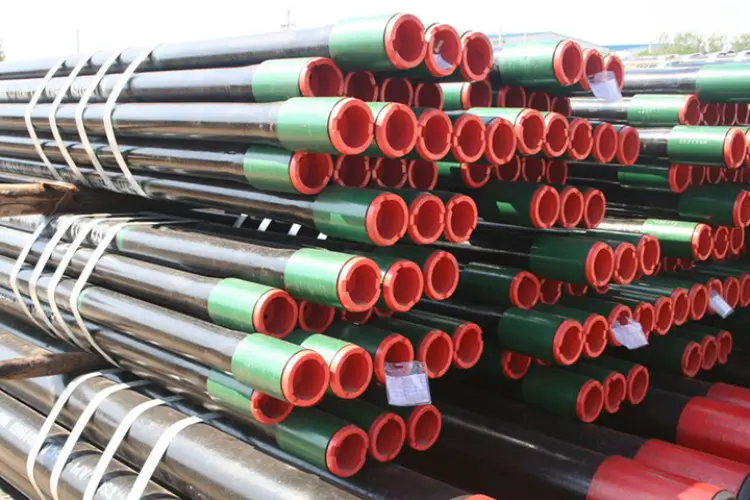
DIN 17400 1.4401 Stainless Steel Pipe
DIN 17400 1.4401 Stainless Steel Pipe: Composition, Properties & International Equivalents
In-depth material data for DIN 17400 1.4401 stainless steel pipe, including chemical composition, mechanical and thermal properties, international cross-references, and application guidelines.
Hot rolling, cold rolling, cold drawing, welding, machining (lower machinability than ferritic grades), deep drawing, bending
- Phone : +8618037372205
- Email : [email protected]
- WhatsApp: Contact via Whtsapp
- WeChat: +8618037372205
DIN 17400 1.4401 Stainless Steel Pipe Introduction
1.4401 is a classic austenitic chromium-nickel-molybdenum stainless steel, defined in the now withdrawn German standard DIN 17400 (superseded by EN 10088 series). It corresponds to X5CrNiMo17-12-2 (EN 1.4401) and AISI 316. The steel offers excellent corrosion resistance in moderate aggressive environments, particularly against pitting and crevice corrosion due to its molybdenum content (2.0–2.5%). It is non-magnetic in the annealed condition, highly formable, and exhibits good weldability without requiring preheating. Typical applications include chemical processing equipment, food industry components, medical devices, and marine hardware. Delivery condition is usually solution annealed and pickled, providing a uniform structure with optimum ductility and toughness.
DIN 17400 1.4401 Stainless Steel Pipe Chemical Composition
Based on DIN 17400 and EN 10088-1 for grade 1.4401. The composition is carefully balanced to ensure stable austenitic structure and corrosion resistance. Carbon is kept low to avoid intergranular carbide precipitation during welding. Molybdenum enhances pitting resistance in chloride-containing media. Nitrogen is a deliberate addition to increase strength without loss of ductility.
| Element | Standard Value | Note |
|---|---|---|
| Carbon (C) | ≤ 0.07 | Max. content for good intergranular corrosion resistance |
| Silicon (Si) | ≤ 1.00 | Deoxidation element; higher Si improves oxidation resistance but promotes sigma phase |
| Manganese (Mn) | ≤ 2.00 | Austenite stabilizer; higher Mn aids hot working |
| Phosphorus (P) | ≤ 0.045 | Residual element; low P attains better corrosion properties |
| Sulfur (S) | ≤ 0.030 | Residual element; for improved machinability, controlled S may be used (with addition note) |
| Chromium (Cr) | 16.50 – 18.50 | Essential for passivity and corrosion resistance |
| Nickel (Ni) | 10.00 – 13.00 | Stabilizes austenite; contributes to ductility and toughness |
| Molybdenum (Mo) | 2.00 – 2.50 | Increases pitting and crevice corrosion resistance in chloride environments |
| Nitrogen (N) | ≤ 0.11 | Strengthening agent; intentional addition up to 0.11 % |
DIN 17400 1.4401 Stainless Steel Pipe Thermal and Electrical Physical Properties
Physical properties are representative for wrought 1.4401 in the solution annealed condition. Values may vary slightly depending on exact composition and manufacturing history. Thermal expansion and thermal conductivity data are vital for design involving temperature changes. The alloy is non-magnetic in the annealed state, with relative permeability close to 1. Electrical resistivity is relatively high, typical for austenitic stainless steels.
| Property | Standard Value | Unit | Test Condition |
|---|---|---|---|
| Density (ρ) | 7.98 | g/cm³ | At 20 °C |
| Elastic Modulus (E) | 200 | GPa | At 20 °C, static |
| Shear Modulus (G) | 77 | GPa | At 20 °C |
| Poisson's Ratio (ν) | 0.3 | - | At 20 °C |
| Thermal Expansion Coefficient (α) | 16.0 | 10⁻⁶/K | 20 – 100 °C |
| Thermal Expansion Coefficient (α) | 16.5 | 10⁻⁶/K | 20 – 200 °C |
| Thermal Expansion Coefficient (α) | 17.0 | 10⁻⁶/K | 20 – 300 °C |
| Thermal Expansion Coefficient (α) | 17.5 | 10⁻⁶/K | 20 – 400 °C |
| Thermal Expansion Coefficient (α) | 18.0 | 10⁻⁶/K | 20 – 500 °C |
| Thermal Conductivity (λ) | 15 | W/(m·K) | At 20 °C |
| Thermal Conductivity (λ) | 16.5 | W/(m·K) | At 100 °C |
| Thermal Conductivity (λ) | 19.5 | W/(m·K) | At 300 °C |
| Thermal Conductivity (λ) | 22.0 | W/(m·K) | At 500 °C |
| Specific Heat Capacity (cp) | 500 | J/(kg·K) | At 20 °C |
| Specific Heat Capacity (cp) | 540 | J/(kg·K) | At 100 °C |
| Electrical Resistivity (ρe) | 0.75 | µΩ·m | At 20 °C |
DIN 17400 1.4401 Stainless Steel Pipe Mechanical Properties
Mechanical data are specified for pipes and tubes according to DIN 17400 in the solution annealed condition. Typical room temperature tensile properties are listed. For thick-walled products a slightly lower strength may be observed. The wrought austenitic structure guarantees high elongation and excellent toughness even at cryogenic temperatures. Impact test values are not mandatory by the standard but are generally far above 100 J at 20 °C.
| Property | Standard Required Value | Unit | Test Condition |
|---|---|---|---|
| Tensile Strength (Rm) | 500 – 700 | MPa | Room temperature, longitudinal specimen |
| Yield Strength (Rp0.2) | ≥ 200 | MPa | Room temperature, 0.2 % offset |
| Elongation after Fracture (A) | ≥ 40 | % | Gauge length L0 = 5.65√S0, room temperature |
DIN 17400 1.4401 Stainless Steel Pipe True Equivalent Material Standards and Substitute Grades
| Country/Region | Standard | Grade/Designation | Remarks |
|---|---|---|---|
| Europe (EN) | EN 10088-2 / -3 | 1.4401 (X5CrNiMo17-12-2) | Direct equivalent; replaces DIN 17400 for most products |
| USA | ASTM A276 / A312 | 316 (UNS S31600) | Matching chemistry and mechanical properties |
| Japan | JIS G4303 / G4304 | SUS 316 | Fully equivalent for pipes, bars and plates |
| China | GB/T 1220 / 3280 | 06Cr17Ni12Mo2 (new), 0Cr17Ni12Mo2 (old) | National standard match |
| UK | BS 970-1 / 1449-2 | 316S31 | Historical BS equivalent |
| International | ISO 15510 | X5CrNiMo17-12-2 | ISO grade corresponding to 1.4401 |
DIN 17400 1.4401 Stainless Steel Pipe Application Introduction
1.4401 (AISI 316) pipe is widely used in aggressive environments where pitting and crevice corrosion are a concern. Its good formability, weldability, and excellent corrosion resistance to many organic and inorganic media make it a first-choice material across many industrial sectors. It can be processed into a large variety of semi-finished and finished products, covering thin-walled tubes to heavy forgings.
Product Applications: Seamless and welded pipes for fluids transfer, Heat exchanger tubes and U-bend tubes, Boiler and superheater pipes, Sanitary tubing and brewery pipes, Condenser and evaporator tubes, Hydraulic and instrumentation tubing, Decorative and structural pipes
Processed into products: Pipe fittings (elbows, tees, reducers, flanges), Valve bodies and valve trim, Pump shafts and impellers, Nozzles and diffusers, Fasteners (bolts, nuts, studs) for corrosive service, Springs and wire cloth, Filter housings and strainers, Cryogenic vessel linings and piping
Application industries: Chemical and Petrochemical Processing, Food and Beverage Production, Pharmaceutical Equipment, Marine and Offshore Engineering, Pulp and Paper Industry, Textile Machinery, Water Treatment and Desalination, Medical Devices and Surgical Implants, Architectural and Building Hardware, Heat Exchanger Manufacturing
DIN 17400 1.4401 Stainless Steel Pipe Similar / Equivalent Materials for Comparison
| Country/Region | Standard | Grade/Designation | Remarks |
|---|---|---|---|
| Europe | EN 10088 | 1.4404 (X2CrNiMo17-12-2) | Low carbon variant (≤0.03 % C) – better weldability as '316L'; slightly lower strength |
| Europe | EN 10088 | 1.4435 (X2CrNiMo18-14-3) | Extra-low carbon with higher Mo – superior pitting resistance, medical grade |
| Europe | EN 10088 | 1.4571 (X6CrNiMoTi17-12-2) | Titanium stabilized version '316Ti' – improved intergranular corrosion resistance at elevated temperatures |
| USA | ASTM | 316L (UNS S31603) | Low carbon equivalent – same as 1.4404, recommended for welded structures |
| Japan | JIS | SUS 316L | Corresponds to 1.4404 – enhanced welding performance |
| USA | ASTM | 316H (UNS S31609) | High carbon (0.04–0.10 %) – improved high-temperature strength |
| Europe | EN 10088 | 1.4539 (X1NiCrMoCu25-20-5) | Highly alloyed austenitic – superior corrosion resistance in severe environments |
Notes:
General notes:
- Due to its austenitic structure, 1.4401 is non-magnetic after solution annealing but may become slightly magnetic after cold deformation.
- This grade is susceptible to stress corrosion cracking in hot chloride solutions above 60 °C; avoid direct contact with concentrated chlorides.
- Welding: Common filler metals include ISO 14343-B 19 12 3 L (low carbon) or AWS ER316L; post-weld heat treatment is usually not required for section thicknesses up to 20 mm.
- In heavy sections, intergranular corrosion risk exists after prolonged exposure in the temperature range 450–850 °C; for such applications, low-carbon (1.4404) or stabilized (1.4571) grades are preferred.
- DIN 17400 is officially withdrawn and has been replaced by the EN 10088 series; however, the designation 1.4401 remains valid in the European material numbering system.
- For machining, high work hardening rate demands rigid setups, sharp tools, and effective cooling; optimized tool geometries are recommended.
- Share



