
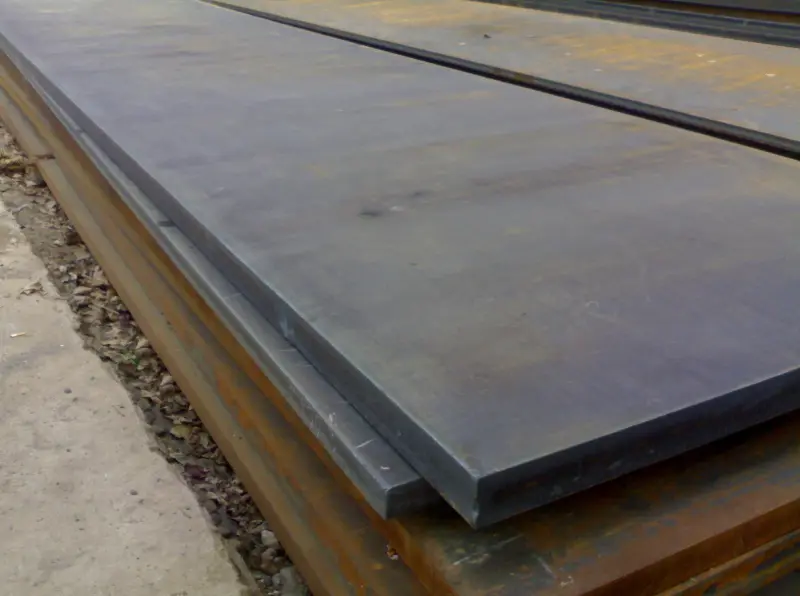
Austenitic 317LN (UNS S31753) Stainless Steel Plate/Coil
High-Strength, Corrosion-Resistant 317LN Stainless Steel Plate/Coil (UNS S31753)
Explore 317LN (S31753) stainless steel plate and coil—a nitrogen-enhanced austenitic grade providing superior pitting resistance and high mechanical strength for aggressive chemical and marine environments.
Hot rolling, cold rolling, continuous annealing, pickling, descaling, skin pass, leveling, shearing
- Phone : +8618037372205
- Email : [email protected]
- WhatsApp: Contact via Whtsapp
- WeChat: +8618037372205
Austenitic 317LN Stainless Steel Plate/Coil Introduction
Austenitic stainless steel 317LN (UNS S31753) is a nitrogen-strengthened, low‑carbon grade featuring elevated molybdenum (3.0‑4.0%) for outstanding resistance to pitting and crevice corrosion in chloride‑containing media. The deliberate addition of nitrogen (0.10‑0.22%) markedly increases yield and tensile strengths compared to 317L, while retaining excellent ductility and toughness. Its low carbon content (<0.03%) suppresses sensitization during welding, ensuring integrity in as‑welded thick sections.
Key characteristics:- Enhanced mechanical properties via nitrogen alloying
- Superior corrosion resistance in acidic and halide environments
- Non‑magnetic when annealed; hardens only by cold working
- Good formability and weldability using standard austenitic procedures
- Service temperatures up to approximately 870°C (1600°F) in oxidizing atmospheres
Commonly supplied in annealed and pickled condition as plate, sheet, coil or strip for demanding applications in chemical processing, flue gas desulfurization, marine engineering, pulp & paper, and heat exchanger fabrication.
Austenitic 317LN Stainless Steel Plate/Coil Chemical Composition
Chemical requirements per ASTM A240/A240M for UNS S31753. The composition is designed with low carbon to prevent intergranular corrosion and with a significant nitrogen addition for solid‑solution strengthening. All values are maximum unless a range is indicated.
| Chemical Element | Standard Value | Remarks |
|---|---|---|
| Carbon (C) | ≤0.030% | Maximum |
| Manganese (Mn) | ≤2.00% | Maximum |
| Silicon (Si) | ≤0.75% | Maximum |
| Phosphorus (P) | ≤0.045% | Maximum |
| Sulfur (S) | ≤0.030% | Maximum |
| Chromium (Cr) | 18.0–20.0% | Range |
| Nickel (Ni) | 11.0–15.0% | Range |
| Molybdenum (Mo) | 3.0–4.0% | Range |
| Nitrogen (N) | 0.10–0.22% | Range |
| Iron (Fe) | Balance | Remainder |
Austenitic 317LN Stainless Steel Plate/Coil Thermal and Electrical Physical Properties
Typical physical data for 317LN in the annealed condition. These values are representative of the grade and may vary slightly with specific heat and processing. They are provided for engineering calculations and are not part of the dimensional delivery standard. The nitrogen addition has a negligible effect on density, thermal expansion, and conductivity compared to 317L.
| Property | Typical Value | Unit | Condition / Temperature |
|---|---|---|---|
| Density (ρ) | 8.0 | g/cm³ | Room temperature |
| Elastic Modulus (E) | 200 | GPa | Tension, RT |
| Shear Modulus (G) | 77 | GPa | Calculated from E and ν |
| Poisson's Ratio (ν) | 0.30 | — | Room temperature |
| Thermal Expansion Coeff. (α) | 16.0 | 10⁻⁶/K | 20 °C to 100 °C |
| Thermal Expansion Coeff. (α) | 17.5 | 10⁻⁶/K | 20 °C to 500 °C |
| Thermal Conductivity (λ) | 14.6 | W/(m·K) | At 100 °C |
| Thermal Conductivity (λ) | 21.5 | W/(m·K) | At 500 °C |
| Specific Heat Capacity | 500 | J/(kg·K) | Room temperature |
| Electrical Resistivity (ρₑ) | 0.74 | µΩ·m | Room temperature, annealed |
Austenitic 317LN Stainless Steel Plate/Coil Mechanical Properties at Room Temperature
Minimum mechanical properties for 317LN (UNS S31753) plate, sheet and strip in the annealed condition according to ASTM A240/A240M. The nitrogen strengthening raises the yield strength above that of standard 317L, while excellent elongation ensures good formability. Hardness values are specified for acceptance; impact testing is not mandatory for austenitic grades but can be agreed upon.
| Property | Standard Requirement | Unit | Test Condition |
|---|---|---|---|
| Yield Strength (Rp0.2) | ≥205 (30) | MPa (ksi) | Annealed plate, transverse test |
| Tensile Strength (Rm) | ≥515 (75) | MPa (ksi) | Annealed plate, transverse test |
| Elongation (A) | ≥40 | % | Gauge length 50 mm (2 in.) |
| Hardness | ≤217 HBW or ≤95 HRB | HBW / HRB | As annealed |
| Bend Test | 180° bend, d = t (t ≤ 19 mm) | — | Per ASTM A240, no cracks permitted |
Austenitic 317LN Stainless Steel Plate/Coil Fully Equivalent Material Standards and Substitutable Grades
Internationally recognized standards that define grades chemically and mechanically identical to 317LN (UNS S31753). These designations may be substituted for one another in pressure equipment and general fabrication, subject to project specifications.
| Country/Region | Standard | Grade / Designation | Remarks |
|---|---|---|---|
| USA | ASTM A240/A240M, ASME SA‑240 | UNS S31753 (317LN) | Original specification; plate/sheet/coil |
| European Union | EN 10088‑2, EN 10088‑3 | X2CrNiMoN18‑12‑4 / 1.4434 | Matching composition and properties |
| Japan | JIS G4304, JIS G4305 | SUS317LN | Hot‑ and cold‑rolled stainless steels |
| China | GB/T 3280, GB/T 4237 | 022Cr19Ni13Mo4N / S31753 | National equivalent, same UNS mapping |
| International (ISO) | ISO 15510 | X2CrNiMoN18‑12‑4 | Unified designation for worldwide use |
Austenitic 317LN Stainless Steel Plate/Coil Application Introduction
317LN's combination of high nitrogen‑enhanced strength and robust pitting/crevice corrosion resistance makes it a preferred material for severe service conditions. It withstands organic and inorganic acids, chlorides, and sulfur‑containing environments, and maintains toughness at cryogenic temperatures. Typical fabrication involves welding with 317L or 317LN filler metals, machining with carbide tooling, and cold forming that increases strength further.
Product Applications: Pressure vessels and reactor vessels, Shell‑and‑tube heat exchangers, Storage tanks for corrosive chemicals, Condenser and evaporator tube bundles, Piping systems for aggressive media, Column trays and internals
Processed into products: Flanges, fittings, and gaskets, Valve bodies, stems, and seats, Pump impellers, shafts, and casings, Expansion joints and bellows, Welded linings and cladding, Fasteners and bolting (where applicable)
Application industries: Chemical and petrochemical processing, Marine, offshore, and desalination plants, Pulp and paper manufacturing (bleaching equipment), Flue gas desulfurization (FGD) systems, Pharmaceutical and high‑purity food processing, Heat exchanger and condenser construction
Austenitic 317LN Stainless Steel Plate/Coil Similar / Alternative Materials
Grades that offer comparable corrosion resistance or strength but may differ in specific alloy content, availability, or cost. Selection should consider service environment and required mechanical properties.
| Country/Region | Standard | Grade / Designation | Remarks |
|---|---|---|---|
| USA | ASTM A240/A240M | 317L (UNS S31703) | Lower nitrogen → lower strength, same corrosion resistance; can replace 317LN where strength is not critical |
| EU | EN 10088‑2 | X2CrNiMo18‑15‑4 / 1.4435 | 317L equivalent, no nitrogen strengthening |
| Japan | JIS G4304 | SUS317L | 317L equivalent |
| USA | ASTM A240/A240M | 316LN (UNS S31653) | Contains less Mo (2.0‑3.0%) → lower pitting resistance; strength increase via nitrogen |
Notes:
- Welding: Welded by SMAW, GTAW, GMAW, SAW with matching filler metals (e.g., AWS ER317L or ER317LN). Post‑weld annealing is not mandatory for most applications due to low carbon content, but solution annealing at 1040‑1120°C (1900‑2050°F) followed by rapid cooling restores maximum corrosion resistance.
- Heat treatment: Only solution annealing can soften the alloy; it cannot be hardened by quenching and tempering.
- Machining: Due to work‑hardening tendency, low cutting speeds, rigid setups, and ample coolant are recommended.
- Dual certification: Material certified to both 317L and 317LN is sometimes available when nitrogen is controlled to meet both specifications.
- Share



