
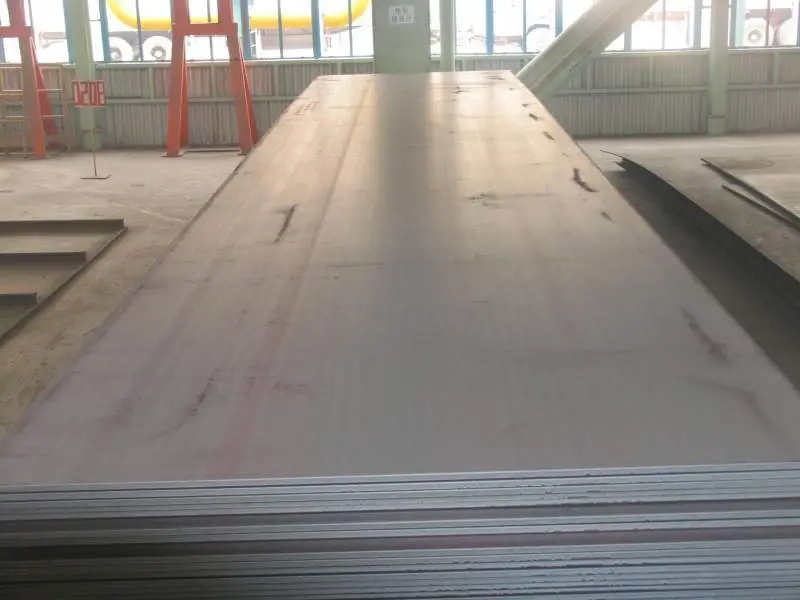
ASTM A572 Grade 60 Carbon
ASTM A572 Grade 60 Carbon and Low-alloy High-strength Steel Coil
Comprehensive technical specification for ASTM A572/A572M Grade 60 high-strength low-alloy structural steel coil, including chemical composition, mechanical properties, physics, equivalents, and applications.
Hot-rolled, cold-forming, welding, shearing, punching, machining
- Phone : +8618037372205
- Email : [email protected]
- WhatsApp: Contact via Whtsapp
- WeChat: +8618037372205
ASTM A572 Grade 60 Carbon Introduction
ASTM A572/A572M Grade 60 is a high-strength low-alloy (HSLA) structural steel with a minimum yield strength of 60 ksi (415 MPa). It is designed for welded, bolted, or riveted construction in structural shapes, plates, sheet piling, and bars. The steel is microalloyed with elements such as niobium, vanadium, or titanium to achieve its strength while maintaining good weldability and formability. Typical applications include building frames, bridges, transmission towers, and heavy-duty machinery. It offers an excellent strength-to-weight ratio, allowing lighter sections and reduced material costs.
ASTM A572 Grade 60 Carbon Chemical Composition
The chemical composition of ASTM A572 Grade 60 is controlled to ensure the required mechanical properties. Carbon is limited to 0.26% max to maintain good weldability. Manganese up to 1.35% improves strength and toughness. Microalloying elements (Nb, V, Ti) are added for grain refinement and precipitation hardening, with minimum specified contents as per the standard.
- Type 1: Niobium (Nb) min 0.005%
- Type 2: Vanadium (V) min 0.01%
- Type 3: Nb+V combined, each meeting minimum
- Type 4: V+Nitrogen
The actual alloy design may vary by producer while meeting the standard limits.
| Element | Standard Value (max, unless range) | Remarks |
|---|---|---|
| Carbon (C) | 0.26% | For plates with Si > 0.15%, C max may be reduced. |
| Manganese (Mn) | 1.35% | For plates and bars ≤ 1.5 in. (40 mm) thick; for thicker material, 1.35% also typical. |
| Phosphorus (P) | 0.030% | Max |
| Sulfur (S) | 0.030% | Max |
| Silicon (Si) | 0.40% | Max for plates ≤ 1.5 in.; optional, but usually 0.15-0.30% for deoxidation. |
| Niobium (Nb) | 0.005–0.05% | When used as grain refiner (Type 1) – min 0.005% |
| Vanadium (V) | 0.01–0.15% | When used (Type 2) – min 0.01% |
| Copper (Cu) | 0.20% (min when specified) | Optional for atmospheric corrosion resistance if required. |
| Nitrogen (N) | 0.015% | Typical residual; not specified as max, but for Type 4 V+N steel, N is controlled. |
ASTM A572 Grade 60 Carbon Physical Properties
The physical properties below are typical for ASTM A572 Grade 60 steel at ambient temperature. These values are not specified in ASTM A572/A572M but are representative data for this class of low-alloy structural steel. Thermal conductivity and thermal expansion are important for design calculations involving fire exposure or thermal cycling. Electrical resistivity is relevant to magnetic and electrical applications.
| Property | Typical Value | Unit | Condition / Temperature |
|---|---|---|---|
| Density (ρ) | 7.85 | g/cm³ | Ambient |
| Modulus of Elasticity (E) | 200 | GPa | Ambient |
| Shear Modulus (G) | 77.2 | GPa | Calculated from E and ν |
| Poisson's Ratio (ν) | 0.29 | — | Ambient |
| Coefficient of Thermal Expansion (α) | 11.7 | µm/m·°C | 20–100°C |
| Coefficient of Thermal Expansion (α) | 12.5 | µm/m·°C | 20–200°C |
| Coefficient of Thermal Expansion (α) | 13.5 | µm/m·°C | 20–400°C |
| Thermal Conductivity (λ) | 49.8 | W/m·K | At 20°C |
| Thermal Conductivity (λ) | 45.5 | W/m·K | At 100°C |
| Specific Heat Capacity | 475 | J/(kg·K) | At 20°C |
| Electrical Resistivity (ρ_e) | 0.14 | µΩ·m | At 20°C |
ASTM A572 Grade 60 Carbon Mechanical Properties
Mechanical properties are determined in accordance with ASTM A370. The minimum yield and tensile strengths are guaranteed, while elongation varies with product thickness. Bend test is not mandatory unless specified. Impact toughness (Charpy V-notch) is not a standard requirement but can be supplied as a supplementary option per ASTM A6/A6M. Values below represent the standard requirements for plates and bars.
- Reduction of area and hardness are not specified in A572/A572M but are typical of this grade.
| Property | Standard Requirement | Unit | Test Condition / Specimen |
|---|---|---|---|
| Yield Strength (ReH) | 60 min | ksi | 0.2% offset, at room temperature |
| Yield Strength (ReH) | 415 min | MPa | 0.2% offset, at room temperature |
| Tensile Strength (Rm) | 75 min | ksi | At room temperature |
| Tensile Strength (Rm) | 520 min | MPa | At room temperature |
| Elongation (A) in 8 in. (200 mm) | 18 | % | For plates and bars thickness ≤ 3/4 in. (19 mm) |
| Elongation (A) in 8 in. (200 mm) | 16 | % | Thickness > 3/4 in. to 1.5 in. (19-40 mm) |
| Elongation (A) in 8 in. (200 mm) | 15 | % | Thickness > 1.5 in. to 4 in. (40-100 mm) |
| Modulus of Elasticity (E) | 29,000 | ksi | Typical for carbon/low-alloy steel |
| Modulus of Elasticity (E) | 200 | GPa | Typical |
ASTM A572 Grade 60 Carbon Completely Equivalent Standards and Potential Replacement Grades
| Country/Region | Standard & Grade | Designation | Remarks |
|---|---|---|---|
| USA | ASTM A572/A572M Grade 60 | Grade 60 [415] | Identical standard, can be directly substituted for the same Grade 60 coil. |
| USA | ASTM A588/A588M | Grade B or C (weathering steel) | Not identical but often used in similar structural applications with added atmospheric corrosion resistance. |
| Europe | EN 10025-2:2019 | S420J2, S420M | Yield strength 420 MPa, similar strength level; check weldability and toughness. |
| Europe | EN 10025-3:2019 | S420N/NL | Normalized/normalizing rolled, with improved low-temperature toughness, comparable to Grade 60. |
| China | GB/T 1591-2018 | Q420 (C, D, E) | Yield strength 420 MPa, suitable for welded structures; Q420D has improved impact properties. |
| Japan | JIS G3106:2020 | SM520B, SM520C | Yield strength 365 MPa, tensile strength 520 MPa, slightly lower yield but similar tensile; acceptable for many projects. |
| International | ISO 630-2:2021 | E420D | Structural steel with min yield 420 MPa, comparable mechanical properties. |
ASTM A572 Grade 60 Carbon Application Introduction
ASTM A572 Grade 60 steel coil is widely utilized in structural and heavy engineering sectors. Its high strength permits reduction in section thickness and overall weight, leading to cost savings in transportation and erection. The material is readily fabricated using standard welding processes (SMAW, GMAW, SAW) with appropriate low-hydrogen consumables.
- Preheating may be necessary for thick sections to avoid hydrogen cracking.
- Galvanizing and painting provide excellent corrosion protection.
- For cold forming, recommended minimum bending radii should be observed.
Product Applications: Steel building frames and columns, Bridge girders and deck plates, Offshore platform legs and braces, Transmission tower angles and plates, Dump truck bodies and excavator booms, Railway wagon underframes, Crane booms and jibs, Wind turbine tower sections
Processed into products: Beams, columns, and truss chords, Crane runway beams, Ship hull plate (high-strength zones), Dipper handles for mining shovels, Automotive chassis and suspension parts (heavy vehicles), Flanges and stiffeners, Anchor bolts and base plates, Tunnel lining segments
Application industries: Construction & Civil Engineering, Bridge Engineering, Shipbuilding & Offshore Structures, Power Transmission (Towers & Poles), Mining & Earthmoving Equipment, Railway Rolling Stock, Heavy Machinery & Cranes, Wind Turbine Towers
ASTM A572 Grade 60 Carbon Similar / Alternative Material Recommendations
| Country/Region | Standard & Grade | Designation | Remarks |
|---|---|---|---|
| USA | ASTM A572/A572M | Grade 65 | Higher strength (65 ksi) variant, with similar chemistry but higher Mn or Nb/V; may replace Grade 60 in lighter sections. |
| USA | ASTM A992 | — | Standard for structural shapes, 50 ksi min yield; not equivalent but widely used in building frames, lower strength than Grade 60. |
| Europe | EN 10025-2 | S355J2+N | 355 MPa yield, lower strength; can be used with larger sections if strength is not critical. |
| China | GB/T 1591 | Q390 | 390 MPa yield, slightly lower; cost-effective alternative where design allows. |
| Russia | GOST 19281 | 09G2S (09Г2С) | Yield strength 325-345 MPa, lower; used for similar applications but heavier sections required. |
Notes:
Supplementary Requirements: ASTM A572/A572M offers optional supplementary requirements in accordance with ASTM A6/A6M, such as Charpy V-notch impact testing (S5), through-thickness tension testing (S1), ultrasonic examination (S2), and more. These must be specified at the time of purchase. Weldability: Carbon Equivalent (CE) typically ranges from 0.42 to 0.48, ensuring good weldability with standard procedures. Preheating and interpass temperature controls should follow AWS D1.1 or relevant codes. Corrosion Protection: While not inherently weathering steel, Grade 60 can be used bare in mild environments but is often painted or galvanized for durability.
- Share



