
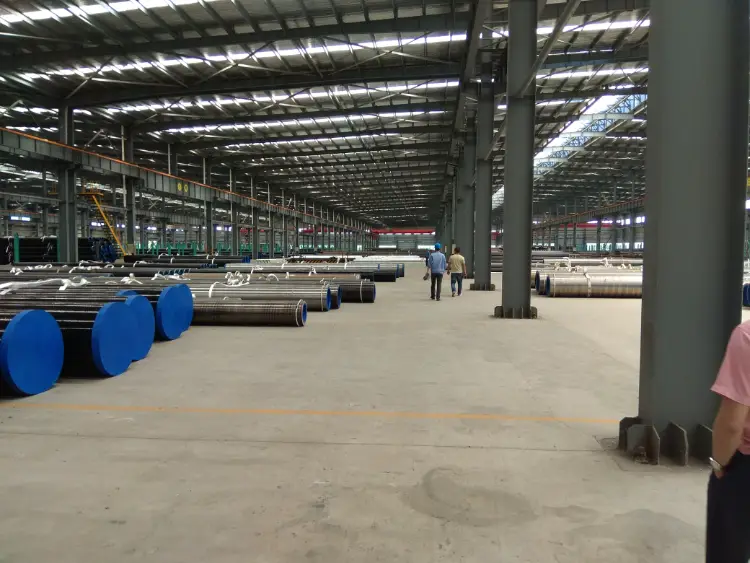
ASTM A511 MT 316 Stainless Steel Mechanical Tube
ASTM A511 MT 316 Stainless Steel Mechanical Tube - Properties & Equivalents
Comprehensive material data for ASTM A511 MT 316 austenitic stainless steel mechanical tube, including chemical composition, mechanical properties, thermal and electrical physical properties, international equivalents, and application guidelines.
Hot finishing, cold finishing, cold drawing, annealing, stress relieving
- Phone : +8618037372205
- Email : [email protected]
- WhatsApp: Contact via Whtsapp
- WeChat: +8618037372205
ASTM A511 MT 316 Stainless Steel Mechanical Tube Introduction
ASTM A511 MT 316 is a seamless austenitic stainless steel mechanical tube grade produced in accordance with ASTM A511/A511M. The "MT" designation refers to Mechanical Tube, which is intended for structural and mechanical applications rather than fluid transport. Made from the widely used 316 (UNS S31600) alloy, the material contains molybdenum for improved pitting corrosion resistance in chloride environments compared to 304. Typical delivery conditions include annealed, stress-relieved, or cold-worked tempers. The annealed condition provides excellent ductility, ease of fabrication, and good weldability. This material is readily available in rounds, squares, rectangles, and special shapes, and is commonly used in demanding applications such as chemical processing equipment, marine hardware, and architectural structures.
ASTM A511 MT 316 Stainless Steel Mechanical Tube Chemical Composition
The chemical composition of ASTM A511 MT 316 conforms to the requirements for UNS S31600 as referenced in ASTM A511/A511M. This is a molybdenum-bearing austenitic stainless steel designed to resist corrosion in harsh environments. The controlled balance of chromium, nickel, and molybdenum provides excellent corrosion resistance and mechanical properties. The tabulated values are based on heat analysis according to ASTM A511. * indicates the element is a requirement in the specification but the value represents the minimum or maximum limit, not a single fixed value.
| Chemical Element | Standard Value (wt%) | Remarks |
|---|---|---|
| Carbon (C) | ≤ 0.08 | Maximum |
| Manganese (Mn) | ≤ 2.00 | Maximum |
| Silicon (Si) | ≤ 1.00 | Maximum |
| Phosphorus (P) | ≤ 0.045 | Maximum |
| Sulfur (S) | ≤ 0.030 | Maximum |
| Chromium (Cr) | 16.0 - 18.0 | Required range |
| Nickel (Ni) | 10.0 - 14.0 | Required range |
| Molybdenum (Mo) | 2.00 - 3.00 | Required range |
| Nitrogen (N) | ≤ 0.10 | Maximum |
ASTM A511 MT 316 Stainless Steel Mechanical Tube Thermal and Electrical Physical Properties
The physical properties listed below are typical values for AISI 316 / ASTM A511 MT 316 stainless steel in the annealed condition at room temperature unless otherwise noted. These values are widely accepted for UNS S31600 and are useful for engineering calculations involving heat transfer, thermal expansion, and electrical applications. Slight variations may occur depending on the specific product form and processing history. Thermal conductivity and specific heat may vary with temperature; values at elevated temperatures are available from authoritative sources.
| Property | Standard Requirement Value | Unit | Test Condition / Remarks |
|---|---|---|---|
| Density (ρ) | 8.00 | g/cm³ | Room temperature |
| Elastic Modulus (E) | 193 | GPa | Tension, room temperature |
| Shear Modulus (G) | 74 | GPa | Calculated from E and ν, typical |
| Poisson's Ratio (ν) | 0.28 | - | Room temperature |
| Thermal Expansion Coefficient (α) | 16.5 | 10⁻⁶/K | 20°C to 100°C |
| Thermal Expansion Coefficient (α) | 17.2 | 10⁻⁶/K | 20°C to 300°C |
| Thermal Expansion Coefficient (α) | 18.0 | 10⁻⁶/K | 20°C to 500°C |
| Thermal Conductivity (λ) | 16.2 | W/(m·K) | At 100°C |
| Thermal Conductivity (λ) | 18.2 | W/(m·K) | At 300°C |
| Thermal Conductivity (λ) | 20.9 | W/(m·K) | At 500°C |
| Specific Heat Capacity | 500 | J/(kg·K) | Room temperature, typical |
| Electrical Resistivity (ρe) | 0.74 | µΩ·m | Room temperature |
ASTM A511 MT 316 Stainless Steel Mechanical Tube Mechanical Properties
Mechanical properties for ASTM A511 MT 316 tubing vary depending on the delivery condition. The table below presents the standard requirements for the annealed (solution treated) condition, unless otherwise specified. These values are based on longitudinal strip tests or full-section tube tests according to ASTM A370. Elongation is typically reported in 50 mm (2 in) gauge length. For cold-worked tempers, minimum properties are agreed upon between the manufacturer and purchaser. The values below represent the minimum requirements as per ASTM A511/A511M for annealed TP316 material. Actual values for specific products may be higher.
| Property | Standard Requirement | Unit | Test Condition / Remarks |
|---|---|---|---|
| Tensile Strength (Rm) | ≥ 515 | MPa | Room temperature, annealed |
| Yield Strength (ReH, 0.2% offset) | ≥ 205 | MPa | Room temperature, annealed |
| Elongation (A) | ≥ 35 | % | In 50 mm (2 in), annealed |
| Hardness | ≤ 90 HRB / 200 HBW | - | Annealed condition, typical max |
ASTM A511 MT 316 Stainless Steel Mechanical Tube Completely Equivalent Material Standards and Replaceable Grades
| Country/Region | Standard | Grade | Remarks |
|---|---|---|---|
| USA | ASTM A511/A511M | MT 316 | Identical standard and grade |
| USA | ASTM A269/A213 | TP316 | Seamless/welded tube for general service |
| International | EN 10216-5 | 1.4401 (X5CrNiMo17-12-2) | Seamless stainless steel tube for pressure purposes |
| Japan | JIS G3459 | SUS316TP | Corrosion-resistant machine structural tube |
| China | GB/T 14976 | 022Cr17Ni12Mo2 (00Cr17Ni14Mo2 equivalent) | Similar but low carbon; 0Cr17Ni12Mo2 also close |
| USA | ASTM A312/A312M | TP316 | Seamless pipe for process industries, chemical composition same |
ASTM A511 MT 316 Stainless Steel Mechanical Tube Application Introduction
ASTM A511 MT 316 tubes are engineered for mechanical and structural use rather than fluid conveyance. They combine moderate strength with outstanding corrosion resistance in both atmospheric and chemical environments. Typical applications take advantage of the material's toughness, fabricability, and ability to withstand a wide temperature range (-268°C to 870°C) for short-term exposure. The addition of molybdenum enhances resistance to pitting, especially in chloride-containing solutions. Industries such as marine, chemical processing, food equipment, and architecture frequently specify this grade.
Product Applications: Machine frames and structural supports, Heat exchanger components (when duplexes are not used), Architectural handrails, balustrades, and fittings, Marine hardware and boat rails, Conveyor rollers and guides, Pharmaceutical cleanroom equipment, Automotive tubular frames and exhaust parts
Processed into products: Bushings, sleeves, and wear rings, Shafts and axles (hollow structural members), Instrumentation fittings, Valve stems and bodies, Fasteners (when machined from tube), Custom machined parts for corrosive environments
Application industries: Chemical and petrochemical processing, Marine and shipbuilding, Food and beverage processing, Pharmaceutical manufacturing, Architecture and construction, Automotive (exhaust systems, trim), Pulp and paper, Water treatment and desalination
ASTM A511 MT 316 Stainless Steel Mechanical Tube Similar or Closely Related Substitute Materials
| Country/Region | Standard | Grade | Remarks |
|---|---|---|---|
| USA | ASTM A276 | 316 (UNS S31600) | Bar and shape, similar chemistry |
| International | ISO 15510 | X5CrNiMo17-12-2 | Chemical composition match |
| Germany | DIN EN 10217-7 | 1.4401 | Welded tube, same alloy |
| UK | BS 3605 | 316S31 | Similar grade for seamless tube |
| Russia | GOST 9941 | 08Ch17N13M2T | Close but contains titanium stabilization |
Notes:
Cold-work tempers (1/16 hard to full hard) may significantly increase strength but reduce elongation; mechanical properties for such tempers are usually agreed upon between the purchaser and manufacturer. Welding of MT 316 is readily performed by common fusion and resistance methods; filler metal AWS E316L/ER316L is recommended for corrosion resistance. Post-weld annealing is not always required for thin sections but may be needed for optimum corrosion resistance in certain environments. This material is non-magnetic in the annealed condition but may become slightly magnetic after cold working. Intergranular corrosion can be mitigated by using low-carbon 316L (UNS S31603) when service involves temperatures between 425-870°C or when heavy cross-section welding is required; the subject grade (MT 316) has maximum carbon 0.08%, making it susceptible if sensitized. When ordering, the structure should specify the required temper, shape, surface finish, and any supplementary testing (e.g., flattening, flaring, eddy current) to fully comply with ASTM A511.
- Share



