
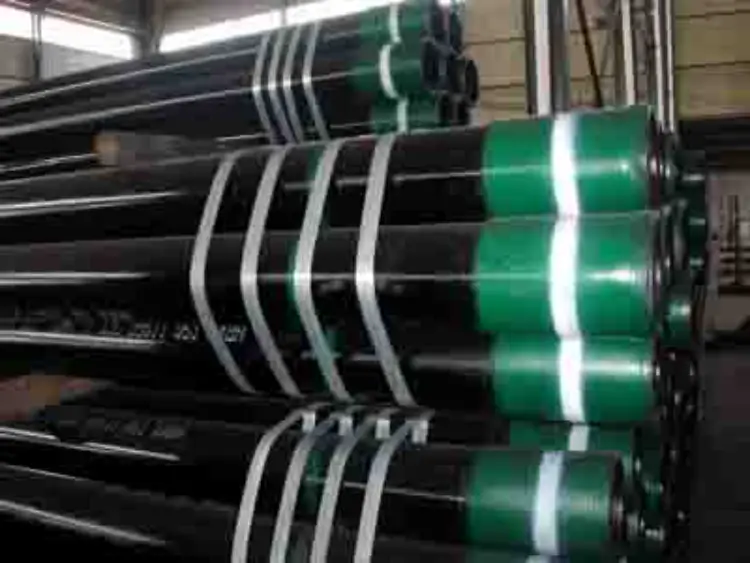
ASTM A312 TP317L Stainless Steel Pipe
ASTM A312 TP317L Stainless Steel Pipe: Enhanced Corrosion Resistance for Chemical & Marine Environments
Comprehensive material data for ASTM A312 TP317L austenitic stainless steel pipe, including chemical composition, mechanical and physical properties, international equivalents, and application guidance.
Seamless, welded, or heavily cold-worked; suitable for hot or cold forming, machining, welding
- Phone : +8618037372205
- Email : [email protected]
- WhatsApp: Contact via Whtsapp
- WeChat: +8618037372205
ASTM A312 TP317L Stainless Steel Pipe Introduction
ASTM A312 TP317L is an austenitic chromium-nickel-molybdenum stainless steel pipe grade with low carbon content (UNS S31703). It provides superior corrosion resistance compared to TP316L, especially in environments containing chlorides, sulfuric acid, and other reducing acids. The alloy's molybdenum content (3.0–4.0%) enhances resistance to pitting and crevice corrosion. Key features include:
- Excellent resistance to a wide range of chemical environments
- Good mechanical properties at ambient and elevated temperatures
- Low carbon minimizes intergranular corrosion after welding without post-weld heat treatment
- Suitable for use in moderate to severe corrosive applications up to approximately 550°C (1020°F)
It is supplied in accordance with ASTM A312/A312M, which covers seamless, welded, and heavily cold-worked austenitic stainless steel pipes for high-temperature and general corrosive service.
ASTM A312 TP317L Stainless Steel Pipe Chemical Composition
The chemical composition meets the requirements of ASTM A312 for TP317L (UNS S31703). Minor variations are permitted within the specified ranges. Iron (Fe) constitutes the balance. All elements are controlled to ensure the corrosion resistance and weldability of the austenitic structure. Nitrogen may be intentionally added or remain as a residual element.
| Element | Standard Value | Remarks |
|---|---|---|
| Carbon (C) | ≤0.030 | Reduced carbon prevents intergranular corrosion after welding |
| Manganese (Mn) | ≤2.00 | Austenite stabilizer; deoxidizer |
| Phosphorus (P) | ≤0.045 | Maximizes corrosion resistance and hot workability |
| Sulfur (S) | ≤0.030 | For improved machinability when specified, but generally kept low |
| Silicon (Si) | ≤0.75 | Deoxidizer; higher levels may affect weldability |
| Chromium (Cr) | 18.0–20.0 | Primary element for corrosion resistance |
| Nickel (Ni) | 11.0–15.0 | Stabilizes austenitic structure and enhances toughness |
| Molybdenum (Mo) | 3.0–4.0 | Key element for pitting and crevice corrosion resistance |
| Nitrogen (N) | ≤0.10 | May be present; increases strength without impairing ductility |
| Iron (Fe) | ≈64.5–69.0 (balance) | Remainder |
ASTM A312 TP317L Stainless Steel Pipe Thermal and Electrical Physical Properties
These values are typical for annealed TP317L austenitic stainless steel and serve as a guide for design, not as specification requirements. Properties may vary slightly depending on product form and measurement techniques. Thermal conductivity and expansion are essential for stress analysis in high-temperature service.
| Property | Typical Value | Unit | Test Condition / Temperature |
|---|---|---|---|
| Density (ρ) | 8.0 | g/cm³ | 20°C (68°F) |
| Modulus of Elasticity (E) | 193 | GPa | 20°C (68°F), in tension |
| Shear Modulus (G) | 77 | GPa | 20°C (68°F) |
| Poisson's Ratio (ν) | 0.30 | – | Elastic range |
| Thermal Expansion Coefficient (α) | 16.0 | 10⁻⁶/K (µm/m·°C) | 20–100°C (68–212°F) |
| Thermal Expansion Coefficient (α) | 17.5 | 10⁻⁶/K (µm/m·°C) | 20–500°C (68–932°F) |
| Thermal Conductivity (λ) | 14.6 | W/(m·K) | 100°C (212°F) |
| Thermal Conductivity (λ) | 21.0 | W/(m·K) | 500°C (932°F) |
| Specific Heat Capacity (cp) | 500 | J/(kg·K) | 0–100°C |
| Electrical Resistivity (ρe) | 0.75 | µΩ·m | 20°C (68°F) |
ASTM A312 TP317L Stainless Steel Pipe Mechanical Properties
The minimum tensile properties as specified in ASTM A312 are determined at room temperature on longitudinal specimens in accordance with ASTM A370. The values apply to solution-annealed pipe. Yield strength is measured using the 0.2% offset method. Elongation is reported on a gauge length of 50 mm (2 in.) or proportional. These properties ensure reliability under pressure and mechanical loading.
| Property | Standard Required Value | Unit | Test Condition |
|---|---|---|---|
| Tensile Strength (Rm) | ≥515 | MPa | Room temperature, ASTM A370 |
| Yield Strength (ReH, 0.2% offset) | ≥205 | MPa | Room temperature, ASTM A370 |
| Elongation (A) in 50 mm (2 in.) | ≥35 | % | For wall thickness ≤19.0 mm (0.75 in.); other conditions may require reduction |
ASTM A312 TP317L Stainless Steel Pipe Fully Equivalent Material Standards and Alternative Designations
| Country / Region | Standard | Grade / Designation | Remarks |
|---|---|---|---|
| USA | ASTM A312/A312M | TP317L (UNS S31703) | Original specification |
| European Union | EN 10216-5 / EN 10217-7 | X2CrNiMo18-15-4 (1.4438) | Chemical and property equivalent for pipes |
| China | GB/T 14976 | 022Cr19Ni13Mo3 (old: 00Cr19Ni13Mo3) | Seamless stainless steel pipe grade |
| Japan | JIS G3459 / JIS G3463 | SUS317L | Stainless steel pipes for general and heat exchanger service |
| International | ISO 9328-7 | X2CrNiMo18-15-4 | Ferritic-austenitic and austenitic stainless steel pipes |
ASTM A312 TP317L Stainless Steel Pipe Application Introduction
ASTM A312 TP317L pipes are chosen for their superior corrosion resistance in severe chemical and marine environments. The low carbon content minimizes the risk of intergranular attack in the heat-affected zone of welds, making the material suitable for welded construction without post-weld annealing in many applications.
- Chemical Processing: handling hot organic and inorganic acids, chlorides, bleaching agents.
- Marine & Offshore: seawater piping, heat exchangers, desalination plants.
- Pulp & Paper: digesters, bleaching equipment, evaporators.
- Food & Beverage: process lines, storage vessels, where corrosion resistance and cleanliness are critical.
- Pharmaceutical: high-purity water systems, reaction vessels.
Product Applications: Process piping systems, Heat exchangers and condensers, Pressure vessels and reactors, Evaporators and crystallizers, Instrumentation tubes, Hygienic and sanitary tubing
Processed into products: Reactor shells and internals, Tube bundles for shell-and-tube heat exchangers, Distillation columns and trays, Flue gas desulfurization spray headers, Pump bodies and valve components, Sight glasses and flow indicators, Welded spools and fittings
Application industries: Chemical & Petrochemical, Marine Engineering, Oil & Gas (downstream), Pulp & Paper, Food Processing, Pharmaceutical & Biotechnology, Power Generation (flue gas desulfurization)
ASTM A312 TP317L Stainless Steel Pipe Closely Related or Similar Alternative Material Recommendations
| Country / Region | Standard | Grade | Remarks |
|---|---|---|---|
| USA | ASTM A312 | TP316L (UNS S31603) | Lower molybdenum (2.0-2.5%), reduced pitting resistance; more economical alternative for less aggressive environments. |
| USA | ASTM A312 | TP317 (UNS S31700) | Higher carbon (≤0.08%), slightly higher strength but may require post-weld heat treatment to avoid sensitization. |
| USA | ASTM A312 | TP317LMN (UNS S31726) | Contains nitrogen and higher molybdenum (4.0-5.0%) for enhanced corrosion resistance and strength. |
| European Union | EN 10216-5 | X2CrNiMoN17-13-5 (1.4439) | Similar corrosion resistance to 317L but with nitrogen addition for higher strength. |
Notes:
The data presented here are based on published standard ASTM A312/A312M and industry references for typical physical properties. Actual values may vary depending on product size, wall thickness, and manufacturing process. Always refer to the latest edition of the standard and specific material certificates for design and procurement. For high-temperature service, allowable stress values can be found in ASME Boiler and Pressure Vessel Code Section II Part D.
- Share



