
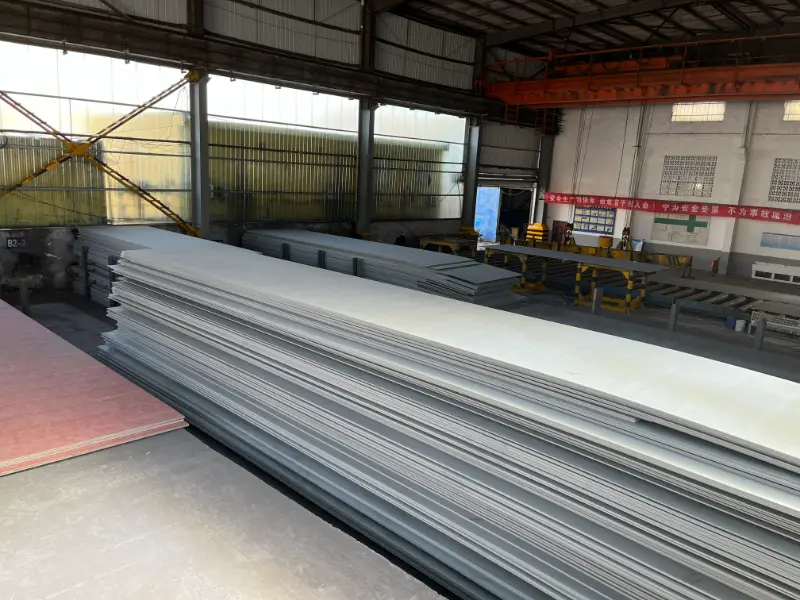
ASTM A240 UNS S20100 Stainless Steel
ASTM A240 UNS S20100 Stainless Steel: High-Strength Austenitic Cr-Mn-Ni-N Alloy
Comprehensive data for ASTM A240 201 (UNS S20100) stainless steel: chemical composition, mechanical and physical properties, international equivalents, and application guidelines.
Hot/cold rolling, bending, deep drawing, stamping, welding (by all common methods except oxyacetylene), machining (similar to 304 but requires positive feeds and sharp tools)
- Phone : +8618037372205
- Email : [email protected]
- WhatsApp: Contact via Whtsapp
- WeChat: +8618037372205
ASTM A240 UNS S20100 Stainless Steel Introduction
ASTM A240 201 (UNS S20100) is a chromium-manganese-nickel-nitrogen austenitic stainless steel designed as a cost-effective alternative to conventional Cr-Ni grades (e.g., 304).
- Excellent formability and weldability combined with higher yield strength than 304.
- Good oxidation resistance up to moderate temperatures; corrosion resistance is generally lower than 304, especially in chloride environments.
- Non-magnetic in annealed condition, may become slightly magnetic after cold working.
- Used extensively in architectural trim, kitchen equipment, and transportation applications where a balance of strength, appearance, and cost is required.
ASTM A240 UNS S20100 Stainless Steel Chemical Composition
The composition of ASTM A240 201 is balanced to obtain an austenitic structure with economical Mn and N additions, while limiting carbon for corrosion resistance and weldability. Values are ladle analysis per ASTM A240.
| Element | Standard Value | Remarks |
|---|---|---|
| Carbon (C) | ≤0.15 | |
| Manganese (Mn) | 5.50–7.50 | |
| Phosphorus (P) | ≤0.060 | |
| Sulfur (S) | ≤0.030 | |
| Silicon (Si) | ≤1.00 | |
| Chromium (Cr) | 16.00–18.00 | |
| Nickel (Ni) | 3.50–5.50 | |
| Nitrogen (N) | ≤0.25 |
ASTM A240 UNS S20100 Stainless Steel Thermal and Electrical Physical Properties
Typical physical properties of annealed ASTM A240 201 at room temperature, except where noted. These values are representative for general engineering use; variations may occur depending on exact product form and processing.
| Property | Typical Value | Unit | Test Condition |
|---|---|---|---|
| Density (ρ) | 7.8 | g/cm³ | At 20°C |
| Modulus of Elasticity (E) | 193 | GPa | Tension, at 20°C |
| Poisson's Ratio (ν) | 0.3 | — | Typical for austenitic grades |
| Thermal Expansion Coefficient (α) | 16.5 | 10⁻⁶/K | 20–100°C |
| Thermal Conductivity (λ) | 16.2 | W/m·K | At 100°C |
| Specific Heat Capacity | 500 | J/kg·K | 20–100°C |
| Electrical Resistivity (ρe) | 0.72 | µΩ·m | At 20°C |
ASTM A240 UNS S20100 Stainless Steel Mechanical Properties
Minimum mechanical properties for ASTM A240 201 sheet, strip, and plate in solution-annealed condition at room temperature. Testing is performed in accordance with ASTM A370. The material exhibits high work hardening rate, which increases strength after cold forming.
| Property | Standard Required Value | Unit | Test Condition |
|---|---|---|---|
| Tensile Strength (Rm) | ≥655 | MPa | Transverse test, annealed |
| Yield Strength (ReH, 0.2% offset) | ≥260 | MPa | Transverse test, annealed |
| Elongation (A, 2 in. or 50 mm gauge) | ≥40 | % | Transverse test, annealed |
| Brinell Hardness (HB) | ≤241 | — | Annealed |
| Rockwell B Hardness (HRB) | ≤100 | — | Annealed |
ASTM A240 UNS S20100 Stainless Steel Fully Equivalent Material Standards and Substitutable Grades
| Country/Region | Standard | Designation | Remarks |
|---|---|---|---|
| USA | ASTM A240 | 201 (S20100) | Reference standard |
| International (ISO) | ISO 15510 | X12CrMnNiN17-7-5 | Mirrors chemical and property requirements |
| Europe | EN 10088-2 | 1.4372 (X12CrMnNiN17-7-5) | Consistent with ASTM 201; may have minor differences in allowable ranges |
| Japan | JIS G4304 | SUS 201 | Near-equivalent; same nominal composition |
| China | GB/T 3280 | 12Cr17Mn6Ni5N (formerly 1Cr17Mn6Ni5N) | Equivalent grade for sheet and plate |
ASTM A240 UNS S20100 Stainless Steel Application Introduction
ASTM A240 201 is widely used where its combination of high strength, good formability, and moderate corrosion resistance offers economic and technical advantages. Typical application areas include:
Product Applications: Architectural cladding and roofing sheets, Kitchen sinks and faucets, Utensils and hollowware, Automotive decorative trim and wheel covers, Commercial refrigerator and freezer panels
Processed into products: Stamped sink bowls and drainboards, Deep-drawn pots and pans, Welded tube/pipe for handrails and low-pressure fluid transport, Formed brackets, hinges, and support brackets, Laser-cut decorative screens and furniture parts, Roll-formed sections for window frames and door thresholds
Application industries: Architecture and construction (decorative panels, handrails, elevator interiors), Household appliances (sinks, cookware, dishwasher interiors), Food service and catering (countertops, trays, storage containers), Automotive and transportation (trim, exhaust components, railway car bodies), General engineering (structural parts, welded frames, fasteners where corrosion is not severe)
ASTM A240 UNS S20100 Stainless Steel Recommended Similar/Alternative Materials
| Country/Region | Standard | Designation | Remarks |
|---|---|---|---|
| USA | ASTM A240 | 202 (S20200) | Higher Mn (7.5–10.0%) and slightly different Ni/Cr balance; often used where additional strength is needed |
| USA | ASTM A240 | 304 (S30400) | Standard Cr-Ni austenitic grade; superior corrosion resistance and slightly lower yield strength; more expensive due to higher Ni content |
| Europe | EN 10088-2 | 1.4301 (X5CrNi18-10) | 304 analogue; provides better weldability and corrosion performance, but lower strength |
| China | GB/T 3280 | 06Cr19Ni10 (0Cr18Ni9) | 304 type; often substituted when higher corrosion resistance is required |
Notes:
- Weldability: All common fusion methods can be used; use filler metal ER308L or ER201 for high toughness; avoid excessive heat input to prevent sensitization.
- Machining: Similar to 304 but with a tendency to gall; sharp tools, positive feeds, and adequate coolant are essential.
- Corrosion resistance: Adequate in mildly corrosive atmospheres and potable water; not recommended for heavy industrial or marine environments where pitting resistance of 304 is required.
- Post-weld treatment: Usually not required for thin sections; for maximum corrosion resistance, a post-weld solution anneal may be applied.
- Share



