
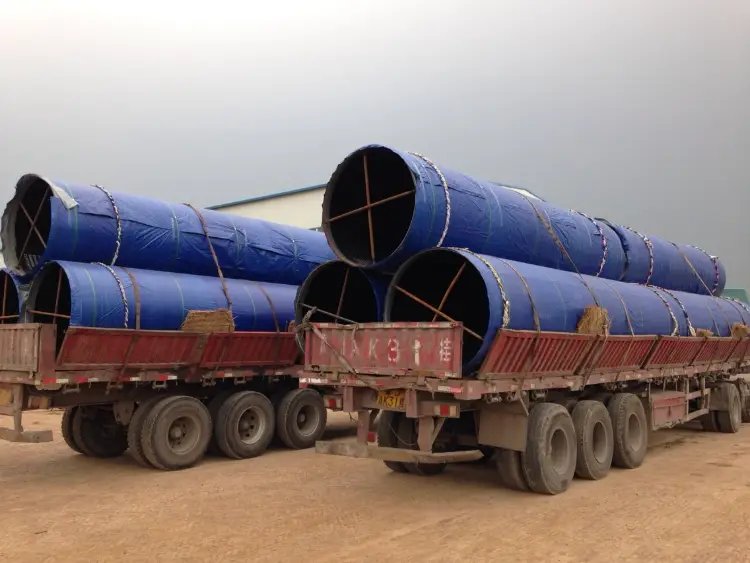
ASTM A240 304 (S30400) Stainless Steel Pipe
ASTM A240 304 (S30400) Stainless Steel Pipe Material Data & Properties Guide
Complete material data for ASTM A240 304 (UNS S30400) stainless steel pipe, including chemical composition, mechanical and thermal properties, international equivalents, and application guidance for piping systems.
Hot rolling, cold rolling, welding, machining, deep drawing, bending, stamping
- Phone : +8618037372205
- Email : [email protected]
- WhatsApp: Contact via Whtsapp
- WeChat: +8618037372205
ASTM A240 304 Stainless Steel Pipe Introduction
ASTM A240 304 (UNS S30400) is the most widely used austenitic chromium-nickel stainless steel. It offers an excellent combination of corrosion resistance, formability, and weldability.
Key features:
- Excellent resistance to a wide range of atmospheric environments and many corrosive media.
- Good high-temperature strength and scaling resistance up to about 870°C (1600°F) in continuous service.
- Non-magnetic in the annealed condition, slightly magnetic after cold working.
- Easily formed, drawn, and welded using standard shop practices.
- Available in a wide variety of product forms including pipe, tube, sheet, plate, and strip.
Typical applications include food processing equipment, chemical containers, architectural trim, and heat exchangers. Delivery condition is usually solution annealed and descaled.
ASTM A240 304 Stainless Steel Pipe Chemical Composition per ASTM A240
The chemical composition of 304 stainless steel is balanced to provide optimum corrosion resistance and formability. The chromium content ensures a passive surface layer, while nickel enhances ductility and toughness. Carbon is kept low to minimize carbide precipitation during welding. Unless otherwise noted, values are maximum unless a range is indicated.
| Element | Value (wt%) | Remarks |
|---|---|---|
| Carbon (C) | ≤0.07 | Standard grade |
| Manganese (Mn) | ≤2.00 | |
| Phosphorus (P) | ≤0.045 | |
| Sulfur (S) | ≤0.030 | |
| Silicon (Si) | ≤0.75 | |
| Chromium (Cr) | 18.0 – 20.0 | Essential for corrosion resistance |
| Nickel (Ni) | 8.0 – 10.5 | Stabilizes austenitic structure |
| Nitrogen (N) | ≤0.10 | Residual |
ASTM A240 304 Stainless Steel Pipe Physical Properties
Physical properties are not part of ASTM A240 but are typical for 304 stainless steel in the annealed condition. These values are useful for design calculations involving thermal expansion, heat transfer, and electrical conductivity. Actual values may be slightly influenced by cold working and service temperature.
| Property | Value | Unit | Test Condition |
|---|---|---|---|
| Density (ρ) | 8000 | kg/m³ | 20°C |
| Modulus of Elasticity (E) | 193 | GPa | 20°C |
| Shear Modulus (G) | 75 | GPa | 20°C (typical) |
| Poisson's Ratio (ν) | 0.29 | dimensionless | 20°C |
| Thermal Expansion Coeff. (α) | 17.2 | x10⁻⁶/K | 20 – 100°C |
| Thermal Conductivity (λ) | 16.2 | W/m·K | at 100°C |
| Specific Heat Capacity | 500 | J/kg·K | 20°C |
| Electrical Resistivity (ρ_e) | 0.72 | x10⁻⁶ Ω·m | 20°C |
ASTM A240 304 Stainless Steel Pipe Mechanical Properties
Mechanical properties are specified in ASTM A240 for plate, sheet, and strip. Values shown are minimum requirements at room temperature, unless otherwise noted. For pipe applications, corresponding ASTM A312 standard values are identical. Actual properties may vary by product form and thickness.
| Property | Value | Unit | Test Condition |
|---|---|---|---|
| Yield Strength (0.2% offset) | ≥205 | MPa | Room temperature |
| Tensile Strength | ≥515 | MPa | Room temperature |
| Elongation in 50 mm | ≥40 | % | Room temperature |
| Hardness | ≤201 HBW / ≤92 HRB | - | As annealed |
| Bend Test | Not specified | - | - |
ASTM A240 304 Stainless Steel Pipe Completely Equivalent Material Standards and Substitutable Grades
| Country/Region | Standard | Grade | Remarks |
|---|---|---|---|
| USA | ASTM A240 | 304 (S30400) | Original standard, identical |
| Europe | EN 10088-2/EN 10088-3 | 1.4301 (X5CrNi18-10) | Fully equivalent for most applications |
| Japan | JIS G4304 | SUS304 | Equivalent chemistry and properties |
| China | GB/T 3280 | 06Cr19Ni10 | Equivalent chemistry and properties |
| International | ISO 15510 | X5CrNi18-10 | Equivalent chemistry and properties |
ASTM A240 304 Stainless Steel Pipe Application Introduction
304 stainless steel pipe is widely used in industries requiring a combination of corrosion resistance, cleanability, and formability. It is the material of choice for conveying a broad range of fluids and for structural applications where appearance and hygiene are critical. Working temperatures range from cryogenic to about 870°C (1600°F) in non-severe oxidation conditions. It is not suitable for seawater or environments with high chloride concentrations due to susceptibility to pitting and stress corrosion cracking.
Typical industries and applications include:
Product Applications: Sanitary tubing and piping systems, Heat exchanger tubes, Pressure vessel shells, Kitchen equipment (sinks, countertops), Brewery and dairy equipment, Architectural cladding and handrails
Processed into products: Pipe fittings (elbows, tees, reducers, flanges), Valve bodies and trim, Pump shafts and impellers, Bolts, nuts, and fasteners, Welded tank and vessel components, Structural support brackets
Application industries: Food and Beverage Processing, Chemical and Petrochemical, Pharmaceutical, Architecture and Construction, Water Treatment, Oil and Gas, Automotive
ASTM A240 304 Stainless Steel Pipe Similar/Alternative Grade Recommendations
| Country/Region | Standard | Grade | Remarks |
|---|---|---|---|
| USA | ASTM A240 | 304L (S30403) | Extra-low carbon (≤0.03) for improved weld corrosion resistance; slightly lower strength |
| USA | ASTM A240 | 304H (S30409) | Higher carbon (0.04–0.10) for better high-temperature strength |
| Europe | EN 10088-2 | 1.4307 (X2CrNi18-9) | Low-carbon version of 1.4301, equivalent to 304L |
| Europe | EN 10088-2 | 1.4948 (X6CrNi18-11) | High-carbon variant similar to 304H |
| International | ISO 15510 | X2CrNi18-9 | Low-carbon version, equivalent to 304L |
Notes:
Special notes for pipe applications:
- ASTM A240 covers plate, sheet, and strip; for pipe, the companion standard is ASTM A312 which directly references the same chemical and mechanical property requirements for grade 304. Verify the exact product standard.
- 304 stainless steel can be readily welded by all common methods (TIG, MIG, MMA). Post-weld annealing is not usually required for thin sections, but heavy welds may benefit from solution annealing to relieve residual stresses and maximize corrosion resistance.
- The material is generally considered non-magnetic after annealing but may exhibit slight magnetism after cold working.
- For applications involving prolonged exposure to 425–870°C (800–1600°F), sensitization (chromium carbide precipitation) may occur, which can be avoided by using the low-carbon grade 304L.
- Maximum allowed service temperature for continuous oxidation resistance is approximately 870°C (1600°F).
- All data provided is based on official ASTM A240 and typical published references; for critical design, always refer to the latest standard revision and material test certificates.
- Share



