
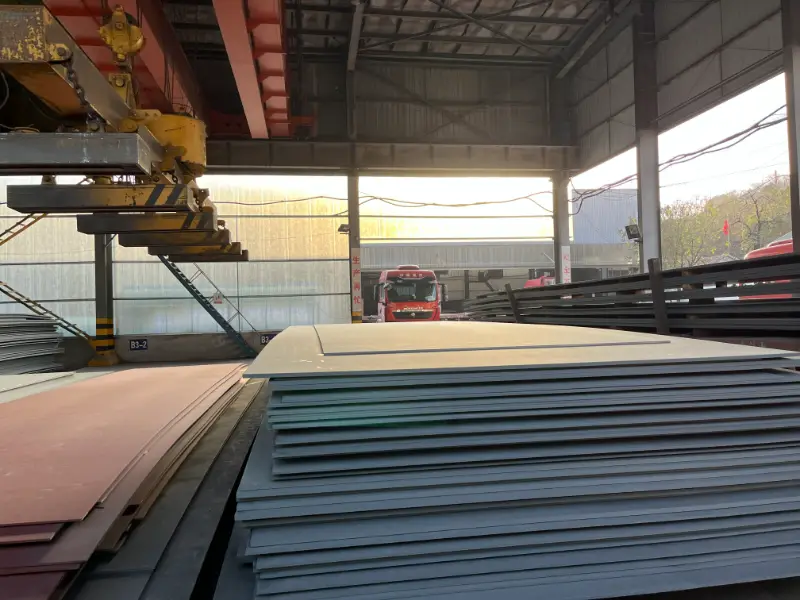
ASTM A240 316 (S31600) Stainless Steel
ASTM A240 316 (S31600) Stainless Steel - Composition, Properties & Global Equivalent Grades
Comprehensive technical data for ASTM A240 316 (S31600) stainless steel: chemical composition, mechanical properties, thermal and electrical properties, global equivalents, and application guidelines.
Hot rolling, cold rolling, forming, machining, welding (common filler: ER316L or E316L-xx)
- Phone : +8618037372205
- Email : [email protected]
- WhatsApp: Contact via Whtsapp
- WeChat: +8618037372205
ASTM A240 316 Stainless Steel Introduction
ASTM A240 316 (UNS S31600) is an austenitic chromium-nickel-molybdenum stainless steel widely used for its excellent corrosion resistance, particularly in chloride environments and acidic media. The addition of molybdenum enhances pitting and crevice corrosion resistance compared to Type 304. It offers good elevated temperature strength and is typically supplied in the annealed condition. Key features:
- Excellent general corrosion resistance
- Superior resistance to pitting and crevice corrosion due to 2-3% Mo
- Non-magnetic in the annealed condition
- Good formability and weldability
- Used in chemical processing, marine, and food equipment
ASTM A240 316 Stainless Steel Chemical Composition
Chemical composition per ASTM A240/A240M for grade 316 (UNS S31600). Ladle analysis limits apply. All values are maximum unless a range is specified. The molybdenum content (2.00-3.00%) distinguishes 316 from 304 and improves pitting resistance.
| Element | Value (%) | Remarks |
|---|---|---|
| Carbon (C) | 0.08 max | Standard grade (not 'L' variant) |
| Manganese (Mn) | 2.00 max | |
| Silicon (Si) | 1.00 max | |
| Phosphorus (P) | 0.045 max | |
| Sulfur (S) | 0.030 max | |
| Chromium (Cr) | 16.0 - 18.0 | |
| Nickel (Ni) | 10.0 - 14.0 | |
| Molybdenum (Mo) | 2.00 - 3.00 | Key element for chloride resistance |
| Nitrogen (N) | 0.10 max | Not explicitly listed for 316 in ASTM A240, but typical residual; actual A240 may not require reporting unless ordered. |
ASTM A240 316 Stainless Steel Thermal and Electrical Physical Properties
Physical properties for wrought 316 stainless steel in the annealed condition. Values are representative of standard material and may vary slightly based on specific heat treatment and product form. Data sources: ASME BPVC Section II-D (metric) and typical engineering references. Density at room temperature.
| Property | Typical Value | Unit | Test Condition |
|---|---|---|---|
| Density (ρ) | 8.00 | g/cm³ | 20°C (68°F) |
| Modulus of Elasticity (E) | 193 | GPa | Room temperature (tension) |
| Shear Modulus (G) | 77 | GPa | Calculated from E and ν |
| Poisson's Ratio (ν) | 0.30 | - | Room temperature |
| Thermal Expansion Coefficient (α) | 16.0 | 10⁻⁶/K | 0-100°C |
| Thermal Expansion Coefficient (α) | 17.5 | 10⁻⁶/K | 0-540°C |
| Thermal Conductivity (λ) | 16.2 | W/(m·K) | at 100°C |
| Thermal Conductivity (λ) | 21.5 | W/(m·K) | at 500°C |
| Specific Heat Capacity | 500 | J/(kg·K) | 0-100°C |
| Electrical Resistivity (ρ_e) | 0.72 | µΩ·m | Room temperature |
ASTM A240 316 Stainless Steel Mechanical Properties
Minimum mechanical properties required by ASTM A240 for annealed 316 material. Tensile testing is performed transversely to the rolling direction for wide products. Elongation is measured over a 50 mm (2 in.) gauge length. Hardness values are typical maximums, not mandatory but often specified in supplementary requirements.
| Property | Required Value | Unit | Test Condition |
|---|---|---|---|
| Tensile Strength (Rm) | 515 min | MPa | Room temperature, transverse specimen |
| Yield Strength (ReH 0.2% offset) | 205 min | MPa | Room temperature, transverse specimen |
| Elongation (A) in 50 mm (2 in.) | 40 min | % | For strip thickness < 0.5 mm, thin sheets may have slightly lower requirements per standard |
| Hardness (Brinell) | 217 max | HBW | Annealed condition, typical reference |
| Hardness (Rockwell B) | 95 max | HRB | Annealed condition, typical reference |
ASTM A240 316 Stainless Steel Exact Equivalent Material Standards and Substitute Grades
| Country/Region | Standard | Designation | Remarks |
|---|---|---|---|
| International (ISO) | ISO 4954 | X5CrNiMo17-12-2 | Identical chemistry |
| Europe | EN 10088-2 / EN 10088-3 | 1.4401 | Also covers X5CrNiMo17-12-2 |
| Japan | JIS G4304 / JIS G4305 | SUS316 | Equivalent to 316 hot-rolled/cold-rolled plate |
| China | GB/T 3280 / GB/T 4238 | 06Cr17Ni12Mo2 (new designation) or 0Cr17Ni12Mo2 (old) | Corresponding grade for plates/strips |
| Germany (obsolete) | DIN 17440 / DIN 17441 | 1.4401 (X5CrNiMo17-12-2) | Now replaced by EN standard |
| UK (obsolete) | BS 1449 / BS 1501 | 316S31 | Withdrawn, superseded by EN |
ASTM A240 316 Stainless Steel Application Introduction
ASTM A240 316 stainless steel is chosen when enhanced corrosion resistance over 304 is required, especially in environments containing chlorides, sulfates, or acidic process fluids. Its good mechanical properties and formability make it suitable for a wide range of fabricated equipment. Material is readily available in plate, sheet, and strip forms, which are often used to manufacture pipe, fittings, and vessels.
Product Applications: Storage tanks and pressure vessels, Heat exchanger shells and tube sheets, Welded and seamless pipe (when specified to ASTM A312 or A358 using A240 material), Flanges and fittings, Industrial kitchen equipment, Surgical instruments, Architectural panels and structural sections
Processed into products: Pipe spools and elbows, Reactor vessel linings, Filter housings, Pump casings and impellers, Brewing and dairy equipment, Pollution control equipment (scrubbers, ductwork)
Application industries: Chemical and petrochemical processing, Oil and gas (offshore platforms, piping), Marine and shipbuilding, Pulp and paper mills, Food and beverage processing, Pharmaceutical and biotechnology, Architectural and construction (facades, railings in coastal areas), Heat exchangers and condenser tubing
ASTM A240 316 Stainless Steel Similar or Closely Related Substitute Materials
| Country/Region | Standard | Designation | Remarks |
|---|---|---|---|
| USA | ASTM A240 | 316L (S31603) | Low carbon version (0.030% C max) for improved welding corrosion resistance, slight lower strength but similar general properties. |
| USA | ASTM A240 | 316H (S31609) | Higher carbon (0.04-0.10%) for elevated temperature strength, usually for creep applications. |
| USA | ASTM A240 | 316Ti (S31635) | Titanium stabilized to prevent sensitization, similar to 316L in weldability. |
| Europe | EN 10088-2 | 1.4404 | X2CrNiMo17-12-2, the low-carbon variant corresponding to 316L. |
| China | GB/T 3280 | 022Cr17Ni12Mo2 | Corresponding to 316L. |
Notes:
Welding considerations: Use low carbon filler metal (ER316L or E316L-xx) to avoid sensitization in heavy sections. Post-weld annealing is not always required if the carbon content is controlled. Corrosion note: While 316 resists many chemicals, it can be susceptible to stress corrosion cracking in hot chloride solutions above 60°C. ASTM A240 is a material standard for plate, sheet, and strip; for pipe products, refer to ASTM A312 for seamless and welded pipe, which often utilize A240 grade material for welding feed stock.
- Share



