
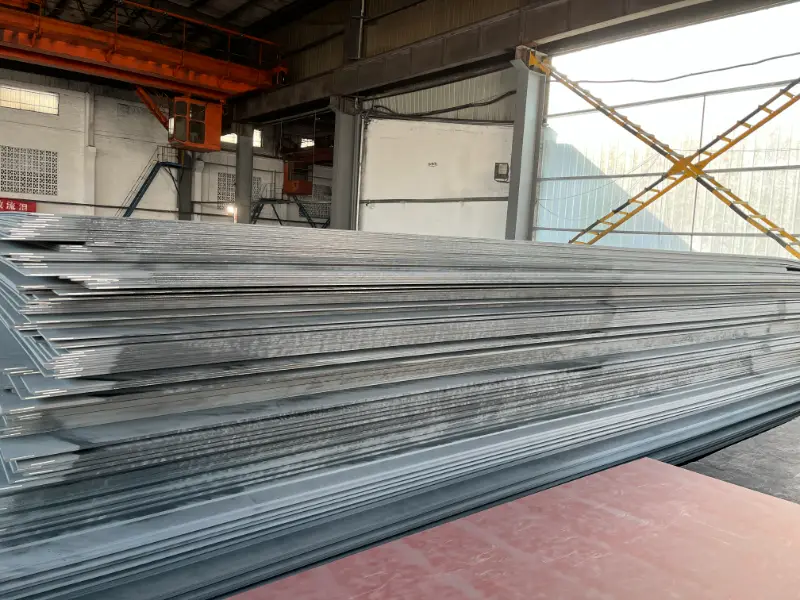
ASTM A240 310S (S31008) Stainless Steel
ASTM A240 310S (S31008) Stainless Steel: High-Temp & Corrosion Resistant Solution
In-depth material data for ASTM A240 310S (S31008) stainless steel, covering its chemical composition, mechanical, thermal, and electrical properties, equivalent grades, and key applications in high-temperature environments.
Welding, Machining, Cold Forming, Hot Forming, Forging
- Phone : +8618037372205
- Email : [email protected]
- WhatsApp: Contact via Whtsapp
- WeChat: +8618037372205
ASTM A240 310S Stainless Steel Introduction
ASTM A240 310S (S31008) is a low-carbon, high-chromium-nickel austenitic stainless steel specifically developed for superior performance in high-temperature, corrosive environments. The alloy's 25% Chromium and 20% Nickel content provides excellent oxidation resistance and strength at elevated temperatures up to 1100°C (2000°F). The low maximum carbon content (0.08%) minimizes carbide precipitation, making it highly resistant to intergranular corrosion and negating the need for post-weld annealing for many service conditions. Key characteristics include:
- Exceptional resistance to oxidation and sulfidation in high-temperature service.
- Good aqueous corrosion resistance, comparable to standard 18/8 stainless steels.
- High strength and excellent creep resistance at elevated temperatures.
- Good ductility and weldability, suitable for complex fabricated components.
ASTM A240 310S Stainless Steel Chemical Composition
The chemical composition of ASTM A240 310S (S31008) is defined by standard ASTM A240. The controlled low carbon content is critical for preventing chromium carbide precipitation, which ensures resistance to intergranular corrosion in as-welded or service conditions up to moderate temperatures. The high chromium and nickel levels are the basis for its exceptional scaling resistance and structural stability at high temperatures.
| Element | Standard Value (wt. %) | Remarks |
|---|---|---|
| Carbon (C) | <= 0.08 | Low carbon for enhanced weldability and resistance to sensitization |
| Manganese (Mn) | <= 2.00 | Austenitizer, aids in deoxidation |
| Phosphorus (P) | <= 0.045 | Residual element, controlled for ductility |
| Sulfur (S) | <= 0.030 | Residual element, controlled for hot working |
| Silicon (Si) | <= 1.50 | Improves oxidation and carburization resistance at high temperatures |
| Chromium (Cr) | 24.00 - 26.00 | Primary element for high-temperature oxidation resistance |
| Nickel (Ni) | 19.00 - 22.00 | Stabilizes austenitic structure for toughness and creep strength |
| Iron (Fe) | Balance | Base element |
ASTM A240 310S Stainless Steel Thermal and Electrical Physical Properties
These physical properties are typical for S31008 in the annealed condition and are valid for a range of temperatures. The data is crucial for engineering design, particularly for applications involving thermal cycling or heat transfer. The lower thermal conductivity and high coefficient of thermal expansion, typical of austenitic stainless steels, must be considered during welding and design to prevent distortion or thermal fatigue.
| Property Item | Reference Value | Unit | Test Condition |
|---|---|---|---|
| Density (ρ) | 7.9 | g/cm³ | At 20°C (68°F) |
| Elastic Modulus (E) | 200 | GPa | At 20°C (68°F) |
| Shear Modulus (G) | 77 | GPa | At 20°C (68°F) |
| Poisson's Ratio (ν) | 0.30 | - | At 20°C (68°F) |
| Thermal Expansion Coeff. (α) | 15.5 | 10&supmin;⁶/K | 20-100°C (68-212°F) |
| Thermal Expansion Coeff. (α) | 17.5 | 10&supmin;⁶/K | 20-800°C (68-1472°F) |
| Thermal Conductivity (λ) | 14.2 | W/m·K | At 100°C (212°F) |
| Thermal Conductivity (λ) | 21.5 | W/m·K | At 500°C (932°F) |
| Specific Heat Capacity | 500 | J/kg·K | At 20°C (68°F) |
| Electrical Resistivity (ρe) | 0.78 | μΩ·m | At 20°C (68°F) |
| Melting Range (Approx.) | 1400 - 1455 | °C | - |
ASTM A240 310S Stainless Steel Mechanical Properties at Room Temperature
Mechanical properties are measured on solution-annealed material in accordance with ASTM A240. The values represent minimum requirements for plate, sheet, and strip. This grade is not designed for high strength at room temperature but rather for stability and retention of strength at elevated temperatures. The excellent ductility is indicated by high elongation values, facilitating forming and fabrication.
| Property Item | Standard Requirement Value | Unit | Test Condition |
|---|---|---|---|
| Yield Strength (Rp0.2) | >= 205 | MPa | Room Temperature |
| Tensile Strength (Rm) | >= 515 | MPa | Room Temperature |
| Elongation (A50mm) | >= 40 | % | In 2 in. (50mm) Gauge Length |
| Hardness | <= 95 HRB / <= 219 HBW | Rockwell B / Brinell | Room Temperature |
ASTM A240 310S Stainless Steel Complete Equivalent Material Standards and Replaceable Grades
| Country/Region | Standard | Grade | Remarks |
|---|---|---|---|
| European Union | EN 10088-2/EN 10028-7 | 1.4845 (X8CrNi25-21) | Full chemical and property equivalence for general and high-temp applications. |
| Japan | JIS G4304/G4312 | SUS 310S | Direct equivalent with identical chemical requirements. |
| China | GB/T 3280 / GB/T 4238 | 06Cr25Ni20 (S31008) | Official designation in the Chinese standard system. |
| International | ISO 15510 | X8CrNi25-21 | Harmonized international grade designation. |
ASTM A240 310S Stainless Steel Application Introduction
The unmatched combination of high-temperature oxidation resistance and good structural stability makes ASTM A240 310S ideal for thermal processing and energy industries. As a globally codified grade, it is readily available and specified for demanding applications where service conditions preclude the use of standard stainless steels. The low carbon designation is critical for ensuring longevity in thick-section welded fabrications without the risk of sensitization.
Product Applications: Austenitic Stainless Steel Pipe and Tube for heat exchangers, Hot-Rolled and Cold-Rolled Plate and Sheet for structural fabrications, Bar and Forging Stock for machined burner parts and flanges, Stainless Steel Strip for flexible hoses and expansion joints, Welded Radiant Tubes for controlled atmosphere furnaces
Processed into products: Bolts, studs, and fasteners for high-temperature service, Welded retorts, muffles, and baskets for heat treatment furnaces, Thermal oxidizer and afterburner combustion chambers, Petrochemical reformer and cracker tubes, Annealing and enameling furnace rolls, Kiln burner nozzles and flame tubes
Application industries: Petrochemical Processing (furnace tubes, flue gas liners), Thermal and Industrial Furnace Construction (radiant tubes, burners, conveyor belts, kiln linings), Power Generation (coal gasifier internals, boiler parts, superheater supports), Heat Treatment Equipment (retorts, muffles, annealing boxes), Food Processing (high-temperature baking ovens), Cement and Mineral Processing (kiln components)
ASTM A240 310S Stainless Steel Similar/Comparable Substitute Material Recommendations
| Country/Region | Standard | Grade | Remarks |
|---|---|---|---|
| USA | ASTM A240 | 310H (S31009) | Higher carbon version (>0.04-0.10%) for enhanced creep strength at the expense of weldability. |
| USA | AMS 5521 | 310 (UNS S31000) | Standard carbon 310 grade with higher baseline strength but susceptible to sensitization. |
| European Union | EN 10095 | 1.4833 (X7CrNi23-14) | Lower-cost alternative with slightly lower oxidation resistance (service up to ~1000°C). |
| Global | Various | 253 MA® (S30815) | Higher nitrogen and rare-earth additions for significantly improved oxidation resistance and strength up to 1150°C. |
Notes:
Welding Consideration: Standard welding processes (SMAW, GTAW, GMAW, SAW) can be used. A matching filler metal (e.g., AWS E310-15/16 or ER310) is typically required. Preheating is not needed. Post-weld heat treatment is generally not required for this low-carbon ('S') grade.
Corrosion Resistance: While outstanding in high-temp oxidation up to 1100°C, note this grade is susceptible to sigma phase embrittlement after prolonged exposure in the 540-815°C (1000-1500°F) range, though the low carbon content slows this process. Its resistance to aqueous corrosion is excellent, similar to grade 304 in many media, but with higher pitting resistance due to increased chromium content.
- Share



