
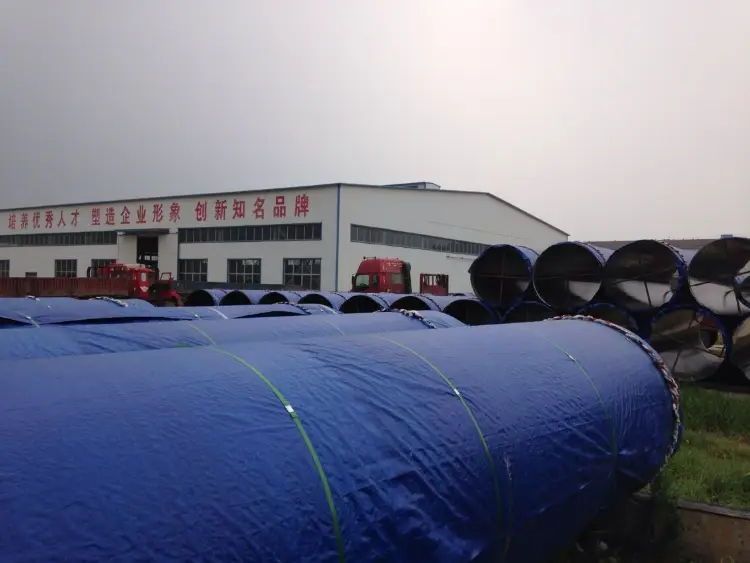
ASTM A240 309S (UNS S30908) Stainless Steel Pipe
ASTM A240 309S (UNS S30908) Stainless Steel Pipe - High-Temperature Austenitic Grade
Comprehensive material datasheet for ASTM A240 309S (UNS S30908) stainless steel pipe, including chemical composition, mechanical and physical properties, international equivalents, and application guidance.
Hot rolling, cold rolling, extrusion, forging, welding, machining
- Phone : +8618037372205
- Email : [email protected]
- WhatsApp: Contact via Whtsapp
- WeChat: +8618037372205
ASTM A240 309S Stainless Steel Pipe Introduction
ASTM A240 309S (UNS S30908) is a high-chromium, high-nickel austenitic stainless steel designed for superior oxidation resistance and strength at elevated temperatures up to 1050°C. Its low carbon content (≤0.08%) minimizes carbide precipitation during welding, preserving corrosion resistance. This grade offers excellent scaling resistance and is widely used in furnace components, heat exchangers, and chemical processing equipment. The pipe form is typically produced to ASTM A312 dimensional and mechanical requirements, while the chemical composition complies with ASTM A240. 309S can withstand cyclic heating without embrittlement and maintains good ductility and weldability.
- High chromium (22.0-24.0%) and nickel (12.0-15.0%) for oxidation resistance
- Low carbon for weldability without post-weld annealing
- Good strength retention up to 980°C
- Excellent scaling resistance in sulfur-containing atmospheres
ASTM A240 309S Stainless Steel Pipe Chemical Composition
The chemical composition conforms to ASTM A240 for UNS S30908. Values are maximum unless a range is indicated. The low carbon content (0.08% max) enhances weldability and reduces intergranular corrosion risk after welding. High chromium and nickel levels ensure excellent oxidation and scaling resistance.
- Carbon (C): 0.08% max for sensitization resistance
- Chromium (Cr): 22.0-24.0% provides oxidation resistance
- Nickel (Ni): 12.0-15.0% stabilizes austenitic structure
| Element | Standard Value (wt.%) | Remarks |
|---|---|---|
| Carbon (C) | 0.08 max | Low carbon minimizes carbide precipitation |
| Manganese (Mn) | 2.00 max | Austenite former; improves hot workability |
| Phosphorus (P) | 0.045 max | Residual element; controlled for hot ductility |
| Sulfur (S) | 0.030 max | Improves machinability but may reduce weldability |
| Silicon (Si) | 0.75 max | Deoxidizer; aids oxidation resistance at high temperature |
| Chromium (Cr) | 22.0 - 24.0 | Primary element for scaling resistance |
| Nickel (Ni) | 12.0 - 15.0 | Promotes austenitic structure and creep strength |
ASTM A240 309S Stainless Steel Pipe Thermal and Electrical Physical Properties
These values are typical for UNS S30908 austenitic stainless steel. Properties vary with temperature and processing history. Specific data from published references and material databases.
- Density slightly lower than some stainless steels due to high nickel content
- Thermal conductivity improves with temperature, aiding heat transfer applications
- Coefficient of thermal expansion is moderate, minimizing distortion in cyclic service
| Property | Typical Value | Unit | Test Condition / Temperature |
|---|---|---|---|
| Density (ρ) | 7.93 | g/cm³ | 20°C |
| Elastic Modulus (E) | 200 | GPa | 20°C |
| Elastic Modulus (E) | 185 | GPa | 200°C |
| Elastic Modulus (E) | 170 | GPa | 400°C |
| Shear Modulus (G) | 77 | GPa | 20°C (calculated: E/(2(1+ν))) |
| Poisson's Ratio (ν) | 0.30 | — | 20°C |
| Thermal Expansion (α) | 14.9 | 10⁻⁶/°C | 20-100°C |
| Thermal Expansion (α) | 17.8 | 10⁻⁶/°C | 20-500°C |
| Thermal Expansion (α) | 19.5 | 10⁻⁶/°C | 20-1000°C |
| Thermal Conductivity (λ) | 15.6 | W/m·K | 100°C |
| Thermal Conductivity (λ) | 18.7 | W/m·K | 500°C |
| Specific Heat | 500 | J/kg·K | 0-100°C |
| Electrical Resistivity (ρ_e) | 0.78 | Ω·mm²/m | 20°C |
ASTM A240 309S Stainless Steel Pipe Mechanical Properties
Tensile properties per ASTM A312 for seamless and welded pipe in solution-annealed condition. Yield strength determined by 0.2% offset method. Elongation requirements vary with wall thickness.
- Minimum tensile strength: 515 MPa (75 ksi)
- Minimum yield strength: 205 MPa (30 ksi)
- Ductility promotes easy forming and bending
| Property | Standard Requirement | Unit | Test Condition |
|---|---|---|---|
| Yield Strength (ReH) | 205 min | MPa | 0.2% offset, room temperature |
| Tensile Strength (Rm) | 515 min | MPa | Room temperature, transversal or longitudinal |
| Elongation (A) | 35 | % | in 50 mm (2 in.) - wall thickness < 7.94 mm (5/16 in.) |
| Elongation (A) | 30 | % | in 50 mm (2 in.) - wall thickness ≥ 7.94 mm (5/16 in.) |
| Hardness (Brinell) | 217 max | HBW | As annealed plate (ASTM A240 reference) |
| Hardness (Rockwell B) | 95 max | HRB | As annealed plate (ASTM A240 reference) |
ASTM A240 309S Stainless Steel Pipe Exact Equivalents Standards and Substitution Grades
| Country / Region | Standard | Grade / Designation | Remarks |
|---|---|---|---|
| United States | ASTM A240 / A312 | 309S (UNS S30908) | Original specification |
| European Union | EN 10088-1 | X6CrNi22-13 (1.4833) | Nearly identical composition; slight silicon variation |
| China | GB/T 20878 | 06Cr23Ni13 | Equivalent grade; used for high-temperature parts |
| Japan | JIS G4304 / G3459 | SUS309S | Same chemistry; JIS G3459 governs heat-resistant pipe |
| International | ISO 15510 | X6CrNi22-13 | Identical chemical properties |
ASTM A240 309S Stainless Steel Pipe Application Introduction
309S is the premium choice for high-temperature structural components requiring oxidation and scaling resistance. Its stability in nitrogen and low-oxygen atmospheres makes it suitable for specialized industrial furnaces. Welding is straightforward using ER309L filler metal without preheat or post-weld heat treatment. Service temperatures up to 1050°C are possible under intermittent conditions, and it withstands thermal cycling without embrittlement. Suitable for both reducing and oxidizing environments, though sulfur-rich atmospheres above 700°C may require careful evaluation.
- Excellent for heat treatment equipment
- Ideal for chemical and petrochemical processing at elevated temperatures
- Used in power generation boiler components
Product Applications: Furnace muffles, retorts, and radiant tubes, Annealing covers and boxes, Kiln linings and support beams, Boiler baffles and expansion joints, Oil burner parts and combustion chambers, Heat exchangers and recuperators
Processed into products: Seamless and welded pipe nipples and fittings, Flanges and gaskets exposed to high temperature, Thermocouple protection tubes, Pyrolysis tubing in ethylene plants, Support hangers and brackets in furnaces, Burner nozzles and vaporizer tubes
Application industries: Heat treatment and industrial furnace manufacturing, Petrochemical and chemical processing, Power generation (boilers, superheaters), Oil and gas (refinery piping, burner tips), Automotive (exhaust gas recirculation components), Food processing equipment (high-temperature cleaning)
ASTM A240 309S Stainless Steel Pipe Similar / Alternative Material Recommendations
| Country / Region | Standard | Grade / Designation | Remarks |
|---|---|---|---|
| United States | ASTM A240 | 310S (UNS S31008) | Higher Cr (24-26%) and Ni (19-22%) for superior oxidation resistance to 1150°C |
| United States | ASTM A240 | 304H (UNS S30409) | Lower high-temperature strength; more economical for ≤800°C if scaling is not severe |
| Germany | DIN EN 10095 | X15CrNiSi25-21 (1.4841) | Higher Si and carbon for improved carburization resistance; often used in furnace rollers |
| China | GB/T 20878 | 06Cr25Ni20 (S31008) | Higher alloy 310S equivalent; better creep strength at extreme temperatures |
Notes:
Welding: Use ER309L or E309L-16 electrodes. Post-weld cleaning is recommended to remove heat tint for optimal corrosion resistance. Corrosion Resistance: Resists oxidation up to 1050°C; in intermittent service, withstands temperatures to 980°C. Avoid continuous use between 550-850°C if exposed to aqueous corrosive environments to prevent sigma phase embrittlement. Availability: Pipe dimensions per ANSI B36.19; also available in large-diameter welded pipe per customer specifications. Consult mill for specific hardness and NACE MR0175 compliance if required for sour service. All data are believed accurate but represent typical values; specific batch certifications should be obtained for critical applications.
- Share



