
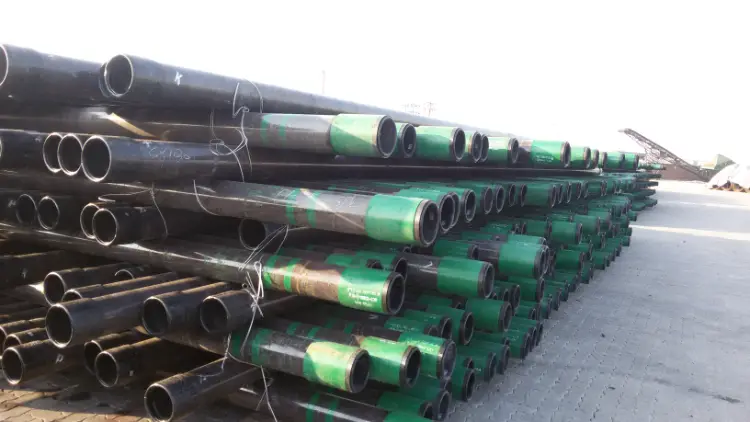
ASME SA312 TP316L Stainless Steel Pipe
ASME SA312 TP316L Stainless Steel Pipe: Complete Technical Data & Cross-Reference Guide
Detailed material data for ASME SA312 TP316L stainless steel pipe: chemical composition, mechanical and physical properties, international equivalents, similar alternatives, and application guidance.
Hot rolling, cold rolling, cold drawing, bending, welding, machining, pickling, passivation
- Phone : +8618037372205
- Email : [email protected]
- WhatsApp: Contact via Whtsapp
- WeChat: +8618037372205
ASME SA312 TP316L Stainless Steel Pipe Introduction
ASME SA312 TP316L is an austenitic chromium-nickel-molybdenum stainless steel pipe grade with extra-low carbon content, widely used for general corrosive service and high-temperature applications. It is standardized by the American Society of Mechanical Engineers (ASME) under specification SA312/SA312M. The corresponding UNS designation is S31603. The 'L' suffix denotes a maximum carbon content of 0.030%, which provides enhanced resistance to intergranular corrosion after welding or stress relieving. TP316L offers excellent resistance to a wide range of chemicals, chlorides, and acidic environments, combined with good high-temperature strength. Typical delivery condition is solution annealed to ensure optimal ductility and corrosion resistance. This grade is non-hardenable by heat treatment and is essentially non-magnetic in the annealed condition, but may become slightly magnetic when cold worked.
ASME SA312 TP316L Stainless Steel Pipe Chemical Composition
Chemical requirements as per ASME SA312 Table 1 for grade TP316L. All values are maximum unless a range is specified. The low carbon content minimizes carbide precipitation during welding. Strict adherence to these elemental limits ensures the material achieves the specified corrosion resistance and mechanical properties.
| Chemical Element | Standard Value | Remarks |
|---|---|---|
| Carbon (C) | 0.030 max | Low carbon for improved weldability |
| Manganese (Mn) | 2.00 max | General deoxidizer |
| Phosphorus (P) | 0.045 max | Residual impurity |
| Sulfur (S) | 0.030 max | Controlled for machinability |
| Silicon (Si) | 1.00 max | Deoxidizing element |
| Chromium (Cr) | 16.0 - 18.0 | Primary corrosion resistance element |
| Nickel (Ni) | 10.0 - 14.0 | Stabilizes austenitic structure |
| Molybdenum (Mo) | 2.00 - 3.00 | Enhances pitting/crevice corrosion resistance |
| Nitrogen (N) | Not specified | May be present, usually <0.10% |
| Iron (Fe) | Balance | - |
ASME SA312 TP316L Stainless Steel Pipe Physical Properties
These physical properties are typical for 316L stainless steel in the annealed condition and are provided for engineering guidance. They are not part of the ASME SA312 mandatory requirements but are based on published data for UNS S31603. Actual values may vary slightly depending on exact composition and processing history. Thermal conductivity and expansion are critical for design involving temperature changes.
| Property | Typical Value | Unit | Test Conditions / Temperature |
|---|---|---|---|
| Density (ρ) | 8000 | kg/m³ | 20 °C (68 °F) |
| Elastic Modulus (E) | 193 | GPa | 20 °C (68 °F); tension |
| Shear Modulus (G) | 77 | GPa | 20 °C (68 °F); estimated from E and ν |
| Poisson's Ratio (ν) | 0.30 | - | Room temperature |
| Thermal Expansion Coefficient (α) | 16.5 | 10⁻⁶/K | 20–100 °C; mean coefficient |
| Thermal Expansion Coefficient (α) | 17.5 | 10⁻⁶/K | 20–300 °C |
| Thermal Expansion Coefficient (α) | 18.5 | 10⁻⁶/K | 20–500 °C |
| Thermal Conductivity (λ) | 15.0 | W/m·K | At 100 °C |
| Thermal Conductivity (λ) | 18.0 | W/m·K | At 300 °C |
| Thermal Conductivity (λ) | 21.5 | W/m·K | At 500 °C |
| Specific Heat Capacity | 500 | J/kg·K | 20 °C |
| Electrical Resistivity (ρe) | 0.74 | µΩ·m | 20 °C |
ASME SA312 TP316L Stainless Steel Pipe Mechanical Properties
Mechanical property requirements for solution-annealed TP316L pipe in accordance with ASME SA312/SA312M. Transverse or longitudinal tensile testing is performed depending on pipe size and wall thickness. Elongation values are based on a 50 mm (2 in.) gauge length; for thin-wall pipes, the required elongation is reduced proportionally. Flattening test and hardness are supplementary and not mandatory unless specified in the purchase order.
| Property | Standard Requirement | Unit | Test Conditions |
|---|---|---|---|
| Tensile Strength (Rm) | 485 min | MPa | Room temperature, longitudinal strip or full-section |
| Tensile Strength (Rm) | 70 min | ksi | Ibid. |
| Yield Strength (Rp0.2/Re 0.2% offset) | 170 min | MPa | Room temperature |
| Yield Strength (Rp0.2/Re 0.2% offset) | 25 min | ksi | Room temperature |
| Elongation (A) | 35 min | % | In 50 mm (2 in.), for wall thickness ≥7.94 mm (0.312 in.) |
| Elongation (A) | 25 min (example) | % | For thinner walls, formula per standard applies |
| Hardness (Brinell) | 217 max | HBW | Typical for annealed condition; not mandatory per SA312 |
| Hardness (Rockwell B) | 95 max | HRB | Typical for annealed condition |
ASME SA312 TP316L Stainless Steel Pipe Completely Equivalent Material Standards and Substitute Grades
| Country/Region | Standard | Grade / Designation | Remarks |
|---|---|---|---|
| USA | ASTM A312/A312M | TP316L (UNS S31603) | Identical technical content; dual-certified with ASME SA312 |
| USA | ASTM A376/A376M | TP316L | Seamless pipe for high-temperature service |
| EU | EN 10216-5 | X2CrNiMo17-12-2 (1.4404) | Seamless tube; same composition and similar properties |
| EU | EN 10217-7 | X2CrNiMo17-12-2 (1.4404) | Welded tube; welded version of 1.4404 |
| Japan | JIS G3459 | SUS316LTP | Pipes for corrosion-resistant service |
| China | GB/T 14976 | 022Cr17Ni12Mo2 (S31603) | Seamless stainless steel pipe; chemical/physical match |
| China | GB/T 12771 | 022Cr17Ni12Mo2 (S31603) | Welded stainless steel pipe |
| Korea | KS D 3576 | STS316LTP | Stainless steel pipes for ordinary piping |
| ISO | ISO 9329-4 | X2CrNiMo17-12-2 | Seamless tubes for pressure purposes |
ASME SA312 TP316L Stainless Steel Pipe Application Introduction
TP316L stainless steel pipe is selected where enhanced corrosion resistance, especially against chlorides and industrial atmospheres, is required beyond the capability of 304/304L grades. Its low carbon content makes it ideal for welded structures that cannot be post-weld heat treated. Typical applications span various industries where reliability, cleanliness, and long service life are critical. Below are common industries, end products, and specific components where ASME SA312 TP316L pipe is utilized.
Product Applications: Seamless and welded process piping systems, Heat exchanger tubes and shells, Condenser and evaporator tubing, High-pressure instrument tubing, Sanitary tubing and fittings for food/pharma, Boiler and superheater tubes (within temperature limits), Structural tubes for architectural and load-bearing applications
Processed into products: Pipe spools and manifolds, Flanges (WN, SO, blind) made from companion materials, Butt-weld fittings (elbows, tees, reducers, caps), Valve bodies and trim (compatible grade), Strainers and filter housings, Expansion joints and flexible connectors, Spray nozzles and lances for harsh environments, Custom machined parts: couplings, nipples, adapters
Application industries: Chemical processing (reactors, columns, acid lines), Petrochemical and oil & gas (offshore platforms, refineries), Pharmaceutical and biotechnology (clean steam lines, WFI systems), Food and beverage (process piping, dairy, brewery), Pulp and paper (digesters, bleaching equipment), Marine and shipbuilding (seawater piping, exhaust systems), Water treatment and desalination (high-pressure piping), Architecture and construction (handrails, structural hollow sections), Power generation (condenser tubing, feedwater heaters)
ASME SA312 TP316L Stainless Steel Pipe Similar or Closely Related Alternative Materials
| Country/Region | Standard | Grade | Remarks |
|---|---|---|---|
| USA | ASTM A312 | TP316 (UNS S31600) | Higher carbon (0.08 max); reduced weldability without post-weld anneal; similar corrosion resistance in many environments but susceptible to sensitization |
| USA | ASTM A312 | TP317L (UNS S31703) | Higher molybdenum (3.0-4.0%) for superior pitting resistance; similar low carbon; higher cost |
| USA | ASTM A240/A312 | UNS S31603 (dual-certified) | Dual-certified as 304/304L in some product forms, but 304L lacks molybdenum; lower pitting resistance |
| EU | EN 10088-3 | X2CrNiMo18-14-3 (1.4435) | Higher molybdenum (2.5-3.0) and controlled nitrogen for better corrosion resistance; used in pharmaceutical |
| Japan | JIS G4304 | SUS316 (SUS316L) | SUS316 is the standard carbon version; SUS316L is identical to TP316L |
| China | GB/T 20878 | 06Cr17Ni12Mo2 (S31608) | Standard 316 version with 0.08 max carbon; not as weldable as S31603 |
Notes:
- Welding: TP316L can be welded by conventional methods (TIG, MIG, SAW, SMAW) using a filler metal with matching composition, such as ER316L or E316L-16. Low heat input and interpass temperature control are recommended to maintain corrosion resistance.
- Heat Treatment: Material is normally supplied in solution-annealed condition (1040–1150 °C followed by rapid cooling). No post-weld heat treatment is required for service in most environments, but a solution anneal might restore maximum corrosion resistance if sensitization occurs.
- Corrosion Resistance: Excellent in chloride-containing media and reducing acids; superior to 304/304L in pitting and crevice corrosion resistance. May be susceptible to stress corrosion cracking in hot chloride solutions above 60 °C.
- Testing: Hydrostatic or non-destructive electric testing is mandatory per ASME SA312; supplementary tests like intergranular corrosion (ASTM A262 Practice E) or grain size determination may be specified on order.
- Magnetic Properties: Essentially non-magnetic in annealed condition; magnetic permeability is typically below 1.02. Cold working can induce a small amount of martensite, slightly increasing magnetic response.
- Share



