
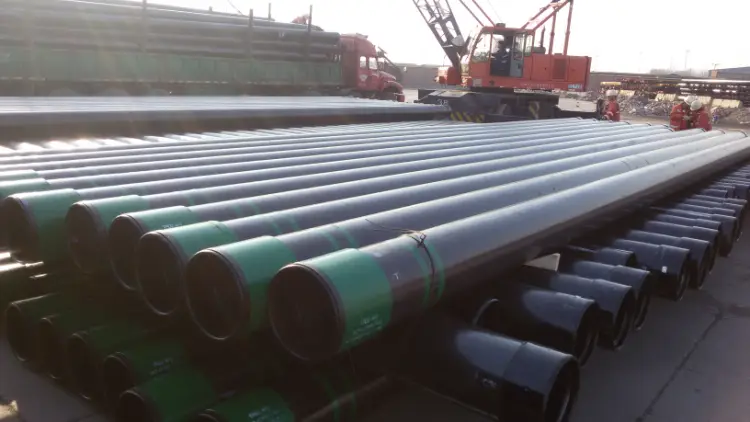
ASME SA312 TP316 Stainless Steel Pipe
ASME SA312 TP316 Stainless Steel Pipe: Properties, Equivalents & Applications
Comprehensive data for ASME SA312 TP316 stainless steel pipe including chemical composition, mechanical and physical properties, international equivalents, and typical uses.
Hot finished or cold finished, solution annealed, pickled and passivated
- Phone : +8618037372205
- Email : [email protected]
- WhatsApp: Contact via Whtsapp
- WeChat: +8618037372205
ASME SA312 TP316 Stainless Steel Pipe Introduction
ASME SA312 TP316 is an austenitic chromium-nickel-molybdenum stainless steel pipe (UNS S31600) designed for seamless and welded construction. The molybdenum addition significantly improves pitting and crevice corrosion resistance in chloride environments compared to TP304, and also enhances high-temperature strength. The alloy is non-magnetic in the annealed condition, offers excellent formability and weldability, and is widely employed in aggressive media. It is typically supplied in the solution-annealed condition to maximize corrosion resistance and ductility.
ASME SA312 TP316 Stainless Steel Pipe Chemical Composition
The chemical requirements for TP316 per ASME SA-312/SA-312M are listed below. The molybdenum content (2.00–3.00%) provides improved resistance to chlorides and reducing acids. Single values are maximum unless otherwise indicated.
| Element | Specification Limit (wt%) | Remarks |
|---|---|---|
| Carbon (C) | ≤ 0.08 | Higher than TP316L for strength |
| Manganese (Mn) | ≤ 2.00 | |
| Phosphorus (P) | ≤ 0.045 | |
| Sulfur (S) | ≤ 0.030 | |
| Silicon (Si) | ≤ 1.00 | |
| Chromium (Cr) | 16.0 – 18.0 | Key element for passivity |
| Nickel (Ni) | 10.0 – 14.0 | Stabilizes austenite |
| Molybdenum (Mo) | 2.00 – 3.00 | Enhances localized corrosion resistance |
ASME SA312 TP316 Stainless Steel Pipe Physical and Electrical Properties
Typical values for annealed TP316 at ambient and elevated temperatures. These data are representative for UNS S31600 and are useful for design purposes but are not mandatory specification limits. Sources: ASME BPVC Section II Part D and typical published data.
| Property | Typical Value | Unit | Temperature / Condition |
|---|---|---|---|
| Density (ρ) | 8.0 | g/cm³ | 20°C |
| Modulus of Elasticity (E) | 193 | GPa | 20°C |
| Shear Modulus (G) | 78 | GPa | 20°C |
| Poisson's Ratio (ν) | 0.29 | - | 20°C |
| Thermal Expansion coefficient (α) | 16.0 | µm/m·°C | 20–100°C |
| Thermal Expansion coefficient (α) | 16.2 | µm/m·°C | 20–300°C |
| Thermal Expansion coefficient (α) | 17.5 | µm/m·°C | 20–500°C |
| Thermal Conductivity (λ) | 16.3 | W/m·K | 100°C |
| Thermal Conductivity (λ) | 21.5 | W/m·K | 500°C |
| Specific Heat Capacity | 500 | J/kg·K | 20°C |
| Electrical Resistivity (ρe) | 0.74 | µΩ·m | 20°C |
ASME SA312 TP316 Stainless Steel Pipe Mechanical Properties
Tensile and hardness values are in accordance with ASME SA-312/SA-312M for material in the solution-annealed condition. Elongation requirements vary with wall thickness; both standard cases are shown.
- Yield strength determined by 0.2% offset method.
- Hardness limits are applicable for material with wall thickness ≥0.015 in. (0.38 mm).
| Property | Specified Value | Unit | Test Condition / Notes |
|---|---|---|---|
| Tensile Strength (Rm) | ≥ 515 (75) | MPa (ksi) | Room temperature |
| Yield Strength (ReH, 0.2% offset) | ≥ 205 (30) | MPa (ksi) | Room temperature |
| Elongation (A) | ≥ 35 | % | In 2 in. (50 mm), wall thickness ≥ 0.1875 in. (4.76 mm) |
| Elongation (A) | ≥ 28 | % | In 2 in. (50 mm), wall thickness < 0.1875 in. (4.76 mm) |
| Rockwell Hardness | ≤ 90 HRB | - | As annealed |
| Brinell Hardness | ≤ 192 HB | - | As annealed |
ASME SA312 TP316 Stainless Steel Pipe Fully Equivalent Material Standards & Substitute Grades
| Country/Region | Standard | Grade/Designation | Remarks |
|---|---|---|---|
| USA | ASTM A312/A312M | TP316 (UNS S31600) | Identical chemical and mechanical requirements |
| European Union | EN 10216-5 (seamless) / EN 10217-7 (welded) | 1.4401 (X5CrNiMo17-12-2) | Slight differences in composition window; often dual certified |
| Japan | JIS G3459 | SUS 316TP | Equivalent austenitic pipe grade |
| China | GB/T 14976 | 06Cr17Ni12Mo2 (new designation), 0Cr17Ni12Mo2 (former) | Seamless stainless steel pipe for fluid transport |
| International | ISO 2604-2 / ISO 9329-4 | TS 60 (approx.) | Reference grade for pressure pipes |
ASME SA312 TP316 Stainless Steel Pipe Application Introduction
ASME SA312 TP316 pipes are used across numerous industries where corrosion resistance and moderate strength at elevated temperatures are required. The material is readily formed and welded, making it suitable for complex piping systems and pressure-containing parts.
- Fabrication: welding with ER316L or E316L electrode; post-weld annealing not typically required for thin sections when using low-carbon filler.
- Service temperatures: up to 870°C for intermittent service, 925°C for continuous oxidation resistance; mechanical properties derate at elevated temperatures.
Product Applications: Process Piping Systems, Heat Exchanger Tubes and Shells, Condenser Tubes, Sanitary Tubing for Food/Pharma, Instrumentation Tubing, Fire Sprinkler Pipe (industrial corrosive environment), Fluid Transport Lines in Chemical Tankers
Processed into products: Pipe spools and prefabricated pipe lengths, Flanges (Slip-on, Weld Neck, Blind) made from matching 316 forgings (ASME A182 F316), Fittings (elbows, tees, reducers) per ASME A403 WP316, Valve bodies and trim in pressure-containing applications, Nozzles and manway in pressure vessels, Support structures in aggressive atmospheres, Thermowell and sensor protection tubes
Application industries: Chemical and Petrochemical Processing, Oil and Gas (refining, offshore topside piping), Food and Beverage Production, Pharmaceutical and Biotechnology, Pulp and Paper Mills, Marine Engineering (deck piping, seawater piping with caution), Power Generation (balance of plant piping), Water Treatment and Desalination
ASME SA312 TP316 Stainless Steel Pipe Related / Similar Substitute Grades
| Country/Region | Standard | Grade | Remarks |
|---|---|---|---|
| USA/Global | ASTM A312 | TP316L (UNS S31603) | Lower carbon (≤0.035%) for enhanced weldability and intergranular corrosion resistance; lower strength in annealed condition |
| USA/Global | ASTM A312 | TP316H (UNS S31609) | Higher carbon (0.04–0.10%) for improved high-temperature strength; used in creep-limited applications |
| EU | EN 10216-5/10217-7 | 1.4404 (X2CrNiMo17-12-2) | Low carbon version of 1.4401, equivalent to 316L |
| Global | ASTM A789 / A790 | UNS S32205 (2205 duplex) | Higher strength and superior chloride SCC resistance for aggressive environments; not a direct substitute but may be considered for upgraded service |
| Global | ASTM A312 | TP304/304L (UNS S30400/S30403) | Lower cost, no molybdenum; reduced pitting resistance compared to 316 |
Notes:
Additional Notes:
- Material is non-magnetic when annealed but may become slightly magnetic after cold work or welding.
- For cyclic service or heavy-wall sections, a low-carbon variant (TP316L) or stabilized grades (TP316Ti, TP316Cb) are recommended to avoid sensitization.
- Seawater applications require careful selection; crevice corrosion can occur in stagnant or oxygen-depleted conditions; duplex stainless steels are often preferred.
- When specifying welded pipe, ensure the product is made from plate/sheet that meets the base metal requirements and is fully solution annealed after welding.
- Dual certification (316/316L) is common where both carbon limits and minimum mechanical properties must be satisfied.
- Share



