
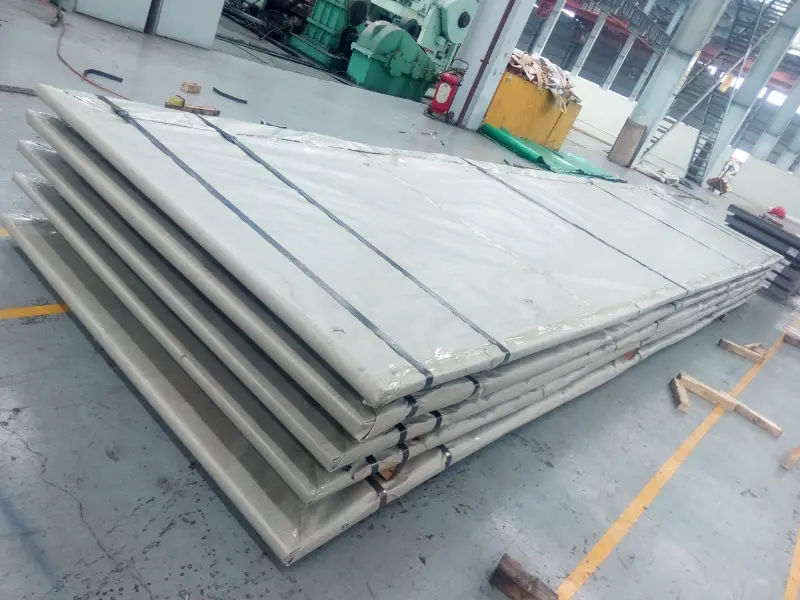
API 5CT H40 Oil Country Tubular Goods (OCTG) Steel Grade
API 5CT H40 Oil Country Tubular Goods (OCTG) Steel Grade
Comprehensive technical data for API 5CT H40 steel, including chemical requirements, mechanical and physical properties, international equivalents, and application guide for casing and tubing in oil and gas wells.
Hot rolling, cold drawing, normalizing (optional), welding (for EW pipes)
- Phone : +8618037372205
- Email : [email protected]
- WhatsApp: Contact via Whtsapp
- WeChat: +8618037372205
API 5CT H40 Oil Country Tubular Goods Steel Grade Introduction
API 5CT H40 is the lowest strength grade in the API 5CT specification for oil country tubular goods (OCTG). It is a carbon‑manganese steel intended for use as casing, tubing, and couplings in shallow oil and gas wells where pressures are low. H40 offers good weldability and adequate formability. It is normally supplied in the as‑rolled condition but may also be normalized upon agreement. The steel has a yield strength range of 276–552 MPa and a minimum tensile strength of 414 MPa. Its chemical composition is simple, with controlled carbon and manganese levels to achieve the required strength and toughness. H40 is widely used worldwide and has identical counterparts in ISO 11960 and other national standards. Because of its limited strength, it is not recommended for deep or high‑pressure wells without further evaluation.
API 5CT H40 Oil Country Tubular Goods Steel Grade Chemical Composition – Seamless Pipe
The chemical composition for H40 seamless pipe is specified in API 5CT Table C.1. The values are heat (ladle) analysis limits. Silicon is not specified in the standard but is typically present as a deoxidizing element. Residual elements (Cr, Ni, Mo, Cu) are usually kept to low levels unless otherwise agreed. For welded pipe, the carbon maximum is lower (0.20%). The steel does not require intentional addition of micro‑alloying elements.
| Element | Standard Value (max, wt%) | Remarks |
|---|---|---|
| Carbon (C) | 0.24 | Seamless pipe; for welded pipe max 0.20 |
| Manganese (Mn) | 1.20 | Seamless and welded pipe |
| Phosphorus (P) | 0.030 | Seamless and welded pipe |
| Sulfur (S) | 0.030 | Seamless and welded pipe |
| Silicon (Si) | Not specified | Typically ≤ 0.45 for deoxidation |
API 5CT H40 Oil Country Tubular Goods Steel Grade Thermal and Electrical Physical Properties
The following physical properties are typical values for a carbon‑manganese steel similar to H40. They are not specified in API 5CT and are provided only as general engineering guidance. Actual properties may vary slightly depending on the exact composition and manufacturing route. The values are valid at room temperature unless otherwise noted.
| Property | Typical Value | Unit | Test Condition / Remarks |
|---|---|---|---|
| Density (ρ) | 7.85 | g/cm³ | At 20 °C |
| Elastic modulus (E) | 200 | GPa | At room temperature |
| Shear modulus (G) | 80 | GPa | Calculated from E and ν |
| Poisson's ratio (ν) | 0.3 | – | Elastic range, room temperature |
| Thermal expansion coefficient (α) | 12.0 | 10⁻⁶/K | Between 20 °C and 100 °C |
| Thermal conductivity (λ) | 50 | W/(m·K) | At 20 °C |
| Specific heat capacity | 480 | J/(kg·K) | At 20 °C |
| Electrical resistivity (ρ_e) | 0.19 | µΩ·m | At 20 °C |
API 5CT H40 Oil Country Tubular Goods Steel Grade Mechanical Properties
The mechanical properties apply to the full wall thickness of the pipe and are determined on longitudinal specimens taken from the pipe body. Yield strength can be measured using the 0.5% total extension under load (EUL) method or the 0.2% offset method. Elongation is evaluated on a 2 in (50.8 mm) gauge length; the minimum required value depends on the cross‑sectional area and is calculated by the API formula. For common casing and tubing sizes the minimum elongation typically falls between 22% and 28%. Hardness and impact testing are not mandatory for H40 unless specified in the purchase order.
| Property | Standard Required Value | Unit | Test Condition |
|---|---|---|---|
| Yield strength (ReH) – Minimum | 276 | MPa | 0.5% total extension (EUL) or 0.2% offset, room temperature |
| Yield strength (ReH) – Maximum | 552 | MPa | 0.5% total extension (EUL) or 0.2% offset, room temperature |
| Tensile strength (Rm) – Minimum | 414 | MPa | Room temperature |
| Elongation (A) – Minimum | Calculated by formula e = 625,000 A^0.2 / U^0.9 (A in sq in, U in psi); typical minimum 22% | % | 2 in (50.8 mm) gauge length, longitudinal specimen |
API 5CT H40 Oil Country Tubular Goods Steel Grade Fully Equivalent Standards and Replaceable Grades
| Country/Region | Standard | Grade | Remarks |
|---|---|---|---|
| International | ISO 11960:2020 | H40 | Identical technical requirements to API 5CT |
| China | GB/T 19830-2017 | H40 | Equivalent to API 5CT H40; adopts the same chemical and mechanical limits |
| USA | API 5CT | H40 | Original specification and grade |
API 5CT H40 Oil Country Tubular Goods Steel Grade Application Introduction
API 5CT H40 is primarily designed for casing and tubing strings in oil and gas wells. Because of its relatively low strength, it is best suited for shallow wells or low‑pressure formations. The steel is readily welded and can be used with standard API connections. It is also employed in water injection wells and structural applications within the well construction. H40 is not intended for sour service (H₂S environments) unless supplementary testing is agreed upon.
Product Applications: Seamless and welded casing pipes, Tubing pipes, Couplings and pup joints, Line pipes (limited, for low‑pressure gathering systems)
Processed into products: Casing joints, Tubing hangers, Short‑length connectors and adapters, Downhole tools (less demanding, such as centralizers, stop collars), Wellhead components (low pressure)
Application industries: Oil and gas exploration, Well construction and completion, Water injection and disposal wells, Geothermal shallow wells (low temperature)
API 5CT H40 Oil Country Tubular Goods Steel Grade Similar / Comparable Alternative Materials
| Country/Region | Standard | Grade | Remarks |
|---|---|---|---|
| USA / International | API 5CT | J55 | Higher yield strength (379‑552 MPa) and tensile strength (517 MPa); can replace H40 in many applications with increased safety margin |
| USA / International | API 5CT | K55 | Similar strength to J55 but often used for casing; also interchangeable with H40 when strength requirements increase |
| China | GB/T 19830-2017 | J55 | Chinese equivalent of API 5CT J55; suitable substitute for H40 |
| Russia / CIS | GOST 632-80 | D | Group D strength category (yield ~ 373 MPa) roughly corresponds to H40, but check exact grade limits |
Notes:
H40 is the lowest strength grade in API 5CT. Hardness and impact testing are not mandatory per the standard; additional requirements must be agreed upon at the time of ordering. The steel is not designed for H₂S service and may suffer sulfide stress cracking unless proven otherwise. When higher strength or corrosion resistance is needed, consider up‑grading to J55, N80, or C95 grades. For welded pipes, the carbon content is restricted to 0.20% maximum to ensure proper weld quality.
- Share



