
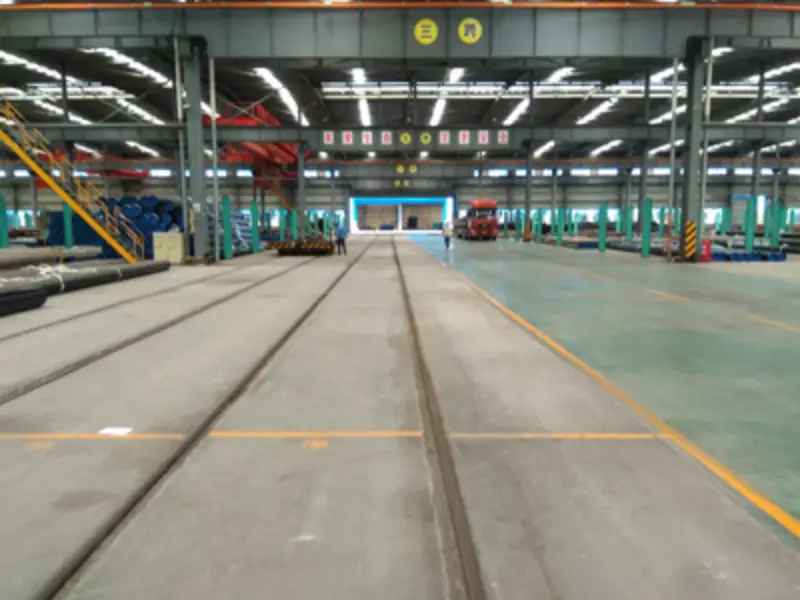
API 5CT-2011 H40 Casing Steel
API 5CT-2011 H40 Casing Steel - Material Data, Properties & Equivalents
Complete material data for API 5CT H40 casing steel: chemical composition limits, mechanical property requirements, physical characteristics, international equivalents, and typical applications in oil and gas well construction.
As‑rolled, normalized, normalized and tempered, or stress relieved; hot‑rolled or cold‑finished depending on product type
- Phone : +8618037372205
- Email : [email protected]
- WhatsApp: Contact via Whtsapp
- WeChat: +8618037372205
API 5CT-2011 H40 Casing Steel Introduction
API 5CT H40 is a general‑purpose carbon‑steel grade specified for seamless and welded casing and tubing. It provides a minimum yield strength of 40 ksi (276 MPa) and is primarily used in low‑pressure oil and gas wells, water wells, and structural applications. The grade is not intended for sour service unless specifically qualified.
Key features:
- Good weldability due to low carbon equivalent, achievable with suitable chemistry control.
- Economical choice for surface casing and conductor pipe.
- Mechanical properties are achieved by the manufacturer through controlled rolling, normalizing, or stress relieving.
- Only phosphorus and sulfur contents are capped by the standard; other elements are adjusted to meet property requirements.
API 5CT-2011 H40 Casing Steel Chemical Composition – as Required by API 5CT
API 5CT H40 imposes explicit limits only on phosphorus and sulfur. Other alloying elements (carbon, manganese, silicon, etc.) are not prescribed but are controlled by the manufacturer to obtain the required mechanical properties. The typical carbon–manganese composition ensures good strength and weldability.
Mandatory limits:
| Element | Standard Value | Remarks |
|---|---|---|
| Phosphorus (P) | ≤ 0.030 % | Maximum according to API 5CT |
| Sulfur (S) | ≤ 0.030 % | Maximum according to API 5CT |
| Carbon (C) | Not specified | Controlled by manufacturer to meet property requirements |
| Manganese (Mn) | Not specified | Controlled by manufacturer |
| Silicon (Si) | Not specified | Controlled by manufacturer |
API 5CT-2011 H40 Casing Steel Thermal & Electrical Physical Properties
API 5CT does not standardize thermal or electrical properties for H40 grade. These properties are composition‑dependent and should be requested from the steel manufacturer. The values below are illustrative only (not mandatory) and vary with heat treatment and product form. No guaranteed limits apply.
| Property | Standard Required Value | Unit | Test Condition |
|---|---|---|---|
| Density (ρ) | ~ 7.85 | kg/dm³ | Typical for carbon steel |
| Elastic Modulus (E) | ~ 205 | GPa | Room temperature, typical |
| Poisson's Ratio (ν) | ~ 0.29 | — | Typical for steel |
| Thermal Expansion Coefficient (α) | ~ 12.5 × 10⁻⁶ | /K | 20–200 °C typical |
| Thermal Conductivity (λ) | ~ 50 | W/(m·K) | At 20 °C, typical |
| Specific Heat Capacity | ~ 500 | J/(kg·K) | Typical for carbon steel |
| Electrical Resistivity (ρ_e) | ~ 0.2–0.3 | Ω·mm²/m | Typical for low‑alloy steel |
API 5CT-2011 H40 Casing Steel Mechanical Properties – API 5CT Minimum/Maximum Requirements
Mechanical tests are performed on longitudinal or transverse strip specimens (or full‑section specimens) per API 5CT. The table lists the mandatory tensile requirements for H40. Hardness testing is supplementary unless specified. Impact toughness is not required for standard H40.
Yield strength maximum is set to avoid processing issues; typical values are near the lower end of the range.
| Property | Standard Required Value | Unit | Test Condition |
|---|---|---|---|
| Yield Strength (ReH, 0.5% EUL) | ≥ 276 | ||
| Yield Strength (ReH, 0.5% EUL) | ≤ 552 | ||
| Tensile Strength (Rm) | ≥ 414 | ||
| Elongation (A) – longitudinal | ≥ 27 | % | Gauge length 2 in. (50.8 mm), strip specimen |
| Elongation (A) – transverse | ≥ 22 | % | Gauge length 2 in. (50.8 mm), strip specimen |
| Hardness (if required) | ≤ 22 | HRC | Per supplementary purchase specification |
API 5CT-2011 H40 Casing Steel Identical Standard Material & Grade Equivalents
| Country/Region | Standard | Grade | Remarks |
|---|---|---|---|
| International | ISO 11960:2011 | H40 | Full equivalent – same mechanical & chemical requirements |
| Europe | EN ISO 11960:2011 | H40 | European adoption, identical to API 5CT H40 |
API 5CT-2011 H40 Casing Steel Application Introduction
API 5CT H40 is primarily employed in the upstream oil and gas sector for low‑pressure well construction. Its good weldability and moderate strength make it cost‑effective for shallow casings and structural tubulars.
Typical application sectors:
Product Applications: Casing pipe (seamless or welded), Conductor pipe, Couplings and thread protectors, Coiled tubing (when specified to API 5CT), Structural hollow sections (when repurposed)
Processed into products: Surface casing strings, Conductor casing in wellheads, Water well casings, Piling sleeves for foundation construction
Application industries: Oil & Gas (exploration and production), Water well drilling, Geothermal energy, Construction / structural piling
API 5CT-2011 H40 Casing Steel Similar or Alternative Grades
| Country/Region | Standard | Grade | Remarks |
|---|---|---|---|
| USA / International | API 5CT | J55 | Higher minimum yield (55 ksi); similar carbon‑manganese steel; may replace H40 where higher strength is acceptable and H2S resistance not required. |
| USA / International | API 5CT | K55 | Yield 55 ksi; comparable to J55 but with different heat treatment (normalized); suitable for similar depth/pressure conditions as H40 with slightly higher load capacity. |
Notes:
Additional remarks:
- H40 is not intended for sour service (H₂S‑containing environments). NACE MR0175/ISO 15156 compliance must be separately evaluated if required.
- Delivery condition (hot‑rolled, normalized, etc.) is at the manufacturer's discretion unless specified by the purchaser.
- Supplementary testing (ultrasonic, electromagnetic, hydrostatic, etc.) may be ordered and should be clearly defined in the purchase agreement.
- Hardness testing and impact testing are optional; if needed, acceptance criteria must be agreed upon.
- Coiled tubing products may have different dimensional tolerances and must be additionally qualified for cyclic bending.
- Share



