
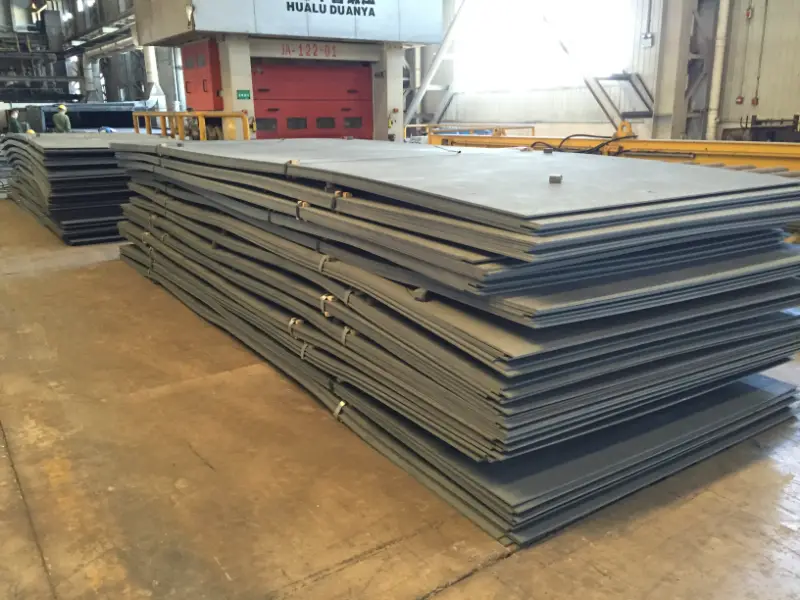
304LN (S30453) Austenitic Stainless Steel Plate & Coil
304LN (S30453) Austenitic Stainless Steel Plate & Coil - Low Carbon Nitrogen Enhanced
Comprehensive material data for 304LN (UNS S30453) stainless steel plate and coil per ASTM A240, including chemical composition, mechanical properties, physical and thermal data, international equivalents, and application guide.
Hot rolling, cold rolling, forming, welding, machining, solution annealing
- Phone : +8618037372205
- Email : [email protected]
- WhatsApp: Contact via Whtsapp
- WeChat: +8618037372205
304LN Austenitic Stainless Steel Plate & Coil Introduction
Austenitic 304LN stainless steel, designated UNS S30453, is a nitrogen-enhanced, low-carbon modification of 304 stainless steel. The deliberate addition of nitrogen (0.10-0.16%) increases strength without sacrificing ductility or corrosion resistance, while the low carbon content (<0.030%) minimizes carbide precipitation during welding. This grade offers excellent toughness at cryogenic temperatures and is widely used in pressure vessels, cryogenic equipment, and structural components requiring high strength and good weldability. It is typically supplied in the solution annealed condition and is available as plate, sheet, and coil.
304LN Austenitic Stainless Steel Plate & Coil Chemical Composition
Chemical composition limits for 304LN (UNS S30453) according to ASTM A240/A240M. The nitrogen addition enhances yield strength while maintaining good ductility and corrosion resistance.
- Carbon is controlled to a maximum of 0.030% to prevent intergranular corrosion after welding.
- Nitrogen range of 0.10-0.16% compensates for lower carbon and increases strength.
| Element | Specified Value (wt.%) | Remarks |
|---|---|---|
| Carbon (C) | ≤ 0.030 | Maximum |
| Manganese (Mn) | ≤ 2.00 | Maximum |
| Phosphorus (P) | ≤ 0.045 | Maximum |
| Sulfur (S) | ≤ 0.030 | Maximum |
| Silicon (Si) | ≤ 1.00 | Maximum |
| Chromium (Cr) | 18.0 - 20.0 | Range |
| Nickel (Ni) | 8.0 - 12.0 | Range |
| Nitrogen (N) | 0.10 - 0.16 | Range |
304LN Austenitic Stainless Steel Plate & Coil Thermal and Electrical Physical Properties
Typical physical properties for 304LN in the annealed condition. These values are for general engineering use and may vary slightly depending on processing history.
- The density is slightly lower than carbon steels due to the high chromium and nickel content.
- Thermal conductivity is relatively low, typical of austenitic stainless steels.
| Property | Typical Value | Unit | Test Condition / Temperature |
|---|---|---|---|
| Density (ρ) | 7.93 | g/cm³ | 20°C |
| Modulus of Elasticity (E) | 193 | GPa | 20°C |
| Shear Modulus (G) | 77 | GPa | 20°C (estimated from E and Poisson's ratio) |
| Poisson's Ratio (ν) | 0.29 | - | 20°C |
| Thermal Expansion Coefficient (α) | 16.2 | μm/m·°C | 20-100°C |
| Thermal Expansion Coefficient (α) | 17.0 | μm/m·°C | 20-300°C |
| Thermal Expansion Coefficient (α) | 18.0 | μm/m·°C | 20-500°C |
| Thermal Conductivity (λ) | 15.0 | W/m·K | 20°C |
| Thermal Conductivity (λ) | 16.3 | W/m·K | 100°C |
| Thermal Conductivity (λ) | 21.5 | W/m·K | 500°C |
| Specific Heat Capacity (cp) | 500 | J/kg·K | 20°C |
| Electrical Resistivity (ρe) | 0.72 | μΩ·m | 20°C |
304LN Austenitic Stainless Steel Plate & Coil Mechanical Properties
Minimum mechanical properties for 304LN plate, sheet, and strip per ASTM A240/A240M. Testing is performed after solution annealing.
- Yield strength is significantly higher than standard 304L due to nitrogen.
- Elongation measured in 50 mm (2 in.) gauge length for thicknesses ≥ 0.05 in. (1.27 mm).
- Hardness values are for reference only unless specified by the customer.
| Property | Specified Value (Minimum or Max) | Unit | Test Condition |
|---|---|---|---|
| Tensile Strength (Rm) | ≥ 515 | MPa | Room temperature, transverse or longitudinal |
| Yield Strength (ReH, 0.2% offset) | ≥ 205 | MPa | Room temperature, transverse or longitudinal |
| Elongation (A50) | ≥ 40 | % | Gauge length 50 mm, thickness ≥ 1.27 mm |
| Elongation (A50) | ≥ 40 | % | Gauge length 50 mm, thickness < 1.27 mm (commonly 40 min also applicable) |
| Hardness (Rockwell B) | ≤ 92 | HRBW | Reference value, not mandatory |
| Hardness (Brinell) | ≤ 201 | HBW | Reference value, not mandatory |
| Bend Test (Cold) | No cracks | - | 180° bend around diameter equal to specimen thickness; all thicknesses |
304LN Austenitic Stainless Steel Plate & Coil Fully Equivalent Material Standards and Replaceable Designations
| Country/Region | Standard | Designation | Remarks |
|---|---|---|---|
| Europe | EN 10088-2 / EN 10088-3 | X2CrNiN18-10 (1.4311) | Identical chemistry and mechanical properties, harmonized |
| Japan | JIS G4304 / G4305 | SUS304LN | Equivalent grade, widely interchangeable |
| China | GB/T 3280 / GB/T 4237 | 022Cr19Ni10N (formerly 00Cr18Ni10N) | Matches UNS S30453 requirements |
| International | ISO 15510 | X2CrNiN18-9 | Chemical composition aligned with 304LN |
| USA (AMS) | AMS 5647 | 304LN (S30453) | Aerospace specification for bars and forgings, same UNS number |
304LN Austenitic Stainless Steel Plate & Coil Application Introduction
304LN is optimized for applications requiring elevated strength at ambient and cryogenic temperatures, combined with good weldability and corrosion resistance. The controlled nitrogen content provides a significant boost in yield strength compared to 304L, enabling lighter designs while maintaining ASME code requirements for pressure vessels.
- It is fully austenitic and non-magnetic in the annealed condition.
- Excellent toughness down to -196°C makes it suitable for LNG and liquid oxygen storage.
Product Applications: Cryogenic pressure vessels and storage tanks, Welded shell-and-tube heat exchangers, Reactor internals and core support structures, Vacuum insulated piping, Weld neck flanges and fittings, Chemical reactor vessels and columns, Stack liners and ductwork
Processed into products: Thick-walled welded vessel shells (solution annealed after welding), Nozzle reinforcements, Bolted flanges for high-pressure service, Expansion bellows (where higher strength reduces thickness), Tube sheets for heat exchangers, Structural supports in cryogenic modules, LNG pump shafts and impellers (forgings)
Application industries: Cryogenic engineering, Chemical and petrochemical processing, Nuclear power generation (pressure boundary components), Liquefied natural gas (LNG) transportation and storage, Food and beverage processing equipment, Pharmaceutical manufacturing, Marine and offshore structures (non-wetted portions)
304LN Austenitic Stainless Steel Plate & Coil Similar and Closely Related Alternative Materials
| Country/Region | Standard | Designation | Remarks |
|---|---|---|---|
| USA | ASTM A240 | 304L (S30403) | Low carbon but without nitrogen addition; lower strength (~170 MPa yield) but excellent corrosion resistance. Substitute when high strength is not required. |
| USA | ASTM A240 | 304 (S30400) | Conventional 304 with higher carbon (≤0.08%); higher strength than 304L but susceptible to sensitization. Not recommended for welded heavy sections. |
| USA | ASTM A240 | 316L (S31603) | Molybdenum-bearing austenitic; better pitting resistance and similar strength to 304LN when strain hardened. Used in more aggressive environments. Slightly higher cost. |
| Europe | EN 10088-2 | X2CrNiN18-7 (1.4318) | Lean duplex alternative with higher strength but lower nickel. Used for structural applications. |
| Europe | EN 10088-2 | X5CrNi18-10 (1.4301) | Standard 304, similar to UNS S30400. Not low carbon, so limited for welded service. |
Notes:
All data are based on ASTM A240/A240M latest revision. Mechanical minimums are for transverse testing unless specified.
- Welding: 304LN exhibits excellent weldability by all common processes (GTAW, GMAW, SMAW, SAW). Filler metal should be ER308L or E308L with matching nitrogen levels to maintain strength.
- Post-weld heat treatment is not required for most applications but solution annealing may be specified to dissolve chromium carbides and recover full corrosion resistance.
- The grade is subject to stress corrosion cracking in chloride environments above 60°C; not recommended for concentrated chlorides.
- Available also as forgings (ASTM A182 F304LN), seamless pipe (ASTM A312 TP304LN), and bars (ASTM A276). Specifications may have slightly different chemical ranges (e.g., nitrogen may be 0.10-0.16% in all forms). Verify for specific product form.
- Share



