
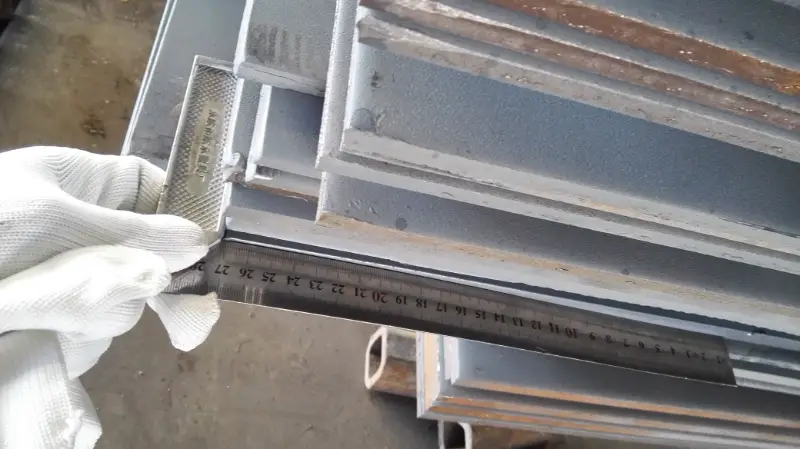
14Cr18Ni11Si4AlTi (1Cr18Ni11Si4AlTi) Dual-Phase Stainless Steel
14Cr18Ni11Si4AlTi (1Cr18Ni11Si4AlTi) Austenitic-Ferritic Stainless Steel Plate & Coil | GB/T 4237
Detailed material data for 14Cr18Ni11Si4AlTi (formerly 1Cr18Ni11Si4AlTi) stainless steel plate and coil according to GB/T 4237, including chemical composition, mechanical and physical properties, international equivalents, and application guidance.
Hot rolling, cold rolling, solution annealing (1000~1100°C, rapid cooling)
- Phone : +8618037372205
- Email : [email protected]
- WhatsApp: Contact via Whtsapp
- WeChat: +8618037372205
14Cr18Ni11Si4AlTi Dual-Phase Stainless Steel Introduction
14Cr18Ni11Si4AlTi (previously designated 1Cr18Ni11Si4AlTi) is an austenitic-ferritic (duplex) stainless steel specified in GB/T 4237 for hot-rolled plates and strips. It features high silicon (≈4%), aluminum, and titanium additions, which provide outstanding oxidation and carburization resistance at elevated temperatures, along with good structural stability and strength. This grade combines the advantages of austenitic and ferritic microstructures: high ductility and toughness with improved resistance to stress corrosion cracking. Typical applications include components operating in high-temperature, oxidizing, or carburizing environments such as industrial furnace parts, heat exchangers, and petrochemical equipment. The material is usually supplied in the solution-annealed condition.
14Cr18Ni11Si4AlTi Dual-Phase Stainless Steel Chemical Composition
The chemical composition complies with GB/T 4237 for austenitic-ferritic stainless steel grade 14Cr18Ni11Si4AlTi. All values are in weight percent. The high silicon content together with aluminum and titanium improves high-temperature oxidation resistance and carburization resistance. Controlled nitrogen content enhances strength.
| Element | Specified Value (wt%) | Remarks |
|---|---|---|
| Carbon (C) | 0.10–0.18 | Determined by standard analysis |
| Silicon (Si) | 3.40–4.00 | Key element for oxidation resistance |
| Manganese (Mn) | ≤0.80 | |
| Phosphorus (P) | ≤0.035 | |
| Sulfur (S) | ≤0.030 | |
| Chromium (Cr) | 16.00–19.50 | Primary element for corrosion and oxidation resistance |
| Nickel (Ni) | 10.00–12.00 | Stabilizes austenite and improves ductility |
| Aluminum (Al) | 0.10–0.30 | Enhances oxidation and carburization resistance |
| Titanium (Ti) | 0.40–0.70 | Prevents sensitization and improves high-temperature stability |
| Nitrogen (N) | ≤0.10 | May be present as residual element |
14Cr18Ni11Si4AlTi Dual-Phase Stainless Steel Thermal and Electrical Physical Properties
Typical physical properties for 14Cr18Ni11Si4AlTi in the annealed condition. These values are indicative and may vary slightly with actual heat treatment and composition. Thermal expansion, conductivity, and specific heat are critical for high-temperature applications. Density and elastic constants are given at room temperature.
| Property | Typical Value | Unit | Test Condition / Temperature Range |
|---|---|---|---|
| Density (ρ) | 7.75 | g/cm³ | At 20°C |
| Modulus of elasticity (E) | 195 | GPa | At 20°C |
| Shear modulus (G) | 76 | GPa | At 20°C (calculated from E and ν) |
| Poisson's ratio (ν) | 0.30 | – | At 20°C |
| Coefficient of thermal expansion (α) | 17.0 | 10⁻⁶/K | 20–100°C |
| Coefficient of thermal expansion (α) | 17.5 | 10⁻⁶/K | 20–300°C |
| Coefficient of thermal expansion (α) | 18.0 | 10⁻⁶/K | 20–500°C |
| Thermal conductivity (λ) | 16 | W/(m·K) | At 100°C |
| Thermal conductivity (λ) | 18 | W/(m·K) | At 300°C |
| Thermal conductivity (λ) | 22 | W/(m·K) | At 500°C |
| Specific heat capacity (cp) | 500 | J/(kg·K) | At 20°C to 100°C (average) |
| Electrical resistivity (ρe) | 0.80 | μΩ·m | At 20°C |
14Cr18Ni11Si4AlTi Dual-Phase Stainless Steel Mechanical Properties
Mechanical properties at room temperature for solution-annealed plate according to GB/T 4237. Requirements vary by plate thickness. The specified values below apply to standard thicknesses. Bending test is required for thicknesses ≤10 mm and uses a mandrel diameter of 3× plate thickness (3a) with a bend angle of 180°. Hardness limits are given as both Brinell and Rockwell B scales.
| Property | Requirement / Typical Value | Unit | Test Condition |
|---|---|---|---|
| Yield strength (0.2% offset, Rp0.2) | ≥440 | MPa | Room temperature, tensile test |
| Tensile strength (Rm) | ≥715 | MPa | Room temperature, tensile test |
| Elongation (A) | ≥25 | % | Gauge length 50 mm (or 5.65√S0) |
| Hardness (HBW) | ≤255 | HBW | As per GB/T 231 |
| Hardness (HRB) | ≤100 | HRB | As per GB/T 230 |
| Bending test (bend angle / mandrel diameter) | 180° / D=3a | – | For plates ≤10 mm thickness; test according to GB/T 232 |
| Impact energy (KV2) | Not specified in standard (typically ≥60 J for duplex grades) | J | Charpy V-notch at room temperature (for reference only) |
14Cr18Ni11Si4AlTi Dual-Phase Stainless Steel Completely Equivalent Material Standards and Substitutable Grades
As 14Cr18Ni11Si4AlTi is a specialized Chinese stainless steel, there is no exact equivalent in other national standards. The table lists the original designation and confirms it has no direct international match.
| Country/Region | Standard | Grade | Remarks |
|---|---|---|---|
| China | GB/T 4237 (current) | 14Cr18Ni11Si4AlTi | Preferred designation |
| China | GB/T 4237 (historical) | 1Cr18Ni11Si4AlTi | Old designation; chemically identical |
| International | – | No exact equivalent | Approximate materials differ in Si, Al, Ti, and Cr-Ni balance |
14Cr18Ni11Si4AlTi Dual-Phase Stainless Steel Application Introduction
14Cr18Ni11Si4AlTi is specifically designed for high-temperature service in oxidizing and carburizing atmospheres. Its unique combination of silicon, aluminum, and titanium provides a stable protective oxide layer and resistance to carbon pickup, making it suitable for furnace components, heat exchangers, and chemical processing equipment operating up to approximately 1000°C. Key applications:
Product Applications: Furnace radiant tubes and retorts, Heat exchanger plates and shells, High-temperature conveyor belts and baskets, Box- and muffle-type furnace chambers, Carburizing and nitriding fixtures
Processed into products: Burner nozzles and flame tubes, Thermocouple protection tubes, Quench tanks and grids, Expansion bellows in hot gas ducts, Support beams and bars for heat treatment jigs
Application industries: Heat treatment and industrial furnace manufacturing, Petrochemical and refinery processing, Power generation (boilers, gas turbine components), Chemical processing (reactors, reformer tubes)
14Cr18Ni11Si4AlTi Dual-Phase Stainless Steel Similar/Alternative Material Recommendations
The following steels offer comparable high-temperature oxidation resistance and are sometimes used for similar applications, but they do not contain the Al and Ti additions critical for carburization resistance in 14Cr18Ni11Si4AlTi. Mechanical properties and microstructural stability may differ.
| Country/Region | Standard | Grade | Remarks |
|---|---|---|---|
| EU | EN 10095 | X15CrNiSi20-12 (1.4828) | Higher Cr (~19-21%), lower Si (~1.5-2.5%), no Al or Ti. Good oxidation resistance to ~1000°C. |
| USA | ASTM A240 | UNS S30900 (309) | 22Cr-12Ni, low Si. Used for high-temperature oxidation resistance; lacks intentional Al/Ti additions. |
| Japan | JIS G4304 | SUS 309S | Equivalent to UNS S30900; similar limitations. |
| Germany | DIN 17440 (historic) | X15CrNiSi20-12 | Predecessor to 1.4828; properties comparable to EN grade. |
| China | GB/T 4238 | 06Cr19Ni10 (0Cr18Ni9) | Common austenitic stainless steel for lower temperature, less aggressive environments; no Si/Al/Ti enhancement. |
Notes:
- Welding: The grade can be welded using matching filler metals or over-alloyed Ni-base fillers to maintain corrosion and oxidation resistance. Preheating is not required, but post-weld solution annealing is recommended for optimum performance.
- Forming: Good hot and cold formability. Hot working temperature range 1150–800°C; cold forming may require intermediate annealing due to work hardening.
- Heat treatment: Solution anneal at 1000–1100°C followed by rapid cooling (water quench) is essential to dissolve carbides and restore ductility and corrosion resistance.
- Surface condition: Descaling after heat treatment is necessary to maintain surface oxidation resistance; pickling or grit blasting is typical.
- Share



