
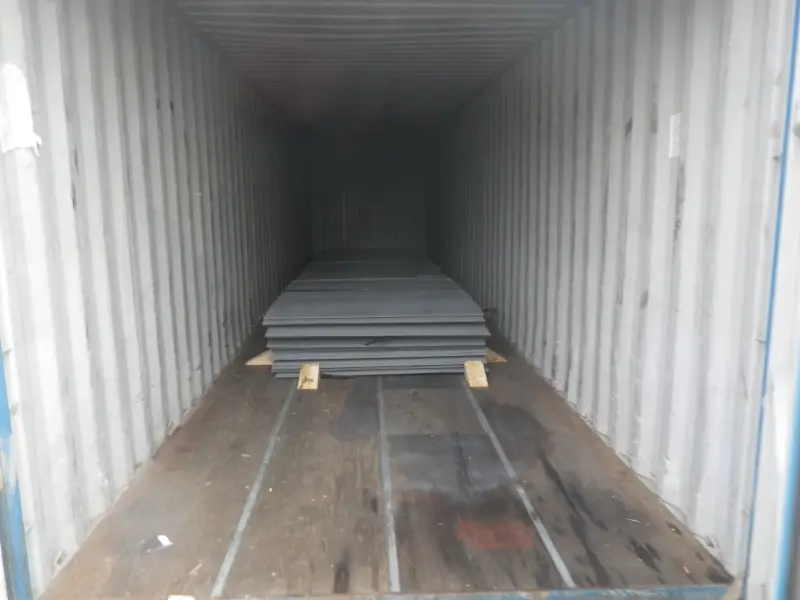
022Cr12Ni9Cu2NbTi Precipitation Hardening Stainless Steel
022Cr12Ni9Cu2NbTi Precipitation Hardening Stainless Steel for High-Temperature Durability
High-strength, precipitation hardenable stainless steel with excellent oxidation and creep resistance at elevated temperatures. Supplied as hot-rolled plate and coil per GB/T 4237.
Hot rolling, cold rolling, solution annealing, precipitation hardening, welding (with proper procedure), forming
- Phone : +8618037372205
- Email : [email protected]
- WhatsApp: Contact via Whtsapp
- WeChat: +8618037372205
022Cr12Ni9Cu2NbTi Precipitation Hardening Stainless Steel Introduction
022Cr12Ni9Cu2NbTi is a low-carbon, precipitation-hardening stainless steel standardized under GB/T 4237 for hot-rolled plates and coils. Its balanced composition of chromium, nickel, copper, niobium, and titanium provides a unique combination of high strength, good ductility, and superior heat resistance up to about 600 °C. The alloy derives its properties from a martensitic transformation followed by precipitation of Ni3(Cu, Ti, Nb) intermetallic phases during aging treatment.
- Excellent creep and stress-rupture properties
- Good oxidation resistance in automotive exhaust environments
- Controlled low carbon content (< 0.022%) minimizes sensitization and improves weldability
- Available in solution-annealed condition for subsequent precipitation hardening
Typically used in turbocharger components, exhaust flanges, high-temperature fasteners, and other structural parts requiring durability under thermal cycling.
022Cr12Ni9Cu2NbTi Precipitation Hardening Stainless Steel Chemical Composition per GB/T 4237
The steel is characterized by an ultralow carbon content to prevent intergranular corrosion, and additions of copper, niobium, and titanium for precipitation hardening. Nb, Ti, and Cu contribute to strengthening through fine precipitates during aging. Control of residual elements ensures high-temperature stability.
| Element | Specified Value (%) | Remarks |
|---|---|---|
| Carbon (C) | ≤0.022 | Max |
| Silicon (Si) | ≤0.50 | Max |
| Manganese (Mn) | ≤1.00 | Max |
| Phosphorus (P) | ≤0.030 | Max |
| Sulfur (S) | ≤0.015 | Max |
| Chromium (Cr) | 11.0 – 12.5 | Allowable range |
| Nickel (Ni) | 8.5 – 10.0 | Allowable range |
| Copper (Cu) | 1.5 – 2.5 | Allowable range |
| Niobium + Tantalum (Nb+Ta) | 0.60 – 0.90 | Combined content |
| Titanium (Ti) | 0.10 – 0.35 | Allowable range |
| Nitrogen (N) | ≤0.025 | Max |
| Aluminium (Al) | ≤0.05 | Typical residual, if not specified |
| Molybdenum (Mo) | ≤0.50 | Max, not strictly required but common |
022Cr12Ni9Cu2NbTi Precipitation Hardening Stainless Steel Thermal and Electrical Physical Properties
These values are typical for 022Cr12Ni9Cu2NbTi in solution-annealed and aged conditions. They are provided as guidance for design and may vary with processing history.
- Density similar to other stainless steels
- Moderate thermal expansion and thermal conductivity suitable for exhaust applications
- Stable electrical resistivity across temperature range
| Property | Typical Value | Unit | Test Condition |
|---|---|---|---|
| Density (ρ) | 7.8 | g/cm³ | 20 °C |
| Elastic Modulus (E) | 195 | GPa | 20 °C, tension |
| Shear Modulus (G) | 75 | GPa | Estimated, 20 °C |
| Poisson's Ratio (ν) | 0.30 | – | 20 °C |
| Thermal Expansion Coefficient (α) | 10.8 | ×10⁻⁶ /K | 20–100 °C |
| Thermal Expansion Coefficient (α) | 11.5 | ×10⁻⁶ /K | 20–300 °C |
| Thermal Expansion Coefficient (α) | 12.0 | ×10⁻⁶ /K | 20–500 °C |
| Thermal Conductivity (λ) | 15 | W/(m·K) | 100 °C |
| Thermal Conductivity (λ) | 18 | W/(m·K) | 300 °C |
| Specific Heat Capacity (cp) | 500 | J/(kg·K) | 20 °C |
| Electrical Resistivity (ρe) | 0.75 | µΩ·m | 20 °C |
022Cr12Ni9Cu2NbTi Precipitation Hardening Stainless Steel Mechanical Properties
Data refer to solution-annealed condition as delivered per GB/T 4237. After subsequent aging treatment (e.g., 710–730 °C for several hours), strength can increase significantly while retaining useful ductility. Values comply with standard requirements; actual performance may vary with section thickness.
| Property | Specified Minimum | Unit | Test Condition |
|---|---|---|---|
| Yield Strength (Rp0.2) | ≥275 | MPa | Room temperature, solution annealed |
| Tensile Strength (Rm) | ≥585 | MPa | Room temperature, solution annealed |
| Elongation (A) | ≥30 | % | Gauge length 50 mm, solution annealed |
| Hardness | ≤255 HBW / ≤30 HRC | – | Solution annealed condition |
| Yield Strength (aged) | ≥620 | MPa | After precipitation hardening (typical) |
| Tensile Strength (aged) | ≥860 | MPa | After precipitation hardening (typical) |
| Elongation (aged) | ≥12 | % | After precipitation hardening (typical) |
022Cr12Ni9Cu2NbTi Precipitation Hardening Stainless Steel Fully Equivalent Materials – Standards and Substitutable Grades
| Country/Region | Standard | Grade | Notes |
|---|---|---|---|
| China | GB/T 4237 | 022Cr12Ni9Cu2NbTi | Original grade defined in this standard |
| – | – | No direct international equivalent | Proprietary composition; check with supplier for cross-references |
022Cr12Ni9Cu2NbTi Precipitation Hardening Stainless Steel Application Introduction
022Cr12Ni9Cu2NbTi delivers an excellent balance of heat resistance, formability, and precipitation hardening capability. It is mainly applied where components must withstand cyclic thermal and mechanical loads up to 600 °C while retaining structural integrity.
- Typical processing includes blanking, forming, welding, solution annealing, and final aging.
- Recommended aging treatment: 710–730 °C for 4–8 hours, air cooling, to achieve peak strength.
Product Applications: Hot-rolled stainless steel plates, Precipitation hardenable coil and strip, Exhaust manifolds and flanges, Turbocharger housings, High-temperature bolts, nuts, and studs, Bellows and expansion joints, Heat-resistant welded structures
Processed into products: Turbocharger turbine housings and wastegate parts, Exhaust manifold gaskets and sealing rings, Automotive exhaust flex couplings, Fasteners for exhaust and hot-end assemblies, Thermal reactor shells, Components of industrial heat-treatment fixtures, Brackets and supports in high-temperature environments
Application industries: Automotive (especially exhaust and turbocharger systems), Energy (heat exchangers, boiler parts), Industrial furnace manufacturing, Aerospace (secondary structural parts where temperature < 600 °C), Petrochemical (valve bodies, fasteners)
022Cr12Ni9Cu2NbTi Precipitation Hardening Stainless Steel Similar / Alternative Materials Recommendation
| Country/Region | Standard | Grade | Comments |
|---|---|---|---|
| China | GB/T 4237 / GB/T 20878 | 05Cr12Ni9Cu2NbTi (S51550) | Higher carbon (≤0.05%), similar precipitation hardening, but lower strength potential |
| USA | ASTM A564 / A693 | S17400 (17-4PH) | Contains Cu and Nb but lacks Ti; requires different aging treatment; comparable strength |
| Europe | EN 10088-2 | X5CrNiMoCuNb14-5 (1.4980) | Higher Cr, Ni, Mo; used for similar high-temperature applications but more costly |
| Japan | JIS G4304 | SUS630 (17-4PH) | Same as ASTM S17400; widely available alternative |
| China | GB/T 1220 | 07Cr17Ni7Al (17-7PH, S51770) | Semi-austenitic precipitation hardening steel; comparable mechanical properties but lower thermal stability |
Notes:
Due to its specialized composition, 022Cr12Ni9Cu2NbTi may require suppliers to confirm compliance with GB/T 4237 latest edition. Welding consumables should be selected carefully; overmatching filler metals (e.g., AWS E309L or ERNiCrFe-3) can be used if thermal stability is paramount. Post-weld heat treatment is recommended to restore precipitation hardening response. For deep drawing and complex forming, solution-annealed material is preferred. The steel exhibits good oxidation resistance up to 650 °C, but for prolonged exposure above this temperature, protective coatings or alternative materials may be considered.
- Share



