
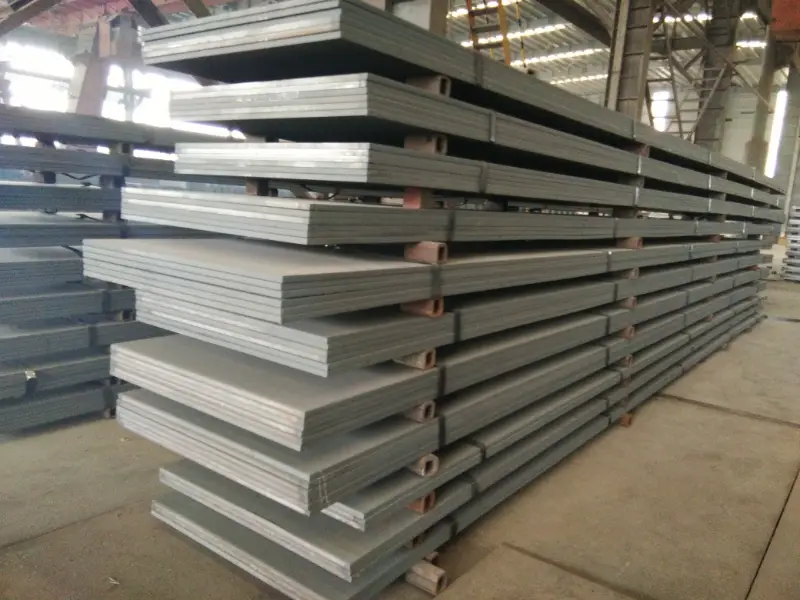
XM-33 (S44626) Ferritic Stainless Steel
XM-33 (S44626) Ferritic Stainless Steel - High-Chromium, Molybdenum-Stabilized Alloy
XM-33 (UNS S44626) is a ferritic stainless steel with 25-27% Cr and 0.75-1.50% Mo, stabilized with Ti/Nb for superior intergranular corrosion resistance. It offers excellent stress corrosion cracking resistance and high-temperature oxidation resistance.
Hot rolling, cold rolling, annealing, pickling, welding, forming
- Phone : +8618037372205
- Email : [email protected]
- WhatsApp: Contact via Whtsapp
- WeChat: +8618037372205
XM-33 Ferritic Stainless Steel Introduction
XM-33 (UNS S44626) is a high-chromium ferritic stainless steel with molybdenum addition, designed for demanding corrosive environments. The alloy is stabilized with titanium and/or niobium, which prevents sensitization during welding and high-temperature service. Its predominantly ferritic microstructure provides
- Excellent resistance to stress corrosion cracking in chloride-containing media
- Good pitting and crevice corrosion resistance due to high Cr and Mo content
- High thermal conductivity and low thermal expansion compared to austenitic grades
- Good oxidation resistance up to ~1000°C
Typically supplied in the solution-annealed condition, XM-33 is readily formed and welded with appropriate procedures, making it suitable for plate and coil applications in chemical processing, pollution control, and heat exchange equipment.
XM-33 Ferritic Stainless Steel Chemical Composition
Chemical composition as per ASTM A240/A240M for grade XM-33 (UNS S44626). The stabilization requirement for Ti+Nb ensures complete carbon and nitrogen binding, providing full ferritic microstructure and immunity to intergranular corrosion after welding.
| Element | Specified Value (wt.%) | Notes |
|---|---|---|
| Carbon (C) | ≤ 0.060 | |
| Manganese (Mn) | ≤ 0.75 | |
| Silicon (Si) | ≤ 1.00 | |
| Phosphorus (P) | ≤ 0.040 | |
| Sulfur (S) | ≤ 0.030 | |
| Chromium (Cr) | 25.0 – 27.0 | Provides pitting and oxidation resistance |
| Nickel (Ni) | ≤ 0.50 | |
| Molybdenum (Mo) | 0.75 – 1.50 | Enhances pitting/crevice resistance |
| Nitrogen (N) | ≤ 0.040 | |
| Titanium + Niobium (Ti+Nb) | 0.20 + 4×(%C+%N) min; max 0.80 | Stabilizing addition |
XM-33 Ferritic Stainless Steel Thermal and Electrical Physical Properties
Typical physical properties for XM-33 (UNS S44626) in annealed condition. Data compiled from published literature for ferritic stainless steels of similar composition. Actual values may vary slightly with processing.
| Property | Typical Value | Unit | Temperature / Condition |
|---|---|---|---|
| Density (ρ) | 7.7 | g/cm³ | 20 °C |
| Modulus of Elasticity (E) | 200 | GPa | 20 °C |
| Shear Modulus (G) | 77 | GPa | 20 °C |
| Poisson's Ratio (ν) | 0.28 | — | 20 °C |
| Thermal Expansion (α) | 10.0 | µm/m·°C | 20–100 °C |
| Thermal Expansion (α) | 11.0 | µm/m·°C | 20–300 °C |
| Thermal Expansion (α) | 11.5 | µm/m·°C | 20–500 °C |
| Thermal Conductivity (λ) | 22 | W/m·K | 100 °C |
| Thermal Conductivity (λ) | 25 | W/m·K | 500 °C |
| Specific Heat Capacity (cp) | 460 | J/kg·K | 0–100 °C |
| Electrical Resistivity (ρe) | 0.60 | µΩ·m | 20 °C |
XM-33 Ferritic Stainless Steel Mechanical Properties
Minimum mechanical properties at room temperature per ASTM A240/A240M for annealed condition. Values apply to thickness ≤ 6.35 mm (0.25 in). For thicker plates, the elongation requirement may be adjusted. Bend test is performed per ASTM A370 with 180° bend.
| Property | Specified Value | Unit | Condition/Note |
|---|---|---|---|
| Yield Strength (0.2% offset, ReH) | ≥ 275 | MPa | Thickness ≤ 6.35 mm |
| Tensile Strength (Rm) | ≥ 470 | MPa | Thickness ≤ 6.35 mm |
| Elongation (A) in 50 mm | ≥ 20 | % | Longitudinal direction, strip spec. |
| Bend Test (180°) | d = 2t (no cracks) | — | Bend diameter = twice specimen thickness, thickness ≤ 9.5 mm |
| Hardness | ≤ 95 HRB | — | Typical requirement; conversion to HBW possible |
XM-33 Ferritic Stainless Steel Equivalent Standards and Direct Replacement Grades
| Country/Region | Standard | Grade Designation | Remarks |
|---|---|---|---|
| USA | ASTM A240/A240M | XM-33 (UNS S44626) | Original specification |
| Europe | EN 10088-2 | 1.4591 (X2CrMoTi26-1) | Chemically equivalent; tighter max C and N limits |
| International | ISO 4955 | X2CrMoTi26-1 (similar) | Closely matched heat-resistant grade |
XM-33 Ferritic Stainless Steel Application Introduction
XM-33 is specifically designed for aggressive, chloride-containing environments where austenitic grades may suffer stress corrosion cracking. Its high chromium and molybdenum content, combined with stabilization, makes it ideal for welded constructions operating at elevated temperatures. The steel is used in the form of plates, sheets, and coils that are subsequently fabricated into various process equipment.
Product Applications: Flue gas desulfurization systems, Chemical storage tanks and pressure vessels, Heat exchanger tube plates and baffles, Scrubber shells and internals, Condenser shells, Digesters and bleaching equipment in pulp mills
Processed into products: Welded pipe and tube for corrosive fluid transport, Flanges and fittings for chemical piping, Lining sheets for tanks and ducts, Expansion joints and bellows in high-temperature service, Structural supports and brackets in corrosive atmospheres, Tube sheets for shell-and-tube heat exchangers
Application industries: Chemical and petrochemical processing, Pollution control (scrubbers, FGD), Pulp and paper (digesters, bleach washers), Food and beverage processing, Marine and offshore equipment, Heat exchanger and condenser manufacturing
XM-33 Ferritic Stainless Steel Closely Related / Alternative Stainless Steel Grades
| Country/Region | Standard | Grade Designation | Remarks |
|---|---|---|---|
| USA | ASTM A240 | XM-27 (UNS S44627) | 26Cr-1Mo with Nb stabilization; very similar corrosion resistance and use; slightly different stabilization mechanism |
| USA | ASTM A240 | 446 (UNS S44600) | 23-27Cr, low C, but no deliberate Mo addition; lower pitting resistance; often used as a lower-cost alternative where Mo is not critical |
| Europe | EN 10088-2 | 1.4521 (X2CrMoTi18-2) | 18% Cr with 2% Mo; lower chromium content provides less oxidation resistance but still good corrosion resistance in many chloride environments; may be substituted in less severe conditions |
| USA | ASTM A240 | S44700 (29-4C) | Superferritic 28Cr-4Mo; significantly higher pitting resistance, but more expensive; suitable for extreme chloride environments |
Notes:
Welding: Use matching or slightly over-alloyed filler (e.g., AWS ER320LR or similar). Ensure low heat input and proper interpass temperature control. Post-weld annealing is generally not required due to stabilization.
Forming: Cold forming is possible; severe deformation may require intermediate annealing. Due to the ferritic structure, the alloy has limited ductility compared to austenitics, and tight bend radii should be avoided.
Heat treatment: Annealing is typically performed at 760 – 830°C followed by air/water quenching. The grade cannot be hardened by heat treatment.
- Share



