
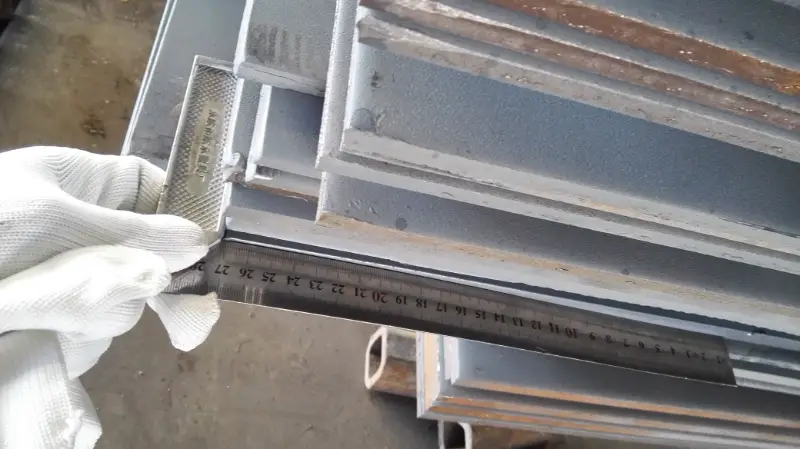
SUS410L Stainless Steel
SUS410L Stainless Steel: Low-Carbon Ferritic Grade for Welded Structures
SUS410L is a low-carbon ferritic stainless steel specified in JIS G4305, enhancing weldability and corrosion resistance, ideal for automotive exhaust and structural applications.
Cold rolling, bending, deep drawing, welding (low heat input recommended), shearing, punching.
- Phone : +8618037372205
- Email : [email protected]
- WhatsApp: Contact via Whtsapp
- WeChat: +8618037372205
SUS410L Stainless Steel Introduction
SUS410L is a low-carbon variant of the 12% chromium ferritic stainless steel, designed to improve weldability and intergranular corrosion resistance by reducing carbon content to a maximum of 0.030%. This grade, governed by JIS G4305 for cold-rolled stainless steel plates, sheets and strip, retains good mechanical properties and moderate corrosion resistance. It is magnetic in all conditions and cannot be hardened by heat treatment. Typical applications include:
- Automotive exhaust systems
- Containers and structural components
- Kitchen equipment and architectural trim
The alloy offers a balance of formability, weldability and cost-effectiveness where high corrosion resistance is not the primary requirement.
SUS410L Stainless Steel Chemical Composition
Chemical composition limits according to JIS G4305 for SUS410L stainless steel. All values are maximum unless a range is indicated. A low carbon content is maintained to minimize sensitization during welding.
| Element | Standard Value (max %) | Remarks |
|---|---|---|
| Carbon (C) | ≤ 0.030 | Low carbon for improved weldability |
| Silicon (Si) | ≤ 1.00 | Deoxidizer; improves oxidation resistance |
| Manganese (Mn) | ≤ 1.00 | Austenite stabilizer; improves hot workability |
| Phosphorus (P) | ≤ 0.040 | Impurity; controlled to avoid embrittlement |
| Sulfur (S) | ≤ 0.030 | Impurity; improves machinability but reduced for formability |
| Chromium (Cr) | 11.00 – 13.50 | Primary ferrite stabilizer; provides corrosion resistance |
| Nickel (Ni) | ≤ 0.60 | Residual; small amount may be present |
SUS410L Stainless Steel Physical and Electrical Properties
Representative physical properties at room temperature and elevated temperatures for SUS410L. Values are typical for ferritic stainless steel and may differ based on exact composition and heat treatment.
| Property | Typical Value | Unit | Test Condition / Temperature |
|---|---|---|---|
| Density (ρ) | 7.75 | g/cm³ | 20°C |
| Elastic Modulus (E) | 200 | GPa | 20°C |
| Shear Modulus (G) | 77 | GPa | Estimated, 20°C |
| Poisson's Ratio (ν) | 0.28 | – | 20°C |
| Thermal Expansion Coefficient (α) | 10.6 | 10⁻⁶ /K | 20–100°C |
| Thermal Expansion Coefficient (α) | 11.4 | 10⁻⁶ /K | 20–300°C |
| Thermal Expansion Coefficient (α) | 12.0 | 10⁻⁶ /K | 20–500°C |
| Thermal Conductivity (λ) | 26 | W/(m·K) | 100°C |
| Thermal Conductivity (λ) | 27 | W/(m·K) | 500°C |
| Specific Heat Capacity (c) | 460 | J/(kg·K) | 20°C |
| Electrical Resistivity (ρ_e) | 0.60 | μΩ·m | 20°C |
SUS410L Stainless Steel Mechanical Properties
Mechanical properties for SUS410L in the solution-annealed condition as per JIS G4305 for cold-rolled sheet/strip (thickness ≤ 8 mm). Representative hardness values are also provided. Properties may vary slightly with product form and thickness.
| Property | Standard Requirement | Unit | Test Condition / Remarks |
|---|---|---|---|
| Yield Strength (ReH, 0.2% offset) | ≥ 205 | MPa | Room temperature, annealed |
| Tensile Strength (Rm) | ≥ 440 | MPa | Room temperature, annealed |
| Elongation (A) | ≥ 20 | % | Gauge length 50 mm, for thickness ≤ 8 mm |
| Hardness (HBW) | ≤ 183 | -- | Annealed condition |
| Hardness (HRB) | ≤ 88 | -- | Annealed condition, Rockwell B scale |
| Hardness (HV) | ≤ 200 | -- | Annealed condition, Vickers hardness |
| Bend Test (Mandrel Diameter) | 180° bend, d = a | mm | For thickness ≤ 8 mm, d = bending diameter, a = specimen thickness |
SUS410L Stainless Steel Fully Equivalent Material Standards and Substitute Grades
| Country/Region | Standard | Grade | Remarks |
|---|---|---|---|
| USA | ASTM A240/A240M | UNS S41003 (Type 410L) | Slight Cr range difference (10.5-12.5%); Ni 0.60-1.10; generally interchangeable |
| Europe | EN 10088-2 | 1.4003 (X2CrNi12) | Cr 10.5-12.5, Ni 0.30-1.00; similar weldable 12Cr steel |
| China | GB/T 4237 | 022Cr12 (UNS S41003 equivalent) | Comparable composition and properties |
SUS410L Stainless Steel Application Introduction
SUS410L is selected where a combination of moderate corrosion resistance, good formability, and enhanced weldability is required. Its low carbon content avoids martensitic formation in the weld heat-affected zone, reducing post-weld cracking. Typical applications include:
- Automotive: exhaust tubing, mufflers, catalytic converter shells, heat shields.
- Industrial containers: corrosion-resistant tanks and hoppers for mild environments.
- Architecture and construction: roofing, cladding, decorative trim.
- Home appliances: washing machine drums, dishwasher liners.
- General engineering: structural supports, frames, brackets.
Product Applications: Exhaust pipes and mufflers, Catalytic converter housings, Storage tanks, Architectural panels and roofing sheets, Washing machine tubs, Heat exchanger tubes, Kitchen sinks
Processed into products: Flanges and pipe fittings, Brackets and structural frames, Deep-drawn parts (sinks, drums), Welded assemblies requiring post-forming, Clamps and fasteners
Application industries: Automotive, Industrial Equipment, Architecture & Construction, Home Appliances, Food Processing (mild conditions), Energy & Heat Exchangers
SUS410L Stainless Steel Similar / Alternative Material Recommendations
| Country/Region | Standard | Grade | Remarks |
|---|---|---|---|
| Japan | JIS G4305 | SUS410 | Higher carbon (≤0.15); lower weldability, higher strength and hardness |
| Japan | JIS G4305 | SUS410S | Carbon ≤0.08; intermediate between 410 and 410L |
| Japan | JIS G4305 | SUS430 | 16-18% Cr ferritic; better corrosion resistance, non-hardenable, widely used for appliances |
| Europe | EN 10088-2 | 1.4016 (X6Cr17) | 17% Cr; better corrosion resistance but lower weldability due to higher carbon |
| USA | ASTM A240 | Type 409 | Ti-stabilized 11% Cr steel; commonly used for automotive exhaust |
Notes:
Welding considerations: Low heat input processes (TIG, MIG, resistance welding) are preferred to avoid excessive grain growth. Filler metals with matching or slightly higher chromium content (e.g., AWS ER410 or ER309L) can be used. Post-weld annealing is rarely required for thin sections, but if specified, re-anneal at 700–820°C followed by rapid cooling. Corrosion behavior: Provides adequate resistance to atmospheric corrosion, fresh water, and mild chemical environments, but is not suitable for aggressive acids or chloride-rich environments where pitting may occur. Formability: Similar to SUS430 but with better weld-zone ductility; can be cold-formed by typical sheet metal methods.
- Share



