
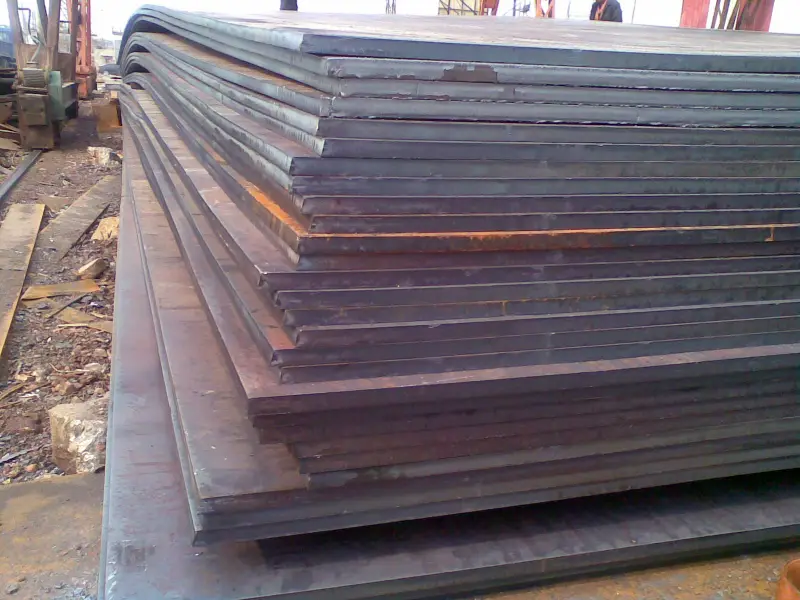
SUS304N1 Stainless Steel
SUS304N1 Austenitic Stainless Steel: High-Strength Nitrogen-Enhanced 304 Plate/Coil
Explore SUS304N1 stainless steel properties per JIS G4304 and JIS G4305. Chemical composition, mechanical & thermal data, international equivalents, and applications for high-strength plate and coil.
Hot rolling, cold rolling, bending, deep drawing, welding, machining
- Phone : +8618037372205
- Email : [email protected]
- WhatsApp: Contact via Whtsapp
- WeChat: +8618037372205
SUS304N1 Stainless Steel Introduction
SUS304N1 is a nitrogen-strengthened austenitic stainless steel standardized under JIS G4304 (hot-rolled) and JIS G4305 (cold-rolled). By adding 0.10–0.25% nitrogen, it gains higher yield and tensile strength compared to standard SUS304, while retaining excellent corrosion resistance, formability, and weldability. Typical applications include structural components, chemical equipment, and food processing machinery where enhanced mechanical properties are required. The material is usually supplied in solution-annealed condition and is available as plate, sheet, and coil.
SUS304N1 Stainless Steel Chemical Composition
Chemical composition as specified in JIS G4304 and JIS G4305. The nitrogen addition is key to enhancing strength without compromising ductility. Values are maximum unless a range is indicated.
| Element | Standard Value | Remarks |
|---|---|---|
| Carbon (C) | ≤0.08 | |
| Silicon (Si) | ≤1.00 | |
| Manganese (Mn) | ≤2.50 | |
| Phosphorus (P) | ≤0.045 | |
| Sulfur (S) | ≤0.030 | |
| Nickel (Ni) | 7.00 - 10.50 | |
| Chromium (Cr) | 18.00 - 20.00 | |
| Nitrogen (N) | 0.10 - 0.25 | Key strengthening element |
| Iron (Fe) | Balance |
SUS304N1 Stainless Steel Thermal and Electrical Physical Properties
Typical physical properties for SUS304N1 range. The nitrogen addition has minimal influence on most physical constants, which remain similar to standard SUS304. Data are for reference and may vary slightly depending on exact composition and temperature.
| Property | Standard Value | Unit | Test Condition |
|---|---|---|---|
| Density (ρ) | 7.93 | g/cm³ | Ambient temperature |
| Modulus of Elasticity (E) | 193 | GPa | 20°C |
| Shear Modulus (G) | 77 | GPa | 20°C |
| Poisson's Ratio (ν) | 0.30 | - | 20°C |
| Thermal Expansion Coefficient (α) | 16.0 | µm/m·°C | 0–100°C |
| Thermal Expansion Coefficient (α) | 17.5 | µm/m·°C | 0–500°C |
| Thermal Conductivity (λ) | 16.3 | W/m·K | 100°C |
| Thermal Conductivity (λ) | 21.5 | W/m·K | 500°C |
| Specific Heat Capacity | 500 | J/kg·K | 0–100°C |
| Electrical Resistivity (ρe) | 720 | nΩ·m | 20°C |
SUS304N1 Stainless Steel Mechanical Properties
Minimum mechanical properties at room temperature for solution-annealed condition as per JIS G4304/G4305. Values may vary slightly depending on product thickness and production method. Hardness values are also provided for reference.
| Property | Standard Requirement | Unit | Test Condition |
|---|---|---|---|
| Yield Strength (ReH) 0.2% offset | ≥275 | MPa | Room temperature, plate/strip thickness ≤ 8 mm |
| Yield Strength (ReH) 0.2% offset | ≥275 | MPa | Room temperature, plate/strip thickness > 8 mm |
| Tensile Strength (Rm) | ≥550 | MPa | Room temperature, all thicknesses |
| Elongation (A) | ≥35 | % | Thickness ≤ 8 mm, gauge length 50 mm |
| Elongation (A) | ≥40 | % | Thickness > 8 mm, gauge length 50 mm |
| Hardness (HBW) | ≤187 | HBW | As solution annealed |
| Hardness (HRB) | ≤90 | HRB | As solution annealed |
| Hardness (HV) | ≤200 | HV | As solution annealed |
SUS304N1 Stainless Steel Fully Equivalent Standards and Substitute Grades
| Country/Region | Standard | Grade | Remarks |
|---|---|---|---|
| Japan | JIS G4304 / G4305 | SUS304N1 | Original grade |
| USA | ASTM A240/A240M | 304N (UNS S30451) | Chemical and mechanical equivalent |
| Europe | EN 10088-2 | X2CrNiN18-10 (1.4315) | Comparable nitrogen-alloyed austenitic |
| International | ISO 15510 | X2CrNiN18-10 | Same designation as European |
| China | GB/T 3280 | 06Cr19Ni10N (S30458) | Close match; minor nitrogen range differs |
| Korea | KS D 3698 / D 3705 | STS304N1 | Adopted from JIS |
SUS304N1 Stainless Steel Application Introduction
SUS304N1 is selected when standard SUS304 lacks sufficient strength but good corrosion resistance and formability are still required. The nitrogen addition provides a cost-effective strength upgrade compared to higher-alloyed grades. Typical applications and industries:
Product Applications: Storage tanks and silos, Piping systems and flanges, Kitchen equipment and sinks, Elevator panels and escalator parts, Automotive fuel rails and mounting brackets, Brewing and fermentation vessels, Decorative architectural sheets
Processed into products: Structural beams and channels, Pressed and deep-drawn parts (sink bowls, cookware), Welded assemblies (frames, supports), Heat exchanger plates, Spring elements (moderate load), Fasteners (bolts, nuts, washers), Flanged connections and fittings, Baffles and trays in distillation columns
Application industries: Chemical and petrochemical processing equipment, Food and beverage production machinery, Architectural and structural components (handrails, cladding), Automotive exhaust and trim parts, Pharmaceutical and dairy equipment, Pressure vessels and storage tanks, Pulp and paper industry components, Heat exchangers and condensers
SUS304N1 Stainless Steel Similar/Near-Equivalent Substitutes
| Country/Region | Standard | Grade | Remarks |
|---|---|---|---|
| Japan | JIS G4304 / G4305 | SUS304 | Same base, lower strength without nitrogen; good corrosion resistance |
| Japan | JIS G4304 / G4305 | SUS304N2 | Higher nitrogen (0.15–0.30%) for even higher strength |
| USA | ASTM A240 | 304L (UNS S30403) | Low-carbon variant, lower strength but better weldability |
| Europe | EN 10088-2 | X5CrNi18-10 (1.4301) | Standard 304, similar corrosion but lower strength |
| International | ISO 15510 | X5CrNi18-10 | Equivalent to 1.4301 |
| Japan | JIS G4304 / G4305 | SUS316L | Molybdenum-bearing, higher corrosion resistance but different chemistry |
Notes:
SUS304N1 offers improved yield strength without significant sacrifice in ductility. It is non-magnetic in the annealed condition but may become slightly magnetic after cold forming. Stress corrosion cracking resistance is similar to standard 304; for chloride-rich environments, higher molybdenum grades (e.g., 316 types) should be considered. The material can be welded using common austenitic stainless steel processes (TIG, MIG, resistance welding) with proper filler metals (e.g., ER308L). Solution annealing after welding is recommended to restore optimum corrosion resistance and reduce stress.
- Share



