
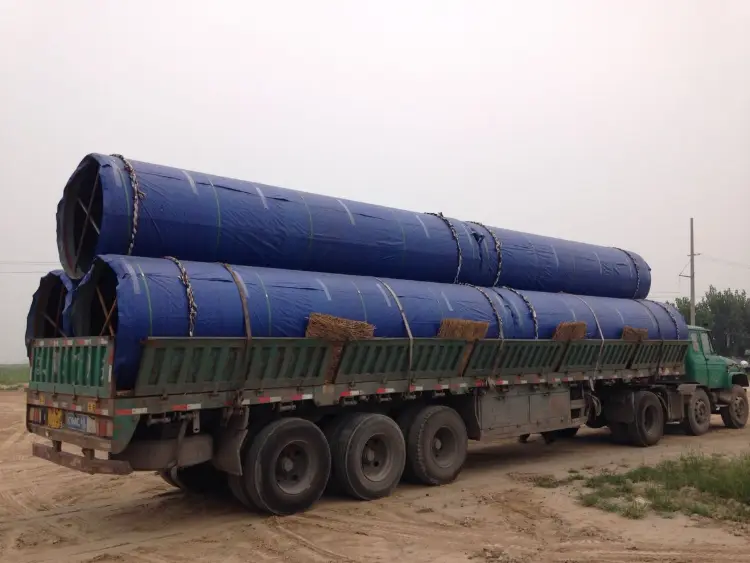
Q345D Low-Temperature Seamless Pipe per GB/T 8163
Q345D Low-Temperature Seamless Pipe: GB/T 8163 Grade for Superior Toughness at -20°C
Comprehensive data sheet for Q345D seamless pipe under GB/T 8163. Covers chemical composition, mechanical properties at sub-zero temperatures, and physical characteristics. Explore equivalent grades like S355J2 and applications in cryogenic fluid transport.
Hot-rolling, cold-drawing, normalizing, stress-relief annealing
- Phone : +8618037372205
- Email : [email protected]
- WhatsApp: Contact via Whtsapp
- WeChat: +8618037372205
Q345D Low-Temperature Seamless Pipe per GB/T 8163 Introduction
Q345D is a low-alloy high-strength structural steel specified in China for seamless pipes under the standard GB/T 8163, intended for fluid transportation at low temperatures. With a minimum yield strength of 345 MPa and guaranteed impact toughness at -20°C (minimum 34 J), it offers a reliable balance of strength, weldability, and cold-temperature performance. The grade is produced via hot rolling or normalizing and is widely used in pressure piping, cryogenic storage, and structural applications. Its controlled chemistry, notably low sulfur and phosphorus with fine-grain elements (Al, Nb, V, Ti), ensures excellent ductility and resistance to brittle fracture, meeting the demands of harsh environments.
Q345D Low-Temperature Seamless Pipe per GB/T 8163 Chemical Composition
The chemical composition conforms to the requirements for Q345D in GB/T 8163, which references the limits of GB/T 1591 for structural steels. The addition of grain-refining elements such as Al, Nb, V, and Ti improves low-temperature toughness. Residual elements are controlled to ensure good weldability.
| Element | Content (% by weight) | Remarks |
|---|---|---|
| Carbon (C) | ≤ 0.18 | |
| Silicon (Si) | ≤ 0.50 | |
| Manganese (Mn) | 1.00 ~ 1.60 | |
| Phosphorus (P) | ≤ 0.030 | |
| Sulfur (S) | ≤ 0.025 | |
| Niobium (Nb) | ≤ 0.07 | Grain refiner, part of microalloying |
| Vanadium (V) | ≤ 0.15 | Grain refiner, part of microalloying |
| Titanium (Ti) | ≤ 0.20 | Grain refiner, part of microalloying |
| Aluminum (Alt) | ≥ 0.015 | Total aluminum, minimum for grain refinement |
| Chromium (Cr) | ≤ 0.30 | Residual element |
| Nickel (Ni) | ≤ 0.50 | Residual element |
| Copper (Cu) | ≤ 0.20 | Residual element |
| Nitrogen (N) | ≤ 0.012 | Not explicitly required but controlled |
Q345D Low-Temperature Seamless Pipe per GB/T 8163 Thermal and Electrical Physical Properties
Physical properties are typical for low-alloy structural steel and serve as engineering references. Actual values may vary with heat treatment and microstructure. These data are not part of the mandatory delivery conditions but are useful for design and thermal analysis.
| Property | Typical Value | Unit | Test Condition / Remarks |
|---|---|---|---|
| Density (ρ) | 7.85 | g/cm³ | At 20°C |
| Modulus of Elasticity (E) | 206 | GPa | At 20°C, in tension |
| Shear Modulus (G) | 79.3 | GPa | Calculated from E and ν |
| Poisson's Ratio (ν) | 0.30 | — | Elastic range |
| Thermal Expansion Coefficient (α) | 12.0 | 10⁻⁶/K | Between 20°C and 100°C |
| Thermal Expansion Coefficient (α) | 13.5 | 10⁻⁶/K | Between 20°C and 300°C |
| Thermal Conductivity (λ) | 53 | W/(m·K) | At 20°C |
| Specific Heat Capacity (c) | 460 | J/(kg·K) | At 20°C |
| Electrical Resistivity (ρ_e) | 0.15 | Ω·mm²/m | At 20°C, typical for carbon-manganese steel |
Q345D Low-Temperature Seamless Pipe per GB/T 8163 Mechanical Properties
Mechanical properties are determined on samples taken from the pipe body in accordance with GB/T 8163. The impact test at -20°C is mandatory for Q345D grade. Tensile properties depend on wall thickness; the values below are for the most common thickness range (≤ 16 mm). For thicker sections, yield strength decreases as per the standard.
| Property | Standard Requirement | Unit | Test Condition / Remarks |
|---|---|---|---|
| Yield Strength (ReH) | ≥ 345 | MPa | Wall thickness ≤ 16 mm; transverse or longitudinal specimen |
| Yield Strength (ReH) | ≥ 325 | MPa | Wall thickness > 16 mm to ≤ 30 mm |
| Yield Strength (ReH) | ≥ 295 | MPa | Wall thickness > 30 mm to ≤ 50 mm |
| Yield Strength (ReH) | ≥ 275 | MPa | Wall thickness > 50 mm to ≤ 70 mm |
| Tensile Strength (Rm) | 470 ~ 630 | MPa | All thicknesses |
| Elongation after Fracture (A) | ≥ 20 | % | Wall thickness ≤ 16 mm, longitudinal specimen, gauge length 5.65√S₀ |
| Elongation after Fracture (A) | ≥ 18 | % | Transverse specimen, applicable when required |
| Impact Energy (KV2) | ≥ 34 (average of 3 specimens) | J | At -20°C, longitudinal specimen; one individual value ≥ 27 J |
| Flattening Test (for pipes) | No cracks or breaks | - | Applies to outside diameter ≤ 400 mm; plate spacing specified in standard |
| Bending Test (for pipes) | No cracks or breaks | - | Applies to outside diameter > 400 mm; bent over a former |
Q345D Low-Temperature Seamless Pipe per GB/T 8163 Fully Equivalent Material Standards and Substitute Grades
| Country / Region | Standard | Grade | Remarks |
|---|---|---|---|
| China | GB/T 1591 | Q345D | Base structural steel plate/strip grade; same chemical and impact requirements |
| European Union | EN 10025-2 | S355J2 | Equivalent low-alloy steel with guaranteed impact at -20°C (J2); suitable for structural and pipe applications |
| Germany (withdrawn) | DIN EN 10025-2 | S355J2 | Superseded by EN standard, historically interchangeable |
| Japan | JIS G3106 | SM490B | Closest strength level; impact temperature is 0°C (B). Additional testing at -20°C needed for full equivalence |
| USA | ASTM A572/A572M | Grade 50 [345] | Strength matches; requires supplementary requirement S5 (Charpy at -20°C) for toughness parity |
| International | ISO 4950-2 | E355DD | High yield strength structural steel with guaranteed impact at -20°C |
Q345D Low-Temperature Seamless Pipe per GB/T 8163 Application Introduction
Q345D seamless pipe is specifically designed for low-temperature service where ordinary carbon steels risk brittle fracture. Its fine-grained structure and microalloy design ensure safety in critical environments. Common uses include:
- Transport of liquefied gases (LNG, LPG) at temperatures down to -20°C
- Pressure piping systems in petrochemical plants and refineries
- Structural hollow sections in offshore platforms and arctic constructions
- Cryogenic storage tank transfer lines
- Heat exchanger tubes requiring moderate low-temperature toughness
Product Applications: Low-temperature fluid transport pipelines, Pressure vessel shells and headers, Structural pipe for offshore jackets and decks, LNG/LPG truck-loading arms and piping, Process plant piping in cold climates, Heat exchanger shells and tube bundles
Processed into products: Pipe spools and bends for low-temperature service, Flanges (after welding appropriate flange material), Branch outlet fittings (tees, laterals), Reducers and caps for pressure piping, Cryogenic valve bodies (when forged from equivalent grade), Manifold headers in process skids
Application industries: Oil & Gas (upstream, midstream, and downstream), Petrochemical and Chemical Processing, Energy (power generation, LNG terminals), Marine and Offshore Engineering, Construction (bridges, high-rise buildings in cold regions), Cryogenic Storage and Transportation
Q345D Low-Temperature Seamless Pipe per GB/T 8163 Similar / Alternative Materials with Different Property Profiles
| Country / Region | Standard | Grade | Remarks |
|---|---|---|---|
| China | GB/T 8163 | Q345C | Same strength, but impact requirement at 0°C instead of -20°C; lower low-temperature toughness |
| China | GB/T 8163 | Q345E | Higher toughness; impact at -40°C; used for more severe cryogenic conditions |
| EU | EN 10025-2 | S355JR | Similar strength, impact only at +20°C; not suitable for low temperatures |
| EU | EN 10025-2 | S355J0 | Impact at 0°C; intermediate toughness option |
| USA | ASTM A572/A572M | Grade 50 (without S5) | Strength equivalent, but standard does not require low-temperature impact testing |
| USA | ASTM A53/A53M | Grade B | Common carbon steel pipe grade; lower strength (240 MPa yield) and no low-temperature toughness guarantee |
Notes:
Additional requirements: Per GB/T 8163, pipes may be supplied in the normalized condition to achieve uniform mechanical properties and grain refinement. Surface quality and dimensional tolerances are defined in the standard. Nondestructive testing (eddy current or ultrasonic) can be specified in the contract. For welding, recommended preheat and post-weld heat treatment should follow recognized codes (e.g., ASME B31.3) to avoid cold cracking. The grade is not intended for sour service (H₂S) unless specifically tested for HIC/SSC. Where improved corrosion resistance is needed, consider lined or clad alternatives.
- Share



