
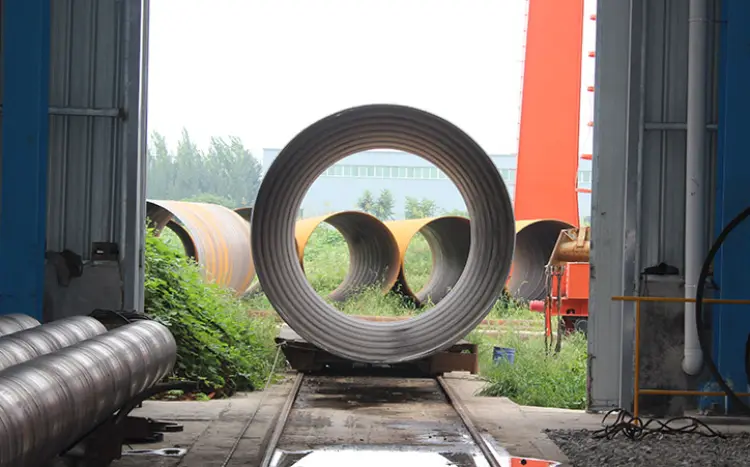
Q345C LSAW Pipe
Q345C LSAW Pipe Steel under GB/T 1591: Low Alloy High Strength Structural Steel Data
Complete material analysis for Q345C low alloy high strength structural steel used in LSAW pipes per GB/T 1591-2018, including chemistry, mechanical properties, physical data, and international equivalents.
Submerged arc welding, bending, forming, hot rolling, normalizing
- Phone : +8618037372205
- Email : [email protected]
- WhatsApp: Contact via Whtsapp
- WeChat: +8618037372205
Q345C LSAW Pipe Introduction
Q345C is a low alloy high strength structural steel designated under Chinese standard GB/T 1591-2018. It is extensively utilized in the manufacture of LSAW (Longitudinal Submerged Arc Welded) pipes for structural and fluid transportation applications. The 'C' quality grade specifies minimum Charpy V-notch impact energy of 34 J at 0 °C, ensuring adequate toughness for moderate low-temperature service. The steel features a fine-grained microstructure achieved through controlled rolling and microalloying additions of Nb, V, and Ti. Typical delivery condition is hot-rolled or normalized, with yield strength ≥345 MPa for thicknesses up to 16 mm. Its balanced chemistry provides excellent weldability, consistent mechanical properties, and good formability, making it a reliable choice for welded pipes in oil and gas, structural, and water engineering sectors. This analysis derives all mandatory data from the official GB/T 1591-2018 standard to serve as a precise reference for engineers and purchasers.
Q345C LSAW Pipe Chemical Composition
Chemical composition per GB/T 1591-2018 for Q345C steel. Values are maximum unless a minimum or range is indicated. Microalloying elements Nb, V, and Ti may be added alone or in combination to achieve fine-grain strengthening, with their total ≤ 0.15%. Aluminum is used as a grain refiner (acid-soluble Al ≥ 0.015%). Residual elements Cr, Ni, Cu are limited to 0.30% each unless otherwise agreed for alloy purposes. The composition is designed for good weldability and low-temperature toughness.
| Element | Content (%) | Remarks |
|---|---|---|
| C | ≤0.20 | |
| Si | ≤0.50 | |
| Mn | ≤1.70 | |
| P | ≤0.030 | |
| S | ≤0.030 | |
| Nb | ≤0.07 | Nb+V+Ti ≤0.15 |
| V | ≤0.15 | Nb+V+Ti ≤0.15 |
| Ti | ≤0.20 | Nb+V+Ti ≤0.15 |
| Als | ≥0.015 | Acid-soluble aluminum |
| Cr | ≤0.30 | Residual element |
| Ni | ≤0.30 | Residual element |
| Cu | ≤0.30 | Residual element |
Q345C LSAW Pipe Thermal and Electrical Physical Properties
The following physical properties are typical for low-carbon, low-alloy structural steels comparable to Q345C. They are not mandated by GB/T 1591 but are widely accepted for engineering design and thermal analysis. Density is ~7.85 g/cm³; elastic modulus at room temperature is about 206 GPa. Thermal expansion and conductivity are comparable to general CMn steels. These values may vary with temperature, processing history, and exact composition; they serve as a reliable baseline for calculations.
| Property | Typical Value | Unit | Test Condition |
|---|---|---|---|
| Density (ρ) | 7.85 | g/cm³ | Room temperature |
| Elastic modulus (E) | 206 | GPa | Room temperature, tensile |
| Shear modulus (G) | 79.3 | GPa | Calculated from E and ν |
| Poisson's ratio (ν) | 0.3 | - | Room temperature |
| Thermal expansion coefficient (α) | 12.0 | 10⁻⁶/K | 20 °C to 100 °C |
| Thermal conductivity (λ) | 48 | W/(m·K) | 20 °C |
| Specific heat capacity | 490 | J/(kg·K) | 20 °C |
| Electrical resistivity (ρe) | 0.25 | 10⁻⁶ Ω·m | 20 °C |
Q345C LSAW Pipe Mechanical Properties
Mechanical properties are specified according to GB/T 1591-2018 for Q345C steel in the as-delivered condition. Values depend on the product thickness. The table shows requirements for typical pipe plate thickness ranges. Impact testing is performed on Charpy V-notch specimens at 0 °C, with a minimum absorbed energy of 34 J. The bend test uses a mandrel diameter related to specimen thickness ( d = mandrel diameter, a = specimen thickness). Elongation is measured on a proportional gauge length L0=5.65√S0. For thicknesses >100 mm, the properties shall be agreed between manufacturer and purchaser.
| Property | Standard Requirement | Unit | Test Condition |
|---|---|---|---|
| Yield strength (ReH) | ≥345 | MPa | Thickness ≤16 mm |
| Yield strength (ReH) | ≥335 | MPa | Thickness >16 to ≤40 mm |
| Tensile strength (Rm) | 470 – 630 | MPa | All thicknesses |
| Elongation after fracture (A) | ≥20 | % | Thickness ≤16 mm |
| Elongation after fracture (A) | ≥19 | % | Thickness >16 to ≤40 mm |
| Charpy impact (KV2) | ≥34 | J | 0 °C, longitudinal direction |
| Bend test (d / a) | d=2a | - | Thickness ≤16 mm |
| Bend test (d / a) | d=3a | - | Thickness >16 mm |
Q345C LSAW Pipe Full Equivalent Material Standards and Grades
| Country/Region | Standard | Grade | Remarks |
|---|---|---|---|
| Europe | EN 10025-2:2004 | S355J0 | Minimum yield 355 MPa; 0 °C impact 27 J; close chemical and mechanical match |
| USA | ASTM A572/A572M | Grade 50 | Yield 345 MPa; standard does not require Charpy toughness, must be specified for 0 °C service |
| International | ISO 630 | Fe510B | Corresponds to 355 MPa yield class; B quality 0 °C impact optional |
| Japan | JIS G3106 | SM490A | Yield ≥325 MPa at 16 mm; impact test not mandatory, supplementary requirement needed for 0 °C |
| India | IS 2062 | E350 BR | Yield 350 MPa; BR grade offers 0 °C impact toughness, very similar to Q345C |
Q345C LSAW Pipe Application Introduction
Q345C LSAW pipes combine high strength, excellent weldability, and reliable 0 °C impact toughness. They are widely adopted for large-diameter pipelines and structural applications where safety and cost-efficiency are critical. The LSAW manufacturing process ensures consistent wall thickness and high dimensional accuracy. With proper welding consumables and procedures, Q345C pipes exhibit sound weld joints even in field conditions.
Product Applications: Longitudinally Submerged Arc Welded (LSAW) pipes from 16 inch to 64 inch OD, Spiral welded pipes for medium pressure applications, Welded structural hollow sections and rectangular tubes, Steel pipe piles for marine and onshore foundations, API 5L Grade B/X42/X46 line pipes (when Q345C is qualified to L290/X42), Penstocks and water conveyance pipes
Processed into products: Oil and gas trunkline pipe segments, Welded tee, elbow, and reducer fittings for piping systems, Structural columns and bracing members in buildings and bridges, Offshore jacket legs and piles, Boiler and pressure vessel shell courses (with additional certification), Crane booms and heavy machinery frames, Transmission tower pipes and tubular components, Piling connectors and end rings
Application industries: Oil & Gas transmission, Petrochemical processing, Structural engineering and construction, Water and wastewater management, Civil infrastructure (bridges, tunnels), Mechanical manufacturing and equipment
Q345C LSAW Pipe Similar or Alternative Material Recommendations
| Country/Region | Standard | Grade | Remarks |
|---|---|---|---|
| China | GB/T 1591-2018 | Q345B | 20 °C impact; lower toughness, not suitable for 0 °C critical application |
| China | GB/T 1591-2018 | Q345D | -20 °C impact; enhanced low-temperature performance |
| China | GB/T 1591-2018 | Q345E | -40 °C impact; premium low-temperature toughness |
| Europe | EN 10025-2 | S355JR | 27 J at 20 °C; room-temperature toughness only |
| Europe | EN 10025-2 | S355J2 | -20 °C impact; equivalent cold-temperature grade to Q345D |
| Europe | EN 10025-2 | S355K2 | -20 °C impact with 40 J minimum; superior toughness class |
| USA | ASTM A572 Gr.50 with Suppl. S5 | Gr.50 + 15 ft·lb at 0 °C | When supplemented with Charpy requirement, becomes close substitute |
| Russia | GOST 19281 | St3sp (yield 245 MPa) | Not equivalent; lower strength, for comparison only |
Notes:
The provided data is based on the GB/T 1591-2018 standard for the base steel plate. When Q345C is used to manufacture LSAW pipes according to standards such as GB/T 9711 or API 5L, additional requirements for the weld seam (e.g., weld tensile strength, toughness, hardness), hydrostatic testing, and dimensional tolerances apply. The values in this analysis are for the raw material; the finished pipe properties must meet the applicable pipe standard. It is recommended to review the specific product standard and mill test certificates for final compliance. For critical applications, supplementary testing such as through-thickness properties or corrosion resistance may be needed.
- Share



