
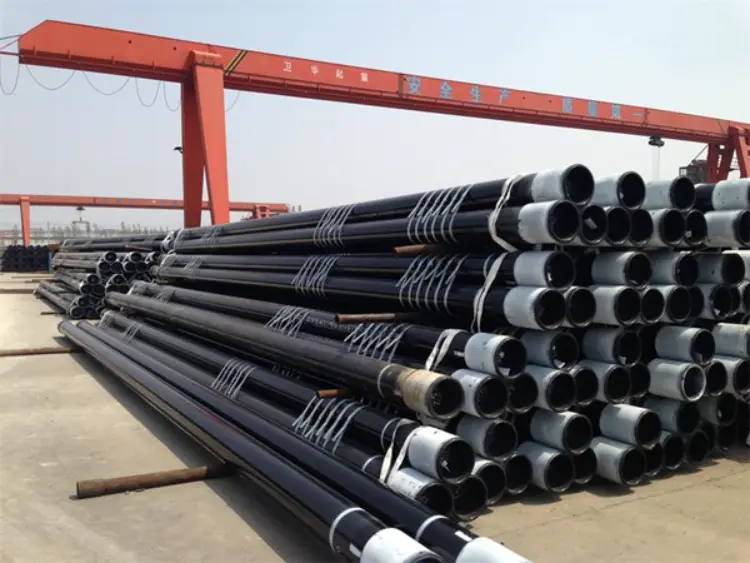
Q310GNH Weathering Steel Pipe
Q310GNH Weathering Steel Pipe - GB/T 4171 Atmospheric Corrosion Resistant Structural Steel
Comprehensive material data for Q310GNH weathering steel pipe under GB/T 4171, including chemical composition, mechanical and physical properties, international equivalents, and typical applications.
Hot rolling, cold forming, welding, bending, stamping, machining, thermal cutting
- Phone : +8618037372205
- Email : [email protected]
- WhatsApp: Contact via Whtsapp
- WeChat: +8618037372205
Q310GNH Weathering Steel Pipe Introduction
Q310GNH is a high atmospheric corrosion resistance structural steel grade specified in GB/T 4171. It is designed for long-term outdoor exposure without painting, relying on the formation of a dense, adherent protective rust layer under alternate wetting and drying conditions. The alloying elements Cu, Cr, Ni, and P synergistically improve resistance to atmospheric corrosion, providing 2–8 times the corrosion resistance of ordinary carbon steel. Q310GNH offers a minimum yield strength of 310 MPa and is delivered in various forms, including plates, coils, and welded pipes. It features good weldability, enabling fabrication of complex structural components. Typical applications include bridges, railway vehicles, containers, transmission towers, and architectural cladding. The steel exhibits excellent formability and can be processed by hot rolling, cold forming, and welding. Compared to conventional painted structures, Q310GNH reduces maintenance costs and environmental impact. When used as a pipe, it is suitable for conveying mildly corrosive media or for structural purposes in outdoor environments. The standard chemical composition and mechanical properties are tightly controlled to ensure reliable performance in demanding structural applications.
Q310GNH Weathering Steel Pipe Chemical Composition
The following chemical composition is based on GB/T 4171-2008 for Q310GNH grade. The combination of Cu, Cr, Ni and P enhances atmospheric corrosion resistance by promoting a stable patina. Phosphorus is intentionally added at a higher level (0.07–0.15%) to improve corrosion protection, unlike ordinary structural steels. The residual elements (S, etc.) are strictly controlled to maintain weldability and toughness.
| Chemical Element | Standard Value (wt%) | Remarks |
|---|---|---|
| Carbon (C) | ≤0.12 | Maximum |
| Silicon (Si) | 0.25 – 0.75 | Permitted range |
| Manganese (Mn) | 0.20 – 0.50 | Permitted range |
| Phosphorus (P) | 0.07 – 0.15 | Intentional addition for weather resistance |
| Sulfur (S) | ≤0.020 | Maximum for cleanliness |
| Copper (Cu) | 0.25 – 0.55 | Key alloy for patina formation |
| Chromium (Cr) | 0.30 – 1.25 | Improves corrosion resistance and strength |
| Nickel (Ni) | ≤0.65 | Enhances toughness and corrosion uniformity |
| Others | Balance (Fe) | Not intentionally added elements |
Q310GNH Weathering Steel Pipe Physical, Thermal and Electrical Properties
The following physical properties are representative for Q310GNH weathering steel based on typical low‑alloy steel behaviour. These values are not normative in the standard but are widely accepted for design calculations. Properties may vary slightly with actual chemical composition and processing.
| Property | Typical Value | Unit | Condition / Remarks |
|---|---|---|---|
| Density (ρ) | 7.85 | g/cm³ | At 20 °C |
| Elastic modulus (E) | 210 | GPa | At 20 °C, tension |
| Shear modulus (G) | 81 | GPa | Derived from E and Poisson's ratio |
| Poisson's ratio (ν) | 0.3 | — | Elastic range |
| Thermal expansion coefficient (α) | 11.2 | 10⁻⁶/K | 20 – 100 °C range |
| Thermal expansion coefficient (α) | 12.0 | 10⁻⁶/K | 20 – 200 °C range |
| Thermal expansion coefficient (α) | 12.8 | 10⁻⁶/K | 20 – 400 °C range |
| Thermal conductivity (λ) | 43 | W/(m·K) | At 20 °C |
| Specific heat capacity (c) | 470 | J/(kg·K) | At 20 °C |
| Electrical resistivity (ρ_e) | 0.23 | μΩ·m | At 20 °C |
Q310GNH Weathering Steel Pipe Mechanical Properties
These mechanical properties are prescribed by GB/T 4171-2008 for Q310GNH steel at ambient temperature. The yield strength decreases with increasing thickness. Elongation is measured on a gauge length proportional to the specimen (A). Bending requirements are based on 180° cold bend tests without cracking. Impact toughness is not mandatory unless specified in the order.
| Property | Standard Requirement Value | Unit | Test Condition |
|---|---|---|---|
| Yield strength (ReH) | ≥310 | MPa | Thickness ≤ 16 mm |
| Yield strength (ReH) | ≥305 | MPa | Thickness > 16 mm ≤ 40 mm |
| Yield strength (ReH) | ≥295 | MPa | Thickness > 40 mm ≤ 63 mm |
| Yield strength (ReH) | ≥285 | MPa | Thickness > 63 mm ≤ 80 mm |
| Yield strength (ReH) | ≥275 | MPa | Thickness > 80 mm ≤ 100 mm |
| Tensile strength (Rm) | 440 – 630 | MPa | All thicknesses |
| Elongation after fracture (A) | ≥22 | % | Thickness ≤ 16 mm, Lo=5.65√So |
| Elongation after fracture (A) | ≥22 | % | Thickness > 16 mm ≤ 40 mm |
| Elongation after fracture (A) | ≥21 | % | Thickness > 40 mm ≤ 63 mm |
| Elongation after fracture (A) | ≥20 | % | Thickness > 63 mm ≤ 80 mm |
| Elongation after fracture (A) | ≥20 | % | Thickness > 80 mm ≤ 100 mm |
| Bend test (180°) – d = bend diameter, a = specimen thickness | d = 1a | — | Thickness ≤ 6 mm |
| Bend test (180°) | d = 2a | — | Thickness > 6 mm ≤ 12 mm |
| Bend test (180°) | d = 3a | — | Thickness > 12 mm ≤ 25 mm |
| Bend test (180°) | d = 3a | — | Thickness > 25 mm |
Q310GNH Weathering Steel Pipe Exact Equivalent Material Standards & Substitutable Grades
| Country/Region | Standard | Grade | Remarks |
|---|---|---|---|
| China | GB/T 4171-2008 | Q310GNH | Original designation; same as 09CuPCrNi-A in previous standard |
| China | GB/T 4171-2000 | 09CuPCrNi-A | Old grade name, identical chemical and mechanical requirements |
Q310GNH Weathering Steel Pipe Application Introduction
Q310GNH weathering steel pipe is primarily employed in outdoor structural applications where its superior atmospheric corrosion resistance eliminates or reduces painting. It is suitable for welded and bolted connections. Typical industries using this grade include:
Product Applications: Welded structural pipes, Hollow structural sections (HSS), Corten steel plates and coils, Bridge girders and trusses, Freight container bodies, Ventilation ducts, Road sign posts and guardrails
Processed into products: Bridge support columns and cross-beams, Container corner posts and rails, Transmission tower legs and cross arms, Architectural facade frames and sunshades, Exhaust stacks for industrial plants, Railway wagon side frames, Wind turbine tower segments (interior non-painted), Artistic sculptures and landscape elements
Application industries: Bridge engineering, Railway rolling stock and infrastructure, Shipping container manufacturing, Architectural cladding and roofing, Power transmission and telecommunication tower construction, Marine and offshore structural components (excluding immersed parts), Exhaust and flue gas piping systems, Sculpture and urban outdoor furniture
Q310GNH Weathering Steel Pipe Similar / Approximate Substitute Materials
| Country/Region | Standard | Grade | Remarks |
|---|---|---|---|
| Europe | EN 10025-5 | S355J0WP (1.8945) | Weathering steel with higher min. yield (355 MPa) and comparable patina; often used as alternative |
| Europe | EN 10025-5 | S355J2WP (1.8946) | Similar to S355J0WP but with guaranteed impact at -20°C; higher strength than Q310GNH |
| USA | ASTM A588/A588M | Grade A | High-strength low-alloy weathering steel, min. yield 345 MPa; suitable for structural shapes and plates |
| USA | ASTM A588/A588M | Grade B | Similar to Grade A, slight variations in composition; often interchangeable for Q310GNH in many applications |
| Japan | JIS G3125 | SPA-H | Corten equivalent, high atmospheric corrosion resistance, typical yield 355 MPa; used for welded pipes and plates |
| India | IS 11587 | Fe 540 B/570 C | Weathering quality steel with min. yield 355 MPa, sometimes used in place of Q310GNH |
Notes:
Welding: Q310GNH can be welded by all common methods (SMAW, GMAW, SAW). Preheating is generally not required for thickness ≤30 mm, but may be recommended for thicker sections. Corrosion: The protective rust layer develops after repeated wet/dry cycles; initial flash rusting is normal. For submerged or continuously wet conditions, painting or cathodic protection might be necessary. Availability: The material is commercially available in several sizes of seamless and welded pipes according to GB/T 3091, GB/T 13793, or equivalent piping standards.
- Share



