
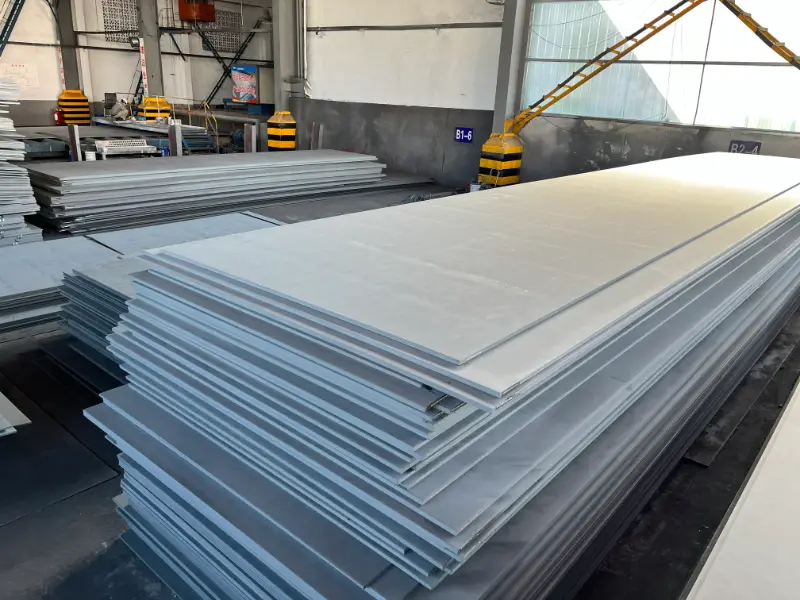
LR AH46 Shipbuilding Steel
LR AH46 Shipbuilding Steel: High-Strength Hull Structural Material
Comprehensive data for LR AH46 shipbuilding steel coil: chemical composition, mechanical and physical properties, equivalents, applications.
Welding, cutting, bending, forming, machining
- Phone : +8618037372205
- Email : [email protected]
- WhatsApp: Contact via Whtsapp
- WeChat: +8618037372205
LR AH46 Shipbuilding Steel Introduction
LR AH46 is a high-strength hull structural steel grade defined by Lloyd's Register (LR) rules for shipbuilding. It offers a minimum yield strength of 460 MPa, making it suitable for critical structural components in ship hulls and offshore structures. The material exhibits excellent weldability, good toughness at 0°C (A-grade), and reliable performance under high-stress conditions. It is supplied in various forms including plates, coils, and sections, and is often delivered in normalized or thermomechanically rolled (TM) condition. Its mechanical properties allow weight reduction while maintaining structural integrity, thus enhancing fuel efficiency and payload capacity in marine applications.
LR AH46 Shipbuilding Steel Chemical Composition
Typical chemical composition limits for LR AH46 according to Lloyd's Register rules. Microalloying elements such as Nb, V, Ti may be added singly or in combination to achieve grain refinement and strength. Carbon equivalent (CEV) is controlled to ensure weldability.
| Element | Standard Value | Notes |
|---|---|---|
| C (Carbon) | ≤ 0.18 | Max |
| Mn (Manganese) | 0.90 - 1.60 | Range |
| Si (Silicon) | ≤ 0.50 | Max |
| P (Phosphorus) | ≤ 0.030 | Max |
| S (Sulphur) | ≤ 0.030 | Max |
| Al (acid soluble) | ≥ 0.015 | Min (if used as grain refiner) |
| Nb (Niobium) | ≤ 0.05 | Max, sum Nb+V+Ti ≤ 0.12 |
| V (Vanadium) | ≤ 0.10 | Max |
| Ti (Titanium) | ≤ 0.02 | Max |
| Cu (Copper) | ≤ 0.35 | Max residual |
| Cr (Chromium) | ≤ 0.20 | Max residual |
| Ni (Nickel) | ≤ 0.40 | Max residual |
| Mo (Molybdenum) | ≤ 0.08 | Max residual |
| CEV | ≤ 0.43 (typical) | C + Mn/6 + (Cr+Mo+V)/5 + (Ni+Cu)/15, for t ≤ 50 mm |
LR AH46 Shipbuilding Steel Physical & Thermal Properties
The following physical properties are typical for LR AH46 hull structural steel at room temperature unless otherwise stated. Actual values may vary slightly with processing conditions.
| Property | Typical Value | Unit | Test Condition / Note |
|---|---|---|---|
| Density (ρ) | 7850 | kg/m³ | 20°C |
| Elastic Modulus (E) | 205 | GPa | Tensile, room temperature |
| Shear Modulus (G) | 79 | GPa | Derived, room temperature |
| Poisson's Ratio (ν) | 0.30 | - | Room temperature |
| Thermal Expansion (α) | 11.7 | ×10⁻⁶ /K | 20 - 100°C |
| Thermal Conductivity (λ) | 49.8 | W/m·K | At 100°C |
| Specific Heat Capacity (cp) | 460 | J/kg·K | 20°C |
| Electrical Resistivity (ρe) | 0.20 | ×10⁻⁶ Ω·m | 20°C |
LR AH46 Shipbuilding Steel Mechanical Properties
Mechanical properties for LR AH46 steel as per LR rules. Tensile testing is performed in transverse or longitudinal direction according to standard. Impact tests are Charpy V-notch at 0°C (A-grade). Results vary with thickness; multiple thickness ranges are listed.
| Property | Standard Requirement | Unit | Test Conditions |
|---|---|---|---|
| Yield Strength (ReH) | ≥ 460 | MPa | Thickness ≤ 100 mm, transverse |
| Yield Strength (ReH) | ≥ 440 | MPa | Thickness 100 < t ≤ 150 mm, transverse |
| Tensile Strength (Rm) | 570 - 720 | MPa | All thicknesses up to 150 mm, transverse |
| Elongation (A5) | ≥ 17 | % | Thickness ≤ 100 mm, gauge length 5.65√S₀ |
| Elongation (A5) | ≥ 16 | % | Thickness 100 < t ≤ 150 mm |
| Impact Energy (KV2) | ≥ 34 (average), ≥ 24 (single) | J | Charpy V, longitudinal, at 0°C, t ≤ 50 mm |
| Impact Energy (KV2) | ≥ 27 (average), ≥ 19 (single) | J | Charpy V, longitudinal, at 0°C, 50 ≤ t ≤ 70 mm |
| Impact Energy (KV2) | ≥ 24 (average), ≥ 17 (single) | J | Charpy V, longitudinal, at 0°C, 70 ≤ t ≤ 100 mm |
| Bend Test (180°) | Mandrel diameter = 2t | - | Thickness ≤ 25 mm, no cracks |
| Bend Test (180°) | Mandrel diameter = 3t | - | Thickness 25 < t ≤ 50 mm |
LR AH46 Shipbuilding Steel Fully Equivalent Material Standards & Alternate Grades
| Country / Region | Standard | Grade | Remarks |
|---|---|---|---|
| International | ABS Rules | AH46 | Same grade under American Bureau of Shipping |
| International | BV Rules | AH46 | Bureau Veritas equivalent |
| International | DNV Rules | AH46 | Det Norske Veritas equivalent |
| International | CCS Rules | AH46 | China Classification Society equivalent |
| International | NK Rules | AH46 | Nippon Kaiji Kyokai equivalent |
| International | KR Rules | AH46 | Korean Register equivalent |
| International | RINA Rules | AH46 | Registro Italiano Navale equivalent |
LR AH46 Shipbuilding Steel Application Introduction
LR AH46 is widely used in the shipbuilding and offshore industry for structural components exposed to high stress and dynamic loads. Its high strength-to-weight ratio helps design lighter yet robust structures.
Product Applications: Hull plates and stiffeners, Deck and bottom structural sections, Bulkheads and frames, Helideck structures, Jack-up rig legs and components
Processed into products: Shell plates, Longitudinal and transverse frames, Stringers and girders, Bulkhead panels, Reinforced brackets, Offshore module support beams
Application industries: Shipbuilding, Offshore oil & gas platforms, Marine engineering, Port machinery, Bridge construction (special)
LR AH46 Shipbuilding Steel Similar / Closely Related Materials
| Country / Region | Standard | Grade | Remarks |
|---|---|---|---|
| International | LR Rules | DH46 | Higher toughness (-20°C), same strength |
| International | LR Rules | EH46 | Higher toughness (-40°C), same strength |
| International | LR Rules | FH46 | High toughness (-60°C), same strength |
| International | ABS Rules | AH40 | Lower yield strength (400 MPa), similar weldability |
| Europe | EN 10025-6 | S460ML | Structural steel with similar yield, but not shipbuilding certified |
Notes:
All data is based on Lloyd's Register Rules for the Manufacture, Testing and Certification of Materials (latest edition). Actual mechanical properties may be influenced by production route (TMCP, Normalized) and product thickness. For precise design values, consult the material certificate. Welding consumables should be compatible and approved according to LR rules.
- Share



