
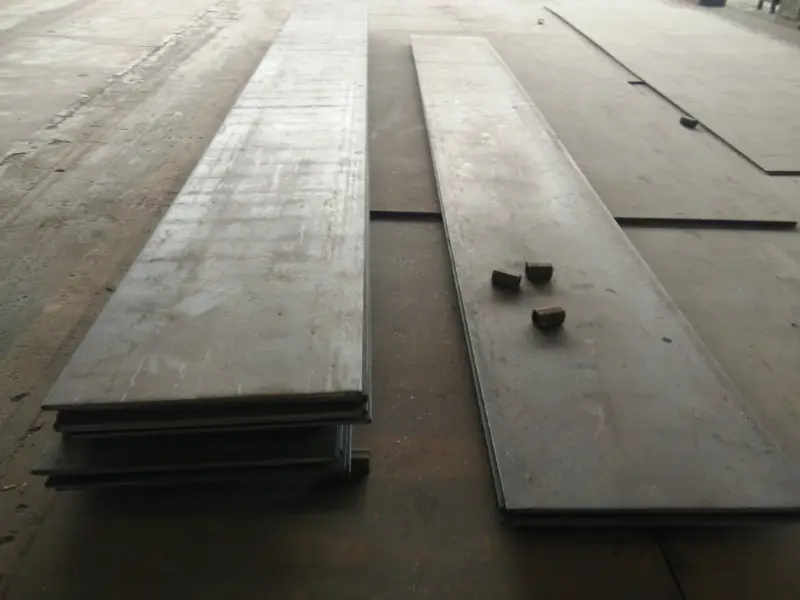
JIS G4052 SCM420H
JIS G4052 SCM420H: Hardenability-Guaranteed Chromium-Molybdenum Case-Hardening Steel for Automotive Gears & Shafts
Detailed material data for SCM420H structural alloy steel as per JIS G4052, including chemical composition, mechanical properties, physical properties, international equivalents, and application recommendations for carburizing components.
Carburizing, quenching, tempering, forging, machining, cold drawing, welding (with precautions)
- Phone : +8618037372205
- Email : [email protected]
- WhatsApp: Contact via Whtsapp
- WeChat: +8618037372205
JIS G4052 SCM420H Introduction
SCM420H is a low-carbon chromium-molybdenum alloy steel defined in JIS G4052, designed with guaranteed hardenability (H-band) for machine structural use. It is primarily intended for carburizing and subsequent hardening to produce a wear-resistant surface layer while maintaining a tough, ductile core. The tight chemical composition and predictable hardenability ensure consistent case depth and core properties across heat treatment batches, making it ideal for high-stress automotive and mechanical components such as gears, shafts, and pins. Its balanced alloy content provides good machinability in the annealed condition and excellent response to quenching, achieving high surface hardness (typically 58–63 HRC after carburizing) with minimal distortion.
JIS G4052 SCM420H Chemical Composition
The specified heat analysis limits for SCM420H according to JIS G4052. The hardenability guarantee is achieved through tight control of carbon and alloying elements, particularly manganese, chromium, and molybdenum, which directly influence the Jominy curve. Permissible product analysis deviations are defined in the standard. All values are weight percent.
| Element | Min–Max (%) | Notes |
|---|---|---|
| C (Carbon) | 0.17 – 0.23 | Core strength and hardness control |
| Si (Silicon) | 0.15 – 0.35 | Deoxidizer; influences hardenability slightly |
| Mn (Manganese) | 0.55 – 0.90 | Enhances hardenability; refines pearlite |
| P (Phosphorus) | ≤ 0.030 | Maximum limit for toughness |
| S (Sulfur) | ≤ 0.030 | Maximum limit; controlled for machinability if resulfurized variant not specified |
| Cr (Chromium) | 0.85 – 1.25 | Primary carbide former and hardenability agent |
| Mo (Molybdenum) | 0.15 – 0.35 | Suppresses temper embrittlement; increases hardenability and high-temperature strength |
| Ni (Nickel) | ≤ 0.25 (residual) | Not intentionally added; may appear as tramp element |
| Cu (Copper) | ≤ 0.30 (residual) | May be present as residual |
JIS G4052 SCM420H Thermophysical and Electrical Properties
The following data represent average values for SCM420H in the annealed or as-quenched and tempered condition at room temperature unless indicated. Variations may occur based on heat treatment and testing direction. These values are suitable for engineering calculations and simulations. Thermal expansion is linear coefficient from 20°C to the indicated temperature.
| Property | Typical Value | Unit | Test Condition / Temperature |
|---|---|---|---|
| Density (ρ) | 7.85 | g/cm³ | 20°C |
| Elastic Modulus (E) | 206 | GPa | 20°C, tensile test |
| Shear Modulus (G) | 80 | GPa | 20°C, calculated |
| Poisson's Ratio (ν) | 0.30 | – | 20°C |
| Thermal Expansion Coefficient (α) | 11.7 | 10⁻⁶/K | 20–200°C |
| Thermal Expansion Coefficient (α) | 12.4 | 10⁻⁶/K | 20–400°C |
| Thermal Expansion Coefficient (α) | 13.1 | 10⁻⁶/K | 20–600°C |
| Thermal Conductivity (λ) | 42 | W/(m·K) | 20°C |
| Specific Heat Capacity (c) | 460 | J/(kg·K) | 20°C |
| Electrical Resistivity (ρ_e) | 0.20 | µΩ·m | 20°C |
JIS G4052 SCM420H Mechanical Properties
These values are indicative for SCM420H after a typical core-hardening treatment (quench from 850-900°C in oil, temper at 150-200°C) and do not constitute a mandatory requirement of JIS G4052. Actual properties depend on section size and heat treatment parameters. For carburized components, the surface hardness reaches 58–63 HRC, while the core retains good toughness. Impact toughness is measured on a 10×10 mm Charpy V-notch specimen.
| Property | Typical Value | Unit | Test Condition / Remarks |
|---|---|---|---|
| Yield Strength (ReH) | ≥ 785 | MPa | Round bar Ø 15 mm, quenched 880°C oil, tempered 180°C |
| Tensile Strength (Rm) | ≥ 980 | MPa | Same heat treatment condition |
| Elongation (A) | ≥ 12 | % | Gauge length L₀ = 5.65√S₀; same condition |
| Reduction of Area (Z) | ≥ 45 | % | Same heat treatment condition |
| Charpy Impact Energy (KV₂) | ≥ 60 | J | Test temperature 20°C, V-notch; core property |
| Surface Hardness after Carburizing | 58 – 63 | HRC | Carburized at 930°C, oil quenched, tempered 180°C |
| Core Hardness | 30 – 42 | HRC | After direct quench from carburizing or re-heat treatment |
JIS G4052 SCM420H International Equivalents – Fully Corresponding Hardenability-Guaranteed Grades
| Country / Region | Standard | Grade | Remarks |
|---|---|---|---|
| USA | ASTM A304 | 4120H | Nearly identical composition and hardenability bands; widely used in North America |
| Europe | EN 10084 | 20CrMo4H (1.7264) | Matching composition and hardenability; H variant guarantees Jominy curve |
| China | GB/T 5216 | 20CrMoH | Equivalent to JIS SCM420H with slight variation in Mn range but interchangeable after confirming hardenability |
| International | ISO 683-11 | 20CrMo4H | Directly harmonized with EN 10084; worldwide acceptance |
| Russia | GOST 4543 | 20KhM | 20KhM (20ХМ) is the nearest analogue; slightly different Si and Mn, but considered interchangeable for most carburizing applications |
JIS G4052 SCM420H Application Introduction
SCM420H is a versatile engineering steel developed for components that demand a combination of high surface wear resistance (achieved via carburizing) and a strong, ductile core. Its guaranteed hardenability ensures uniform response to heat treatment even in large sections, making it reliable for mass production of critical parts. Typical processing route includes forging or machining in the annealed state, followed by case hardening (gas carburizing, carbonitriding, or vacuum carburizing), quenching in oil, and low-temperature tempering. The steel can also be used in induction hardening or nitriding applications when adjusted pre-heat treatment is applied.
Product Applications: Helical, spur, and bevel gears for manual and automatic transmissions, Input/output shafts for gearboxes and differentials, Steering rack ends and tie-rod ball studs, Camshafts for small to medium-sized engines, Heavy-duty gears for industrial gear reducers, High-strength fasteners such as wheel bolts and flange studs (when carburized)
Processed into products: Precision forged gear blanks (ready for hobbing/shaping), Machined shafts with splines and keyways (annealed condition), Cold-drawn bar for CNC turning of pins, sleeves, and bushes, Seamless tubes for hollow shafts and hydraulic cylinder rods (if carburized for wear surfaces), Wire rod for cold heading into bearing pins and small gear blanks
Application industries: Automotive (gears, transmission shafts, differential pinions, steering knuckles, camshafts, rocker arms, clutch parts), Motorcycle power transmission (gears, splined shafts, crankshafts), Agricultural machinery (final drive gears, PTO shafts, heavy-duty bushings), Construction equipment (undercarriage pins, sprockets, idler hubs), General mechanical engineering (medium-duty bearing races, cam followers, spindle sleeves, universal joint crosses)
JIS G4052 SCM420H Similar / Near-Equivalent Materials
| Country / Region | Standard | Grade | Remarks |
|---|---|---|---|
| Japan | JIS G4105 | SCM420 | Same base composition but without mandatory hardenability control; suitable when Jominy curve not required |
| Japan | JIS G4052 | SCM415H | Lower carbon (0.13-0.18%) for lower core hardness; more ductile, used for heavily loaded gears requiring tough core |
| Japan | JIS G4052 | SCM421H | Higher carbon (0.19-0.25%) for increased core strength; higher hardenability than SCM420H |
| Germany | DIN 17210 | 20CrMo5 (1.7264) | Similar to 20CrMo4 but with slightly higher Cr content; can substitute if hardenability is adjusted |
| USA | ASTM A322 | 4120 | Non-H version of 4120; composition overlaps but no hardenability guarantee; may require tighter supplier control |
Notes:
SCM420H is also recognized as a grade with excellent low-carbon martensite formation due to its Mo content, which minimizes retained austenite and reduces temper embrittlement. When specifying hardenability, always refer to the Jominy curves published in JIS G4052 or provide the required hardness at specific Jominy distances. For welding, preheating and post-weld heat treatment are necessary to avoid cracking; typical preheat temperature is 150–250°C. Available in surface conditions suitable for fine blanking, cold extrusion, and subsequent heat treatment without decarburization. In some markets, this material is supplied under the older designation SCM420 (JIS G4105) without the H-suffix, but conformance to hardenability bands should be separately negotiated.
- Share



