
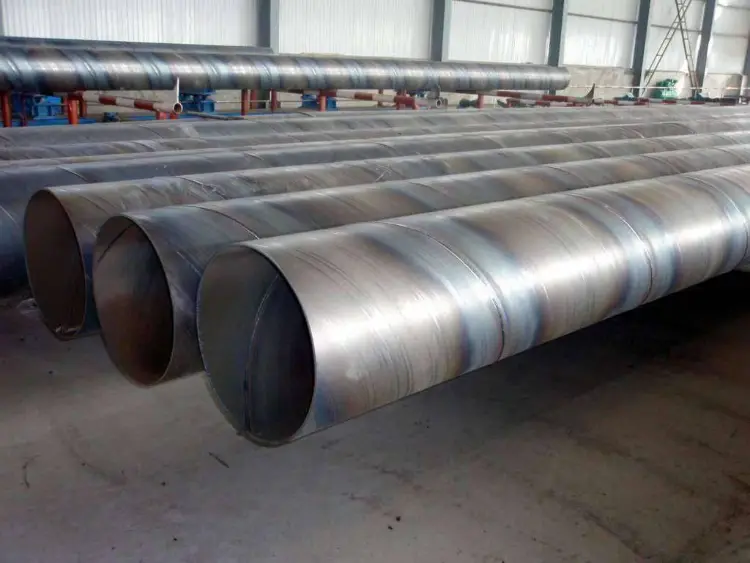
High-Strength 30CrMnSiA Steel Tubes for Air Bottle Applications
High-Strength 30CrMnSiA Steel Tubes for Air Bottle Applications: Comprehensive Guide
Explore the detailed material specifications of 30CrMnSiA steel tubes under GB/T 18248 standard, including chemical composition, mechanical and physical properties, international equivalents, and applications in high-pressure air bottles.
Hot-rolling, cold-drawing, heat treatment (quenching and tempering)
- Phone : +8618037372205
- Email : [email protected]
- WhatsApp: Contact via Whtsapp
- WeChat: +8618037372205
High-Strength 30CrMnSiA Steel Tubes for Air Bottle Applications Introduction
30CrMnSiA is a high-strength chromium-manganese-silicon alloy steel specifically designated for seamless steel tubes used in high-pressure air bottles (gas cylinders) per the Chinese standard GB/T 18248. This grade exhibits excellent hardenability, good tempering resistance, and superior mechanical properties after quenching and tempering. With a minimum tensile strength of 1080 MPa and good impact toughness at low temperatures, it ensures safety and reliability in critical pressure vessel applications. The steel is characterized by controlled sulfur and phosphorus levels for enhanced cleanliness and formability. Typical delivery condition is quenched and tempered, allowing for high strength while maintaining adequate ductility. The tubes are widely utilized in manufacturing compressed air, oxygen, and inert gas cylinders for industrial, medical, and aerospace sectors.
High-Strength 30CrMnSiA Steel Tubes for Air Bottle Applications Chemical Composition
The chemical composition of 30CrMnSiA steel tubes as specified in GB/T 18248 is designed to provide the necessary hardenability and high strength after heat treatment. Strict limits on sulfur and phosphorus ensure good toughness and resistance to brittle fracture. The table below lists the required ranges for all controlled elements.
| Element | Specified Value (wt%) | Remarks |
|---|---|---|
| Carbon (C) | 0.28 - 0.34 | Primary hardenability element |
| Silicon (Si) | 0.90 - 1.20 | Deoxidizer, strengthens ferrite |
| Manganese (Mn) | 0.80 - 1.10 | Improves hardenability and strength |
| Chromium (Cr) | 0.80 - 1.10 | Enhances hardenability and corrosion resistance |
| Phosphorus (P) | ≤ 0.020 | Impurity; kept low for toughness |
| Sulfur (S) | ≤ 0.015 | Impurity; minimized to avoid hot shortness |
| Copper (Cu) | ≤ 0.20 | Residual element, no detrimental effect within limit |
| Nickel (Ni) | ≤ 0.25 | Residual element |
| Total residuals (Cu+Ni+others) | ≤ 0.50 | Sum of unspecified residual elements |
High-Strength 30CrMnSiA Steel Tubes for Air Bottle Applications Thermal and Electrical Physical Properties
The following physical properties are typical for 30CrMnSiA steel in the quenched and tempered condition. They are not mandated by GB/T 18248 but are provided as engineering reference data. Actual values may vary slightly depending on heat treatment parameters and workpiece geometry. Data are based on general steel property tables and published material handbooks.
| Property | Typical Value | Unit | Test Condition / Remarks |
|---|---|---|---|
| Density (ρ) | 7.85 | g/cm³ | At room temperature |
| Modulus of Elasticity (E) | 206 | GPa | At room temperature |
| Shear Modulus (G) | 79.3 | GPa | Calculated from E and ν (ν=0.30) |
| Poisson's Ratio (ν) | 0.30 | - | Typical for steel |
| Thermal Expansion Coeff. (α) | 11.5 | 10⁻⁶/K | 20–100 °C |
| Thermal Expansion Coeff. (α) | 12.5 | 10⁻⁶/K | 20–300 °C |
| Thermal Expansion Coeff. (α) | 13.5 | 10⁻⁶/K | 20–600 °C |
| Thermal Conductivity (λ) | 38 | W/(m·K) | At 100 °C |
| Specific Heat Capacity (c) | 460 | J/(kg·K) | At 20 °C |
| Electrical Resistivity (ρ_e) | 0.45 | μΩ·m | At 20 °C |
High-Strength 30CrMnSiA Steel Tubes for Air Bottle Applications Mechanical Properties
The mechanical properties are determined after quenching at 880 °C in oil and tempering at 540 °C (water or oil cooled). Tests are performed on longitudinal specimens taken from the tube wall. The standard specifies minimum tensile strength, yield strength, elongation, reduction of area, and low-temperature impact energy. Bending test is mandatory for certain tube sizes to ensure formability. Values represent compliance with the GB/T 18248 requirements for 30CrMnSiA grade.
| Property | Required Value | Unit | Test Condition / Remarks |
|---|---|---|---|
| Tensile Strength (Rm) | ≥ 1080 | MPa | Room temperature |
| Yield Strength (ReL) | ≥ 835 | MPa | Lower yield point or 0.2% offset |
| Elongation after Fracture (A) | ≥ 10 | % | Longitudinal, gauge length L0=5d |
| Reduction of Area (Z) | ≥ 40 | % | For round cross-section |
| Impact Energy (KV2) | ≥ 27 | J | At -20 °C, Charpy V-notch, average of three specimens |
| Bend Test | No cracks | - | Bending angle 180°, mandrel diameter = 6×wall thickness, applicable for tubes with OD ≤60 mm or as specified |
High-Strength 30CrMnSiA Steel Tubes for Air Bottle Applications Completely Equivalent Material Standards and Substitutable Grades
| Country/Region | Standard | Grade | Remarks |
|---|---|---|---|
| China | GB/T 3077 | 30CrMnSiA | Same chemical composition; used for structural bars and forgings, not specifically for pressure tubes but chemically identical |
| Russia | GOST 4543 | 30KhGSA (30ХГСА) | Chemically equivalent structural steel; approval required for pressure vessel application per relevant code |
High-Strength 30CrMnSiA Steel Tubes for Air Bottle Applications Application Introduction
30CrMnSiA steel tubes are almost exclusively used for the fabrication of seamless high-pressure gas cylinders. Owing to its high strength-to-weight ratio and reliable low-temperature toughness, it is the material of choice for portable and stationary pressure vessels. The following lists typical application fields and end products:
Product Applications: Seamless high-pressure air cylinders, Compressed natural gas (CNG) vehicle fuel tanks (Type I steel cylinders), Breathing apparatus cylinders for firefighters and divers, Medical oxygen cylinders, Fire extinguisher bodies, Hydraulic accumulators
Processed into products: Cylinder body (seamless tube, closed-end forged/spun), Neck ring and threaded neck for valve attachment, Base ring (welded or integral), Valve boss (machined from thickened tube end)
Application industries: Industrial Gas Supply, Medical Equipment, Firefighting & Emergency Services, Automotive (CNG Vehicles), Aerospace & Defense, Pressure Vessel Manufacturing
High-Strength 30CrMnSiA Steel Tubes for Air Bottle Applications Closely Related or Similar Substitute Materials
| Country/Region | Standard | Grade | Remarks |
|---|---|---|---|
| China | GB/T 18248 | 35CrMo | Higher carbon and Mo content; higher hardenability but slightly lower toughness; may be used as alternative for air bottles |
| China | GB/T 18248 | 30CrMo | Similar strength level with addition of Mo; no Si addition; good substitute if Si sensitivity is a concern |
| International | ASTM A519 / EN 10297 | 4130 (30CrMo4) | Cr-Mo quenched and tempered tube steel; commonly used in gas cylinders, but typically lower tensile strength unless adjusted |
| International | EN 10297 | 34CrMo4 | Comparable high-strength tube steel for pressure vessels; offers similar mechanical properties after appropriate heat treatment |
| Russia | GOST 8731 | 30KhMA | Cr-Mo steel for high-pressure pipes; lower carbon, different balance of properties, potential substitute with redesign |
Notes:
Heat treatment must be executed precisely according to GB/T 18248 to achieve a tempered martensite microstructure.
Non-destructive testing (ultrasonic or eddy current) is mandatory for entire tube length to ensure absence of injurious defects.
Surface quality and dimension tolerances must comply with the standard's requirements for air bottle service.
Welding of the cylinder body is not allowed; the tube is manufactured by seamless processes and end closures are formed by spinning or forging.
For applications with hydrogen or high-sulfur environments, additional testing and material certification may be required.
- Share



