
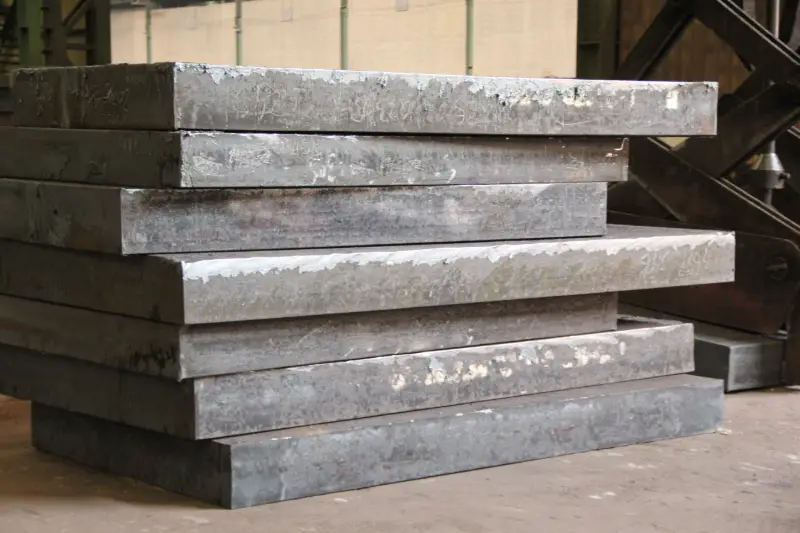
JIS G3106 SM490C
JIS G3106 SM490C: High-Strength Weldable Steel for Structural Engineering
Comprehensive material data for JIS G3106 SM490C steel coil including chemical composition, mechanical properties, thermal and electrical characteristics, international equivalents, and application guidance for welded structural steel.
Hot rolling, cold forming, bending, welding, flame cutting, machining, drilling
- Phone : +8618037372205
- Email : [email protected]
- WhatsApp: Contact via Whtsapp
- WeChat: +8618037372205
JIS G3106 SM490C Introduction
SM490C is a weldable structural carbon and low-alloy high-strength steel defined in Japanese Industrial Standard JIS G3106. It is designed for applications requiring excellent weldability and reliable notch toughness at low temperatures. The grade offers a minimum yield strength of 295–325 MPa depending on plate thickness, with tensile strength ranging from 490 to 610 MPa. SM490C is produced via hot rolling and is typically supplied in the as-rolled, normalized, or thermo-mechanical control processed (TMCP) condition. The controlled chemical composition, low carbon equivalent, and fine-grain practice ensure good formability and resistance to brittle fracture. It is widely used in bridges, buildings, offshore structures, shipbuilding, and heavy machinery where dependable mechanical properties and weld integrity are critical. The 'C' designation indicates a minimum Charpy impact energy of 47 J at 0°C, providing enhanced safety for dynamically loaded structures.
JIS G3106 SM490C Chemical Composition
Chemical composition limits in accordance with JIS G3106. The steel is fully killed and fine-grained. Microalloying elements such as Nb, V, or Ti may be added singly or in combination to achieve the required mechanical properties. The carbon equivalent (CEV) is typically controlled to ensure good weldability. Elements not listed shall not be intentionally added without the purchaser's agreement.
| Element | Content (max, %) | Remarks |
|---|---|---|
| C | ≤0.18 (t ≤ 50 mm); ≤0.20 (t > 50 mm) | Thickness-dependent |
| Si | ≤0.55 | |
| Mn | ≤1.60 | High Mn may be allowed for thicker sections with agreement |
| P | ≤0.035 | |
| S | ≤0.035 |
JIS G3106 SM490C Thermal and Electrical Physical Properties
The physical property values listed below are typical for low‑alloy carbon structural steels at room temperature and are provided as general reference data. They are not specified by JIS G3106 and may vary depending on actual chemical composition and heat treatment. Use these values for calculation and simulation purposes only when exact measured data are unavailable.
| Property | Typical Value | Unit | Condition / Remarks |
|---|---|---|---|
| Density (ρ) | 7.85 | g/cm³ | at 20°C |
| Modulus of Elasticity (E) | 205 – 210 | GPa | at 20°C, in tension |
| Shear Modulus (G) | 80 – 83 | GPa | at 20°C |
| Poisson's Ratio (ν) | 0.29 – 0.30 | - | at 20°C, in elastic range |
| Thermal Expansion Coefficient (α) | 11.7 × 10⁻⁶ | K⁻¹ | Mean coefficient, 20°C to 100°C |
| Thermal Conductivity (λ) | ≈ 50 | W/(m·K) | at 20°C |
| Specific Heat Capacity (c) | ≈ 460 | J/(kg·K) | at 20°C |
| Electrical Resistivity (ρ_e) | ≈ 0.15 | μΩ·m | at 20°C, typical mild steel |
JIS G3106 SM490C Mechanical Properties
Mechanical properties are based on test pieces taken in the transverse direction unless otherwise specified. Tensile test specified according to JIS Z 2241, bend test according to JIS Z 2248, and Charpy impact test according to JIS Z 2242. Values apply to products in the delivery condition. For thicknesses above 100 mm, properties may be agreed upon.
| Property | Requirement | Unit | Test Conditions |
|---|---|---|---|
| Yield Strength (ReH) | ≥325 | MPa | t ≤ 16 mm |
| Yield Strength (ReH) | ≥315 | MPa | 16 < t ≤ 40 mm |
| Yield Strength (ReH) | ≥295 | MPa | 40 < t ≤ 100 mm |
| Tensile Strength (Rm) | 490 – 610 | MPa | t ≤ 100 mm (all thicknesses) |
| Elongation (A) | ≥15 | % | t ≤ 5 mm, gauge length L0 = 50 mm (No.5 test piece) |
| Elongation (A) | ≥17 | % | 5 < t ≤ 16 mm, L0 = 50 mm (No.5 test piece) |
| Elongation (A) | ≥21 | % | 16 < t ≤ 50 mm, L0 = 50 mm (No.5 test piece) |
| Elongation (A) | ≥23 | % | t > 50 mm, L0 = 200 mm (No.4 test piece) |
| Bend Test | No cracks, mandrel diameter d = 1.5t | - | t ≤ 16 mm, 180° bend |
| Bend Test | No cracks, mandrel diameter d = 2.0t | - | 16 < t ≤ 100 mm, 180° bend |
| Charpy Impact (KV2) | ≥47 | J | Test temperature 0°C, longitudinal specimen, t > 12 mm |
JIS G3106 SM490C Materials with Fully Equivalent or Closely Corresponding Standards
| Country / Region | Standard | Grade | Remarks |
|---|---|---|---|
| Japan | JIS G3106 | SM490C | Original designation; 0°C impact requirement 47 J |
| Europe | EN 10025-2 | S355J0 | Equivalent yield and tensile strength; Charpy 27 J at 0°C (slightly lower toughness) |
| China | GB/T 1591 | Q355C | Similar strength level; Charpy impact 34 J at 0°C, compositional limits differ slightly |
| International | ISO 630-2 | Fe 510C / S355C | 0°C impact 27 J; mechanical properties comparable to SM490C |
| USA | ASTM A572/A572M | Grade 50 [345] | Similar minimum yield strength (345 MPa); not a direct match for impact testing; discuss with supplier for fracture-critical applications |
| Korea | KS D 3515 | SM490C | Identical requirements to JIS G3106; fully interchangeable |
JIS G3106 SM490C Application Introduction
SM490C is engineered for welded load‑bearing structures where a combination of high strength, good weldability, and dependable toughness is required. The 0°C impact energy of 47 J makes it well‑suited for outdoor structures in moderate climates. Common delivery forms include hot‑rolled coils and plates, which are subsequently cut, shaped, and welded into finished products. The steel can be joined by all conventional arc welding processes; low‑hydrogen procedures and appropriate preheat/interpass temperatures are recommended depending on thickness and service conditions.
Product Applications: Welded plate girders and box girders, Bridge decks and orthotropic deck plates, Structural columns and beams for high‑rise buildings, Ship hull plates and stiffeners, Offshore platform legs and bracings, Flanges and webs for crane booms, Fabricated storage tanks and silos, Tubular tower sections for wind turbines
Processed into products: Welded I‑section and H‑section members, Stiffened panels and bulkheads, Gusset plates and bracket connections (cut from coil or plate), Bolted or welded end plates for beam‑column connections, Cargo fork arms and loader lift arms (after flame cutting), Base plates and sole plates for heavy machinery, Pressure vessel shells and dished ends (with supplementary requirements), Earth‑moving equipment buckets and booms
Application industries: Civil engineering and infrastructure, Bridge fabrication, Commercial and industrial building construction, Offshore and marine engineering, Shipbuilding (hulls and decks), Heavy machinery and excavator equipment, Pressure vessel and storage tank manufacturing, Renewable energy (wind turbine towers, foundations)
JIS G3106 SM490C Similar or Alternative Material Recommendations
| Country / Region | Standard | Grade | Remarks |
|---|---|---|---|
| Japan | JIS G3106 | SM490B | Same strength level but Charpy requirement 27 J at 0°C; suitable for less severe toughness demands |
| Japan | JIS G3106 | SM490YA | Higher yield strength (355 MPa minimum for t ≤ 16 mm); good alternative when weight reduction is a priority |
| Europe | EN 10025-2 | S355J2+N | 0°C impact guarantee (27 J) and often normalized; provides better notch toughness at sub‑zero temperatures |
| Europe | EN 10025-3 | S355N/NL | Normalized fine‑grain structural steel with improved through‑thickness properties and impact values |
| USA | ASTM A709/A709M | Grade 50W | Weathering steel variant with comparable strength; suitable for unpainted applications |
| China | GB/T 19879 | Q355GJC | High‑performance building structural steel plate; ultra‑low carbon and refined grain, high toughness |
Notes:
For highly stressed welded joints, it is recommended to assess the steel's carbon equivalent (CEV) and adopt suitable preheating procedures. Delivery conditions such as TMCP may improve weldability and toughness while maintaining strength. When ordering SM490C, the purchaser should specify the required thickness, width, impact testing criteria, and any special through‑thickness (Z‑quality) requirements. JIS G3106 also allows supplementary requirements for ultrasonic inspection, toughness at lower temperatures, and restricted chemical composition. Always refer to the latest edition of the standard for the complete technical specifications.
- Share



