
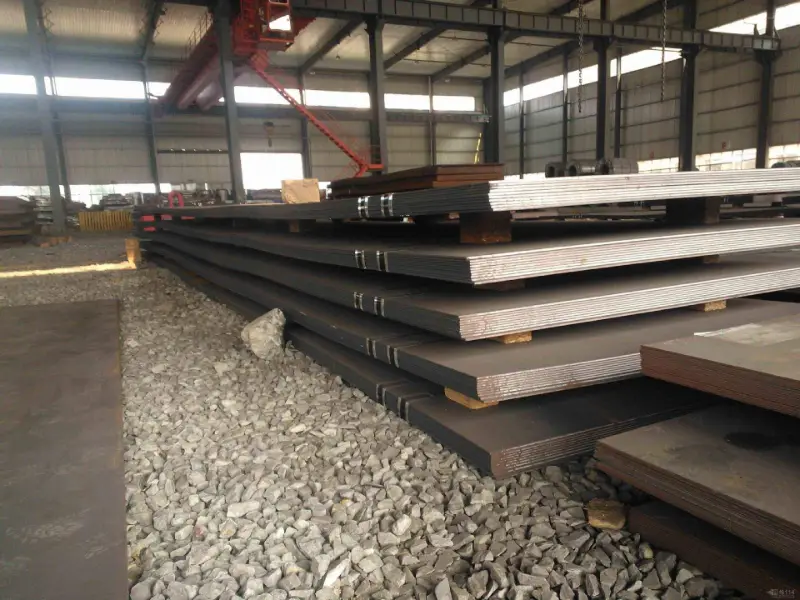
JIS G 3116 SG325 Steel Material for Welded Gas Cylinders
SG325 Steel for Welded Gas Cylinders – JIS G 3116 Grade Data Sheet and Equivalents
Complete technical data for JIS G 3116 SG325 steel: chemical composition, mechanical and physical properties, international equivalents, and application guidance for welded gas cylinder manufacturing.
Hot rolling, cold forming, stamping, deep drawing, welding (all common arc and resistance methods), normalizing (optional)
- Phone : +8618037372205
- Email : [email protected]
- WhatsApp: Contact via Whtsapp
- WeChat: +8618037372205
JIS G 3116 SG325 Steel for Welded Gas Cylinders Introduction
SG325 is a hot-rolled steel grade specified in JIS G 3116, designed for the fabrication of welded gas cylinders. It is a low-carbon, silicon-killed steel with good weldability, excellent formability, and sufficient toughness at ambient and moderately low temperatures. The controlled chemical composition ensures reliable performance under repeated pressurization cycles.
- Minimum tensile strength of 325 MPa permits producing lightweight yet durable cylinders.
- Typical applications include liquefied petroleum gas (LPG) cylinders, industrial gas containers, and fire extinguisher bodies.
- Delivered as coils, sheets, or plates in the hot-rolled condition, often pickled and oiled, or can be ordered with normalizing treatment to enhance toughness.
JIS G 3116 SG325 Steel for Welded Gas Cylinders Chemical Composition
The composition is tightly controlled to guarantee weldability and resistance to brittle fracture in service. Low carbon equivalent ensures that the heat-affected zone does not harden excessively after welding.
- Max. C 0.20% keeps the steel soft and ductile.
- Limited P and S minimize segregation and improve toughness.
- Silicon is used for deoxidation, typically in the range 0.15–0.55%.
| Element | Value (max, %) | Remarks |
|---|---|---|
| Carbon (C) | 0.20 | Ladle analysis |
| Silicon (Si) | 0.55 | Deoxidizer; typical range 0.15–0.55 |
| Manganese (Mn) | 0.70 | Improves strength and counteracts hot shortness |
| Phosphorus (P) | 0.040 | Stringent control for toughness |
| Sulfur (S) | 0.040 | Low sulfur ensures clean microstructure |
JIS G 3116 SG325 Steel for Welded Gas Cylinders Physical Properties
Physical constants are not part of the standard's mandatory requirements but are typical for low‑carbon silicon‑killed steel. These data are useful for thermal and structural analysis, including heat transfer calculations during welding and service.
| Property | Typical Value | Unit | Conditions / Remarks |
|---|---|---|---|
| Density (ρ) | 7.85 | g/cm³ | Room temperature |
| Elastic modulus (E) | 206 | GPa | In tension, room temperature |
| Shear modulus (G) | 79.3 | GPa | Calculated from E and ν |
| Poisson's ratio (ν) | 0.30 | – | Elastic range |
| Thermal expansion (α) | 11.5 | 10⁻⁶/K | 20–100°C; average linear coefficient |
| Thermal conductivity (λ) | 51.9 | W/(m·K) | At 20°C |
| Specific heat capacity (cp) | 486 | J/(kg·K) | At 20°C |
| Electrical resistivity (ρe) | 0.15 | μΩ·m | At 20°C |
JIS G 3116 SG325 Steel for Welded Gas Cylinders Mechanical Properties
Tensile and bend properties are guaranteed by the standard. Elongation values depend on thickness and test piece type (JIS No.5). The 180° bend test demonstrates excellent formability without cracking.
No impact test is required by JIS G 3116 for SG325, but typical transition temperatures are well below 0°C for thicknesses up to 6 mm.
| Property | Specified Value | Unit | Test Condition / Remarks |
|---|---|---|---|
| Yield strength (ReH) | ≥ 215 | MPa | Thickness ≤ 6 mm |
| Yield strength (ReH) | ≥ 195 | MPa | 6 mm < thickness ≤ 16 mm |
| Tensile strength (Rm) | 325 – 440 | MPa | All thicknesses |
| Elongation (A) | ≥ 18 | % | JIS No.5, thickness ≤ 1.6 mm |
| Elongation (A) | ≥ 22 | % | JIS No.5, 1.6 < t ≤ 3.0 mm |
| Elongation (A) | ≥ 26 | % | JIS No.5, 3.0 < t ≤ 6 mm |
| Elongation (A) | ≥ 28 | % | JIS No.5, thickness > 6 mm |
| Bend test | 180°; d = 0.5 a | – | thickness ≤ 6 mm; no cracks |
| Bend test | 180°; d = 1.0 a | – | 6 < t ≤ 16 mm; no cracks |
JIS G 3116 SG325 Steel for Welded Gas Cylinders Directly Equivalent International Grades
| Country / Region | Standard | Grade | Remarks |
|---|---|---|---|
| International (ISO) | ISO 4978 | SG325 | Identical strength range and chemical limits |
| Republic of Korea | KS D 3517 | SG325 | Adopts JIS G 3116 requirements |
| Taiwan | CNS 8693 | SG325 | Harmonized with JIS G 3116 |
JIS G 3116 SG325 Steel for Welded Gas Cylinders Application Introduction
SG325 is engineered for the deep-drawing and welding operations typical in gas cylinder production. Its low carbon level guarantees a soft, formable microstructure that withstands severe deformation without cracking. The steel can be welded by all common methods (SMAW, GMAW, resistance seam welding) without preheating in normal shop conditions.
- Dominant use: welded LPG cylinders that must meet national pressure vessel codes.
- Secondary uses: industrial gas containers (oxygen, nitrogen, argon), fire extinguisher bodies, and small pressure accumulators.
- Also found in base rings, valve bosses, and other stamped components that require consistent mechanical properties.
Product Applications: Domestic and commercial LPG cylinders (5 kg to 50 kg typical), Industrial gas cylinders (high-pressure seamless substitute is not applicable here; used for lower-pressure welded designs), Portable fire extinguisher bodies, Accumulator vessels for hydraulic systems
Processed into products: Cylinder body shells (deep-drawn cups or rolled and welded cylinders), End caps and bottom domes, Valve rings and neck rings, Foot rings and base plates, Guard handles and protective collars
Application industries: Energy (LPG distribution and storage), Industrial gas manufacturing, Safety and fire protection, Pressure vessel fabrication, Automotive (CNG/LPG fuel tanks in some regions)
JIS G 3116 SG325 Steel for Welded Gas Cylinders Similar / Substitute Materials
| Country / Region | Standard | Grade | Remarks |
|---|---|---|---|
| Europe | EN 10120 | P265NB | Higher yield strength (≥265 MPa) and tensile strength (410‑530 MPa); contains microalloying elements; suitable for LPG cylinders when thickness optimization is required. |
| Japan | JIS G 3116 | SG295 | Lower strength grade (Rm 295‑410 MPa) with similar formability; interchangeable for lower design stress. |
| USA | ASTM A414 | Grade D | Hot-rolled sheet for pressure vessels; Rm 380‑550 MPa; higher carbon and manganese; requires qualification for cylinder welding codes. |
| China | GB 6653 | HP325 | Gas cylinder plate with Rm ≥420 MPa and ReH ≥265 MPa; higher strength reduces wall thickness but demands stricter welding procedures. |
Notes:
Delivery condition: Usually supplied as hot-rolled coils or cut sheets with a mil scale or pickled surface. Normalized condition can be agreed upon for improved notch toughness.
Welding: No preheat is normally required for thicknesses below 20 mm. Low hydrogen consumables are recommended to avoid cold cracking.
Post-weld heat treatment: Not mandatory for wall thicknesses typical of LPG cylinders (<6 mm). For thicker vessels, stress relieving at 580–620 °C may be applied if required by the pressure vessel code.
Certification: Mill test certificates according to EN 10204 3.1 are typical; traceability to heat number is guaranteed.
- Share



