
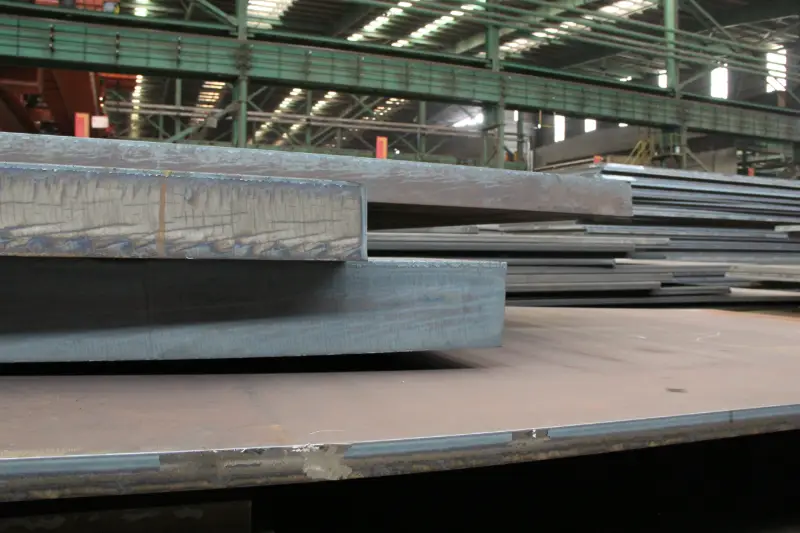
HP325 Gas Cylinder Steel Material
HP325 Gas Cylinder Steel: GB 6653 Properties, Chemistry & Global Equivalents
Comprehensive material data for GB 6653 HP325 gas cylinder steel coils, sheets and plates: chemical composition, mechanical characteristics, thermal & electrical properties, international equivalents and typical applications.
Hot rolling, controlled rolling, normalising (if required), cold forming, welding
- Phone : +8618037372205
- Email : [email protected]
- WhatsApp: Contact via Whtsapp
- WeChat: +8618037372205
HP325 Gas Cylinder Steel Introduction
HP325 is a hot-rolled carbon‑manganese steel specified in GB/T 6653‑2017 for welded gas cylinders. With a minimum yield strength of 325 MPa and good weldability, it is widely used for LPG cylinders, industrial gas bottles and similar pressure vessels. The steel offers a balanced combination of strength, formability and low‑temperature toughness (20 °C impact energy ≥ 27 J). Typical delivery condition is as‑rolled or controlled‑rolled.
- Minimum yield strength 325 MPa
- Tensile strength 440‒560 MPa
- Good bendability and weldability
- 20 °C impact toughness guaranteed
HP325 Gas Cylinder Steel Chemical Composition
As specified in GB/T 6653‑2017. The steel is aluminium‑killed with a minimum total aluminium content. Microalloying elements such as Nb, V or Ti may be added at the manufacturer's discretion and must be stated in the inspection certificate.
| Element | Specified Value | Remarks |
|---|---|---|
| Carbon (C) | ≤ 0.20 | Heat analysis |
| Silicon (Si) | ≤ 0.35 | |
| Manganese (Mn) | 0.50 – 1.50 | |
| Phosphorus (P) | ≤ 0.025 | |
| Sulfur (S) | ≤ 0.015 | |
| Total Aluminium (Alt) | ≥ 0.015 | For deoxidation |
| Others (Nb, V, Ti…) | As agreed | If added, details in certificate |
HP325 Gas Cylinder Steel Thermal and Electrical Physical Properties
These values are typical for carbon‑manganese structural steels and are not part of the GB/T 6653 standard. They are provided as a guide for design calculations.
| Property | Typical Value | Unit | Test Condition |
|---|---|---|---|
| Density (ρ) | 7.85 | g/cm³ | Room temperature |
| Modulus of elasticity (E) | 210 | GPa | Room temperature |
| Shear modulus (G) | ~ 80 | GPa | Room temperature |
| Poisson's ratio (ν) | 0.30 | – | Room temperature |
| Thermal expansion coefficient (α) | 11.5 – 13.0 | ×10⁻⁶/K | 20 °C – 200 °C |
| Thermal conductivity (λ) | ~ 50 | W/(m·K) | 20 °C |
| Specific heat capacity (c) | ~ 460 | J/(kg·K) | 20 °C |
| Electrical resistivity (ρₑ) | 0.14 – 0.18 | µΩ·m | 20 °C |
HP325 Gas Cylinder Steel Mechanical Properties
Requirements according to GB/T 6653‑2017, tested on transverse specimens unless otherwise stated. The values apply to the as‑delivered condition. Multiple rows highlight different thickness categories for elongation and bending.
| Property | Required Value | Unit | Test Condition |
|---|---|---|---|
| Upper yield strength (ReH) | ≥ 325 | MPa | Room temperature |
| Tensile strength (Rm) | 440 – 560 | MPa | Room temperature |
| Elongation after fracture (A) | ≥ 24 | % | Nominal thickness < 3 mm, gauge L₀ = 50 mm or 80 mm |
| Elongation after fracture (A) | ≥ 27 | % | Nominal thickness ≥ 3 mm, gauge L₀ = 50 mm |
| Bend test (bend angle 180°) | D = 1.5 a | – | Nominal thickness < 6 mm; a = specimen thickness |
| Bend test (bend angle 180°) | D = 2 a | – | Nominal thickness ≥ 6 mm |
| Impact absorbed energy (KV₂) | ≥ 27 | J | Longitudinal V‑notch, 20 °C |
HP325 Gas Cylinder Steel Fully Equivalent Material Standards / Substitutable Grades
| Country/Region | Standard | Grade | Remarks |
|---|---|---|---|
| China | GB/T 6653‑2017 | HP325 | Base standard |
| International | ISO 4978:2014 | – | No exact equivalent; P295NB (yield 295 MPa) is the closest ISO grade |
| Japan | JIS G3116:2020 | SG325 | Yield ≥ 325 MPa, tensile ≥ 440 MPa; very similar |
HP325 Gas Cylinder Steel Application Introduction
HP325 steel is specifically designed for the manufacture of welded gas cylinders that operate under moderate pressure. Its good formability allows deep‑drawing of cylinder halves, while the guaranteed impact toughness at 20 °C ensures safe service in ambient conditions. The steel is suitable for cold forming, welding (all conventional methods) and coating (painting, galvanising).
- Excellent consistency of mechanical properties
- Low S and P contents for clean steel and reliable welding
- Easy to cut, form and weld in high‑volume production
Product Applications: Domestic LPG cylinders (e.g., 12 kg, 14.2 kg), Industrial seamless and welded gas bottles, Small disposable refrigerant containers, Medical oxygen cylinders
Processed into products: Cylinder body halves (upper and lower heads), Cylinder shells (rolled and welded tubes), Base rings and neck rings, Valve bosses and footrings, Deep‑drawn parts for high‑pressure vessel ends
Application industries: Liquefied petroleum gas (LPG) cylinder manufacturing, Industrial gas cylinder production (oxygen, nitrogen, acetylene, argon), Refrigeration and air‑conditioning (refrigerant cylinders), Compressed natural gas (CNG) on‑board storage, Fire extinguisher bodies
HP325 Gas Cylinder Steel Similar / Alternative Materials
| Country/Region | Standard | Grade | Analytical Remarks |
|---|---|---|---|
| China | GB/T 6653‑2017 | HP295 | Lower strength (yield 295 MPa); same weldability and toughness |
| China | GB/T 6653‑2017 | HP345 | Higher strength (yield 345 MPa); requires 0 °C impact toughness |
| International | ISO 4978 | P355NB | Higher yield (355 MPa), higher tensile range 510–640 MPa |
| Europe | EN 10120:2017 | P295NB | Yield 295 MPa, comparable forming behaviour |
| USA | ASTM A414/A414M | Grade G | Lower strength range; mainly for general purpose pressure vessels |
Notes:
- Plates and sheets are normally supplied with mill‑edge or trimmed‑edge and may require edge preparation before welding.
- Surface condition: hot‑rolled and pickled or shot‑blasted. For critical cylinders, surface defects must be removed per standard requirements.
- Ultrasonic testing or other NDE may be agreed upon at the time of enquiry.
- Traceability: each plate/coil must be marked with heat number and batch identification.
- Share



