
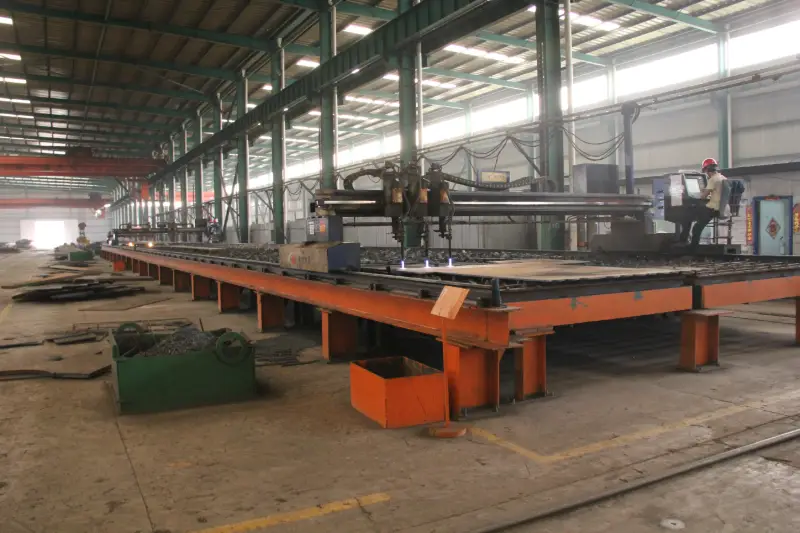
P245NB Gas Cylinder Steel Material
P245NB Gas Cylinder Steel: EN 10120 Grade Properties, Equivalents & Applications
Complete technical reference for P245NB steel according to EN 10120, including chemical composition, mechanical and thermal properties, international equivalents, and application guidance for welded gas cylinders.
Welding, cold forming, hot forming, deep drawing, threading, normalising
- Phone : +8618037372205
- Email : [email protected]
- WhatsApp: Contact via Whtsapp
- WeChat: +8618037372205
P245NB Gas Cylinder Steel Introduction
P245NB is a normalized fine‑grain carbon‑manganese steel specifically designed for the manufacture of welded gas cylinders, covered by the European standard EN 10120. It is supplied in the form of coils, sheets, and plates.
- Minimum yield strength of 245 MPa for thicknesses up to 10 mm
- Excellent weldability and cold forming characteristics due to controlled microalloying with Nb, V, and Ti
- Stringent control of impurities (low P, S) and fine grain structure ensure high resistance to brittle fracture
- Delivery condition is normally normalising rolled or normalised (+N)
- Widely used for LPG, acetylene, and industrial gas cylinders where reliable mechanical properties and safety are paramount
P245NB Gas Cylinder Steel Chemical Composition according to EN 10120
The chemical composition of P245NB is carefully balanced to provide a fine‑grain microstructure after normalising. Niobium, vanadium, and titanium act as grain refiners and precipitation strengtheners. Tight limits on phosphorus and sulfur improve ductility and toughness. Total residual elements (Cr+Ni+Cu) are restricted to avoid detrimental effects on weldability.
| Element | Standard Value (wt%) | Remarks |
|---|---|---|
| Carbon (C) | ≤ 0.16 | Ensures adequate strength and weldability |
| Silicon (Si) | ≤ 0.35 | Deoxidiser; limited to avoid excessive hardening |
| Manganese (Mn) | 0.50 – 1.20 | Primary strengthening and deoxidation element |
| Phosphorus (P) | ≤ 0.025 | Strict limit for toughness and hydrogen‑induced cracking resistance |
| Sulfur (S) | ≤ 0.010 | Low S for improved formability and toughness |
| Aluminium (total, Alt) | ≥ 0.020 | Grain refinement and deoxidation |
| Niobium (Nb) | ≤ 0.05 | Microalloying for grain refinement and precipitation strengthening |
| Vanadium (V) | ≤ 0.05 | Contributes to strength via carbonitride precipitation |
| Titanium (Ti) | ≤ 0.04 | Nitrogen scavenger and grain refiner |
| Nitrogen (N) | ≤ 0.009 | Bound by Ti and Al to prevent strain ageing |
| Cr+Ni+Cu | ≤ 0.45 | Residual elements; restricts hardenability |
| Molybdenum (Mo) | ≤ 0.08 | Residual element |
P245NB Gas Cylinder Steel Thermal and Electrical Physical Properties
The physical properties given are representative for carbon‑manganese steels with a normalised fine‑grain structure. Actual values may show minor variations depending on exact composition and processing history. These data are useful for thermal engineering and manufacturing simulations.
| Property | Typical Value | Unit | Test Condition / Temperature |
|---|---|---|---|
| Density (ρ) | 7.85 | g/cm³ | Room temperature |
| Elastic modulus (E) | 210 | GPa | Room temperature |
| Shear modulus (G) | 81 | GPa | Room temperature |
| Poisson's ratio (ν) | 0.30 | — | Room temperature |
| Thermal expansion coefficient (α) | 12.0 × 10⁻⁶ | K⁻¹ | 20 – 100 °C |
| Thermal expansion coefficient (α) | 12.5 × 10⁻⁶ | K⁻¹ | 20 – 200 °C |
| Thermal expansion coefficient (α) | 13.0 × 10⁻⁶ | K⁻¹ | 20 – 300 °C |
| Thermal conductivity (λ) | 52 | W/(m·K) | 20 °C |
| Thermal conductivity (λ) | 50 | W/(m·K) | 200 °C |
| Thermal conductivity (λ) | 45 | W/(m·K) | 400 °C |
| Specific heat capacity (cp) | 486 | J/(kg·K) | 20 °C |
| Specific heat capacity (cp) | 515 | J/(kg·K) | 200 °C |
| Electrical resistivity (ρe) | 0.21 | µΩ·m | 20 °C |
P245NB Gas Cylinder Steel Mechanical Properties
The mechanical properties are guaranteed in the normalised (+N) or normalising‑rolled condition. Values may vary slightly with thickness. Transverse test pieces are typically used for tensile testing unless longitudinal is specified. Impact properties and bend test requirements are subject to agreement at the time of ordering.
| Property | Required Value | Unit | Test Condition / Remarks |
|---|---|---|---|
| Yield strength (ReH) | ≥ 245 | MPa | Thickness t ≤ 10 mm; transverse specimen |
| Yield strength (ReH) | ≥ 235 | MPa | 10 mm < t ≤ 16 mm; transverse specimen |
| Tensile strength (Rm) | 350 – 480 | MPa | All thicknesses (t ≤ 16 mm) |
| Elongation after fracture (A5) | ≥ 24 | % | Proportional gauge length, longitudinal; t ≤ 10 mm |
| Elongation after fracture (A5) | ≥ 23 | % | Proportional gauge length, longitudinal; 10 < t ≤ 16 mm |
| Impact energy (KV2) | ≥ 27 (optional) | J | Charpy V‑notch, longitudinal; at -20 °C; t ≥ 6 mm; only if agreed |
| Bend test (180°) | No cracks | — | Mandrel diameter 0.5t (t ≤ 12 mm) or 1.0t (12 < t ≤ 16 mm); when required |
P245NB Gas Cylinder Steel Complete Equivalent Material Standards and Designations
| Country / Region | Standard | Grade / Designation | Remarks |
|---|---|---|---|
| International | ISO 4978 | H245 | Identical technical requirements for welded gas cylinder steels |
| China | GB 6653 | HP245 | Chinese equivalent; composition and mechanical properties closely match P245NB |
| European Union | EN 10120:2008 | P245NB | Reference standard grade |
P245NB Gas Cylinder Steel Application Introduction
P245NB is engineered for the demanding safety‑critical application of welded gas cylinders. Its combination of strength, formability, and weldability makes it the material of choice for a wide range of transportable pressure vessels. The steel is processed into cylinder components by cold or hot forming, then welded using conventional arc welding processes without preheating for typical thicknesses.
Product Applications: LPG cylinders (domestic and industrial), Acetylene cylinders (with porous mass filling), High‑pressure industrial gas cylinders (oxygen, nitrogen, argon, helium), CNG cylinders for automotive applications (up to limited pressure, often as cylinder liner), Fire extinguisher bodies (where steel is specified), Chemical transport pressure vessels
Processed into products: Cylinder body (main shell, drawn or rolled and welded), Hemispherical or elliptical cylinder heads, Neck ring and valve boss (forged or machined from plate), Foot ring and protective collar (formed from sheet/plate), Base plates and reinforcement pads
Application industries: Gas cylinder manufacturing, Industrial gas packaging and distribution, LPG (liquefied petroleum gas) supply chain, Medical gas systems, Energy storage (CNG, hydrogen cylinder precursors)
P245NB Gas Cylinder Steel Similar and Substitute Materials for P245NB
| Country / Region | Standard | Grade / Designation | Remarks |
|---|---|---|---|
| European Union | EN 10120 | P265NB | Higher strength variant (min. yield 265 MPa); similar toughness and composition with adjusted alloying |
| European Union | EN 10028‑3 | P245NL1 | Pressure vessel steel for low temperature; comparable base composition but with guaranteed low‑temperature toughness (–40 °C) |
| Germany (obsolete) | DIN EN 10120 | StE 245 | Predecessor designation; no longer valid but sometimes referenced in older documentation |
Notes:
Normalising treatment: If the hot‑forming temperature does not achieve an equivalent normalising effect, a separate normalising heat treatment at 890–950 °C followed by air cooling is applied. Weldability: P245NB exhibits excellent weldability with all common arc welding processes; low carbon equivalent (typically ≤ 0.40) precludes the need for preheating under normal conditions. Inspection: Ultrasonic testing and pressure testing of finished cylinders are mandatory to ensure leak tightness and strength.
- Share



