
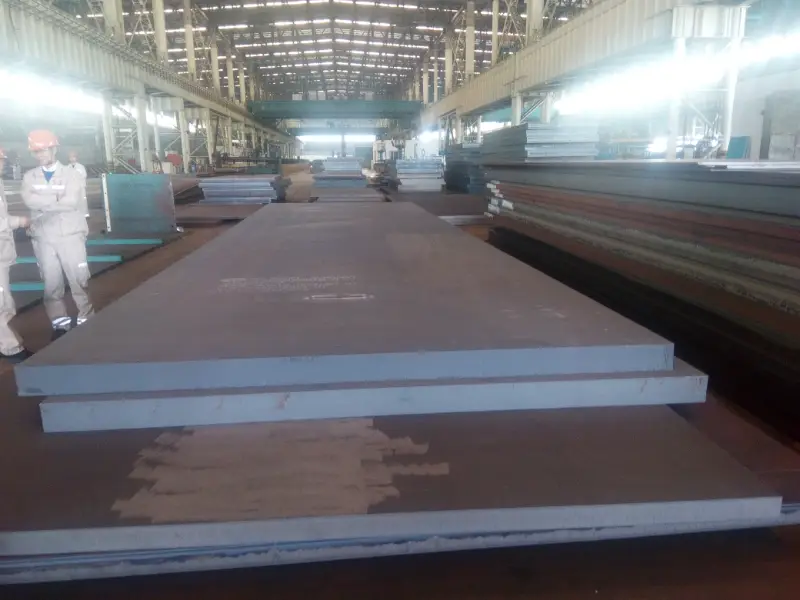
High-Strength Austenitic XM-31 (UNS S21400) Stainless Steel Plate & Coil
High-Strength Austenitic XM-31 (UNS S21400) Stainless Steel Plate & Coil - Properties & Equivalents
Detailed material data for UNS S21400 (XM-31) austenitic stainless steel in plate and coil forms. Includes chemical composition, mechanical and physical properties, international equivalents, similar grades, and application guidance.
Cold forming, machining, welding, hot working, bright annealing
- Phone : +8618037372205
- Email : [email protected]
- WhatsApp: Contact via Whtsapp
- WeChat: +8618037372205
High-Strength Austenitic XM-31 Stainless Steel Plate & Coil Introduction
XM-31, designated as UNS S21400, is a high‑nitrogen, lean‑nickel austenitic stainless steel originally developed to combine high strength with good corrosion resistance. The alloy relies on a high manganese content (14–16%) and significant nitrogen addition (0.35–0.50%) to stabilise the austenitic structure, offering yield strength approximately twice that of conventional 304 stainless steel while maintaining excellent ductility. It is non‑magnetic in the annealed condition and exhibits superior resistance to stress corrosion cracking compared with many standard austenitic grades.
- Key attributes: high strength without post‑processing, good weldability, good low‑temperature toughness, and reliable performance in moderately corrosive environments.
- Common forms: plate, coil, sheet, and strip, typically supplied in the solution‑annealed condition.
- Typical uses: springs, fasteners, chemical and marine equipment, oil‑field components, and cryogenic applications.
High-Strength Austenitic XM-31 Stainless Steel Plate & Coil Chemical Composition
The chemical composition of UNS S21400 (XM-31) as specified in ASTM A240/A240M. High manganese and nitrogen levels are the key alloying elements that ensure a stable austenitic structure and boost strength. Nickel is intentionally kept low (≤1.00%), making the alloy cost‑effective for applications where nickel price volatility is a concern. Iron constitutes the balance.
| Element | Specification (wt%) | Remarks |
|---|---|---|
| Carbon (C) | ≤0.12 | Max |
| Manganese (Mn) | 14.0 – 16.0 | Range |
| Silicon (Si) | ≤1.00 | Max |
| Phosphorus (P) | ≤0.060 | Max |
| Sulfur (S) | ≤0.030 | Max |
| Chromium (Cr) | 17.0 – 19.0 | Range |
| Nickel (Ni) | ≤1.00 | Max |
| Nitrogen (N) | 0.35 – 0.50 | Range |
| Iron (Fe) | Balance | Remainder |
High-Strength Austenitic XM-31 Stainless Steel Plate & Coil Thermal and Electrical Physical Properties
Physical properties at room temperature and elevated temperatures. Parameters such as thermal expansion, thermal conductivity, and electrical resistivity are important for design in both thermal and electrical applications. Values are typical for UNS S21400 in the solution‑annealed condition and are sourced from published alloy data.
| Property | Value | Unit | Condition / Temperature |
|---|---|---|---|
| Density (ρ) | 7.80 | g/cm³ | 20°C |
| Elastic Modulus (E) | 193 | GPa | 20°C, tension |
| Shear Modulus (G) | 74 | GPa | 20°C, calculated from E and ν |
| Poisson's Ratio (ν) | 0.30 | – | 20°C |
| Thermal Expansion (α) | 17.2 | µm/m·°C | 20 – 100°C |
| Thermal Expansion (α) | 18.0 | µm/m·°C | 20 – 200°C |
| Thermal Expansion (α) | 18.5 | µm/m·°C | 20 – 300°C |
| Thermal Conductivity (λ) | 12.5 | W/m·K | 100°C |
| Thermal Conductivity (λ) | 20.9 | W/m·K | 500°C |
| Specific Heat Capacity | 500 | J/kg·K | 20°C |
| Electrical Resistivity (ρe) | 0.72 | µΩ·m | 20°C |
High-Strength Austenitic XM-31 Stainless Steel Plate & Coil Mechanical Properties
Minimum mechanical properties for plate, sheet, and strip per ASTM A240/A240M. The values represent requirements at room temperature in the solution‑annealed condition. The high nitrogen content provides a significant increase in both yield and tensile strength without sacrificing ductility. Hardness values are given for information; bending tests ensure adequate formability.
| Property | Value | Unit | Condition / Remarks |
|---|---|---|---|
| Tensile Strength (Rm) | ≥690 | MPa | Room temperature, transverse or longitudinal, ASTM A370 |
| Tensile Strength (Rm) | ≥100 | ksi | Room temperature, transverse or longitudinal, ASTM A370 |
| Yield Strength (ReH, 0.2% offset) | ≥415 | MPa | Room temperature, ASTM A370 |
| Yield Strength (ReH, 0.2% offset) | ≥60 | ksi | Room temperature, ASTM A370 |
| Elongation (A) | ≥40 | % | In 2 in. (50.8 mm) gauge length, ASTM A370 |
| Hardness | ≤255 | HBW | Typical converted value; ASTM A370 |
| Hardness | ≤100 | HRB | Typical converted value; ASTM A370 |
| Bend Test | No cracks after 180° bend | – | Bend diameter = 2t for t≤4.76 mm; 2.5t for 4.76 |
High-Strength Austenitic XM-31 Stainless Steel Plate & Coil Completely Equivalent Material Standards & Substitutable Grades
UNS S21400 (XM-31) is primarily standardised in the United States under ASTM. There are no internationally identical grades under other major standards; the closest fully equivalent designation is the ASTM specification itself. Other national bodies may reference ASTM A240 directly if they adopt the same UNS number.
| Region / Country | Standard | Grade | Remarks |
|---|---|---|---|
| United States | ASTM A240/A240M | UNS S21400 (XM-31) | Primary standard; plate, sheet, strip |
| International (ISO) | – | No direct ISO equivalent | No EN, JIS, or GB grade exactly matches UNS S21400 |
High-Strength Austenitic XM-31 Stainless Steel Plate & Coil Application Introduction
UNS S21400 (XM-31) is tailored for applications requiring a combination of high mechanical strength, good corrosion resistance, and cost‑effective alloying (low nickel). Its high nitrogen content allows designers to down‑gauge components while maintaining structural integrity. The alloy is suitable for use in mildly corrosive environments, including many organic and inorganic chemical media, seawater (when adequately protected), and cryogenic conditions.
Product Applications: Plate and coil for fabricated vessels and tanks, Sheet for stamped parts, Precision strip for springs and washers, Welded and seamless pipe/tube, Wire for springs and welding consumables
Processed into products: Springs (Belleville, coil, leaf), Fasteners (bolts, nuts, studs), Valve stems and seats, Pump shafts and wear rings, Shaft seals and gaskets, Bushings and bearings (moderate load), Marine hardware, Cryogenic vessel liners, Oil‑field downhole components
Application industries: Chemical processing, Oil & gas, Marine engineering, Pulp & paper, Power generation, Automotive (specialty springs, fasteners), Cryogenic equipment, Food processing (moderate conditions)
High-Strength Austenitic XM-31 Stainless Steel Plate & Coil Closely Related or Similar Alternative Materials
While no international standard provides a perfect match, several high‑nitrogen or high‑manganese austenitic stainless steels offer comparable strength and corrosion resistance. These materials can often serve as substitutes when UNS S21400 is unavailable, though a full technical review of the application requirements is recommended.
| Region / Country | Standard | Grade | Remarks |
|---|---|---|---|
| United States | ASTM A240/A276 | UNS S21900 (XM-11 / Nitronic 40) | High‑nitrogen, high‑Mn austenitic; similar yield strength, good corrosion resistance |
| United States | ASTM A240 | UNS S21800 (Nitronic 60) | High‑Si, high‑Mn; excellent galling resistance and good strength, slightly lower N |
| United States | ASTM A240 | UNS S30451 (304N) | Nitrogen‑strengthened 304; lower strength than S21400 but widely available |
Notes:
- Heat treatment: Solution annealing is typically performed at 1040–1120°C followed by rapid cooling (water or air). Avoid slow cooling to prevent sensitisation.
- Welding: The alloy exhibits good weldability using common processes (GTAW, GMAW, SMAW). Filler metal ER209 or similar high‑nitrogen consumables are recommended. Post‑weld heat treatment is not usually required for corrosion performance but may be applied to relieve stresses.
- Machining: Due to rapid work hardening, low cutting speeds, rigid setups, and sharp tooling are essential. High‑speed steel or carbide tools are suitable.
- Forming: Cold forming operations (bending, deep drawing) benefit from the alloy's high ductility, though higher forming forces are needed. Intermediate annealing may be required for severe deformations.
- Corrosion resistance: Comparable to Type 304 in many environments, with enhanced resistance to stress corrosion cracking. Not recommended for highly oxidising or reducing strong acids without specific testing.
- Share



