
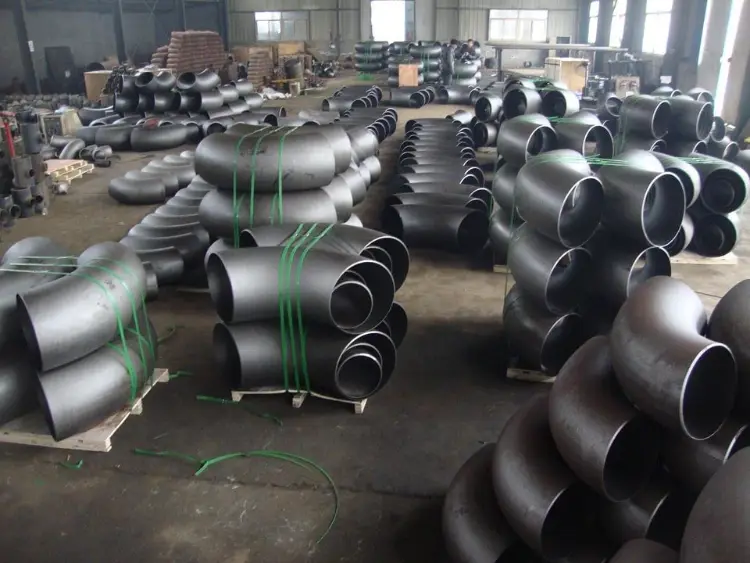
GB/T 9711-2011 PSL1 L290 SSAW Pipe
GB/T 9711-2011 PSL1 L290 SSAW Pipe: Technical Data & Equivalent Grades Guide
Comprehensive analysis of L290 (X42) PSL1 spiral submerged arc welded pipe per Chinese standard GB/T 9711-2011, covering chemical composition, mechanical properties, international equivalents and applications.
Hot-rolled coil, forming, submerged arc welding (helical seam)
- Phone : +8618037372205
- Email : [email protected]
- WhatsApp: Contact via Whtsapp
- WeChat: +8618037372205
GB/T 9711-2011 PSL1 L290 SSAW Pipe Introduction
L290 (also designated as X42) is a pipeline steel grade specified in GB/T 9711-2011 for the transportation of oil, gas and water. The SSAW (spiral submerged arc welded) pipe is manufactured by continuously forming hot‑rolled coil into a helical shape and welding the seam under a blanket of flux. This product conforms to product specification level 1 (PSL1), which represents the basic quality level without mandatory impact toughness testing. The steel is typically micro‑alloyed with niobium, vanadium or titanium to achieve the required strength and good weldability.
- Minimum yield strength: 290 MPa
- Good ductility and formability for field bends
- Suitable for onshore and offshore applications in non‑sour environments
- Delivery condition: as‑welded or normalised (by agreement)
- Fully equivalent to ISO 3183 L290 and API 5L X42 PSL1
GB/T 9711-2011 PSL1 L290 SSAW Pipe Chemical Composition – Heat Analysis
The composition limits are taken from GB/T 9711-2011 Table 4 for PSL1 grade L290. Elements listed as mandatory to be controlled; microalloying elements (V, Nb, Ti) may be added and shall be reported if present. Actual contents are determined by the manufacturer's melting practice. A carbon equivalent (CE) calculation is not mandatory for PSL1 but can be supplied upon agreement.
| Chemical Element | Standard Value (max. %) | Remarks |
|---|---|---|
| Carbon (C) | max 0.26 | Melting analysis; CE may be restricted by supplementary requirement |
| Manganese (Mn) | max 1.30 | Melting analysis |
| Phosphorus (P) | max 0.030 | Melting analysis |
| Sulfur (S) | max 0.030 | Melting analysis |
| Vanadium (V) | max 0.07 | Optional microalloy; shall be reported if added |
| Niobium (Nb) | max 0.05 | Optional microalloy; shall be reported if added |
| Titanium (Ti) | max 0.04 | Optional microalloy; shall be reported if added |
GB/T 9711-2011 PSL1 L290 SSAW Pipe Physical Properties – Typical Reference Values
The GB/T 9711-2011 standard does not specify physical property requirements for the pipe. The data below represent typical values for carbon‑manganese microalloyed steel (in the delivered condition) and may be used for engineering calculations. For precise design parameters, supplier‑certified values should be obtained.
| Property | Typical Value | Unit | Test Condition / Remarks |
|---|---|---|---|
| Density (ρ) | approx. 7.85 | g/cm³ | Room temperature |
| Elastic modulus (E) | approx. 205 | GPa | Room temperature, tensile modulus |
| Shear modulus (G) | approx. 80 | GPa | Calculated from E and ν |
| Poisson's ratio (ν) | approx. 0.3 | — | Within elastic range |
| Thermal expansion coefficient (α) | approx. 11.7 × 10⁻⁶ | /K | Between 20 °C and 100 °C |
| Thermal conductivity (λ) | approx. 50 | W/(m·K) | Room temperature |
| Specific heat capacity (c) | approx. 470 | J/(kg·K) | Room temperature |
| Electrical resistivity (ρe) | approx. 0.18 | μΩ·m | Room temperature |
GB/T 9711-2011 PSL1 L290 SSAW Pipe Mechanical Properties – Mandatory Requirements
Tensile tests are performed on transverse strip specimens taken from the pipe body (for SSAW pipe, the tests are oriented perpendicular to the weld axis). The weld seam must also be tested in tension; the minimum strength values are the same as the base metal. The elongation after fracture (A) is calculated using the standard formula because fixed minimum values are not specified for PSL1. No Charpy impact test is required unless a supplementary specification (e.g., PSL2) is invoked.
| Property | Requirement | Unit | Test Condition |
|---|---|---|---|
| Yield strength (Rt0.5) | min 290 | MPa | 0.5% total extension under load, transverse specimen |
| Tensile strength (Rm), base metal | min 415 | MPa | Transverse specimen, gauge length 50 mm or proportional |
| Elongation after fracture (A) | Determined by formula: A = 1940 × (S00.2) / Rm0.9 | % | Transverse specimen, gauge length 50 mm (S0 = original cross‑section) |
| Weld tensile strength (Rm) | min 415 (base metal specification) | MPa | Transverse weld specimen |
GB/T 9711-2011 PSL1 L290 SSAW Pipe Exact Equivalent Material Standards & Substitute Grades
| Country/Region | Standard | Grade | Remarks |
|---|---|---|---|
| China | GB/T 9711-2011 | L290 (PSL1) | Original specification |
| International | ISO 3183:2012 | L290 (PSL1) | Identical technical content, global reference |
| USA | API 5L (45th Ed. or later) | L290 or X42 (PSL1) | Direct equivalent; 'L290' nomenclature harmonised with ISO |
| Canada | CSA Z245.1 | Grade 290 Cat I | Comparable requirements for line pipe |
| Europe | EN 10208-2 | L290 | Adopted from ISO 3183; fully interchangeable |
GB/T 9711-2011 PSL1 L290 SSAW Pipe Application Introduction
L290 SSAW pipes are the backbone of medium‑pressure oil and gas gathering systems, cross‑country transmission lines and water supply networks. The spiral weld process enables economical production of large‑diameter pipes (typically 16″ to 60″) from narrower coil stock, offering cost advantages for infrastructure projects. PSL1 quality is fully adequate for non‑sour, moderate‑temperature service where toughness requirements are not critical. The material can be field‑welded using standard procedures for pipeline girth welding, provided the welding consumables and procedures are suitably matched.
- Excellent balance between strength and ductility for onshore and shallow water pipelines
- Widely used for structural piling and foundation pipes due to good weldability
- Can be formed into bends using induction bending process
Product Applications: Buried oil trunk lines, Cross‑country natural gas pipelines, Water supply mains, Structural piling and casing pipes, Offshore risers (non‑sour service)
Processed into products: Straight pipe spools and field‑joints, Induction bends and cold‑formed elbows, Tees, reducers and weld‑on flanges, Pipeline support sleepers and cradles, Valve and meter station interconnects
Application industries: Oil & Gas Transmission, Water Distribution & Sewage, Civil Engineering & Structural Piling, Industrial Fluid Handling
GB/T 9711-2011 PSL1 L290 SSAW Pipe Similar & Comparable Alternative Materials
| Country/Region | Standard | Grade | Remarks |
|---|---|---|---|
| International | API 5L / ISO 3183 | L290 (PSL2) / X42 (PSL2) | Same strength; higher quality level with mandatory toughness and tighter chemistry |
| China | GB/T 9711-2011 | L245 (PSL1) | Lower yield (245 MPa); may be considered for reduced‑pressure or structural use |
| China | GB/T 9711-2011 | L320 (PSL1) | Higher strength (320 MPa); suitable when design stress allows upgrade |
| International | ISO 3183 | L360 (X52) | Higher strength class; similar alloy design, requires re‑qualification |
Notes:
For sour service (H2S‑containing environments) or low‑temperature toughness requirements, PSL2 grades with supplementary testing (e.g., HIC, SSC, Charpy V‑notch) are necessary. Carbon equivalent limits and through‑thickness properties can be agreed upon when ordering. All referenced standards are subject to revision; always verify the current edition.
- Share



